
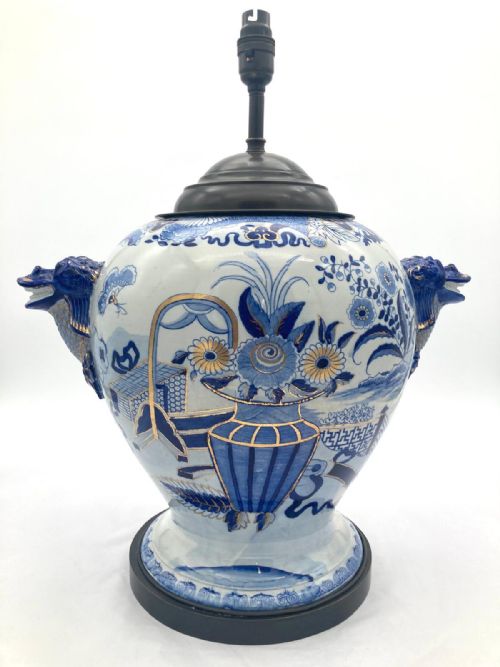


Porcelain Vase Lamp Base
A porcelain vase lamp base brings centuries of ceramic artistry into a room, offering height and a soft glow.
Porcelain Vase Lamp Base
A porcelain vase lamp base is a converted ceramic vessel designed to hold electrical fittings while retaining its original decorative character. The pieces found here span the eighteenth, nineteenth, and early twentieth centuries, with a strong representation of Chinese export wares, Japanese Satsuma and Arita ceramics, and European porcelain.
Most examples take the form of ginger jars, baluster vases, or twin-handled vessels mounted on brass, wood, or gilt bronze. Makers adapted these sturdy containers to illuminate domestic interiors, mounting them with lampholders and wiring them for modern use.
Materials and technique
Potters shaped these bodies from clay and porcelain, applying underglaze cobalt blue, famille rose enamels, or celadon glazes before firing at high temperatures. Metalworkers then fitted brass or ormolu mounts to the necks and bases to secure the electrical components without damaging the ceramic body.
Many items incorporate hand-painted details finished with gilding, requiring steady brushwork and repeated kiln firings to set the pigments permanently into the glaze.
Several ginger jars made new careers illuminating Victorian drawing rooms after long service carrying spices.
What separates the grades
Quality rests upon the crispness of the hand-painted decoration, the weight and finish of the metal mounts, and the balance of the overall conversion. Finer specimens display precise brushwork, rich glaze depth, and mounts that integrate cleanly with the contours of the porcelain.
Lesser examples show hurried enamel work or clumsy metal fittings that obscure the original marks and proportions of the vase. The integrity of the ceramic body itself, free from major hairline fractures, dictates the long-term stability of the piece.
Hicks and Meigh·Samuel Alcock
The Porcelain Vase Lamp Base Glossary
- Celadon
- A pale green jade-like glaze applied to porcelain, originating in China. It relies on iron oxide in the reduction kiln atmosphere to achieve its characteristic soft tone.
- Famille Rose
- A palette of opaque enamels dominated by pink or rose colours, introduced to Chinese porcelain during the Qing dynasty. Artisans used this technique to render intricate floral and figurative scenes.
- Imari
- A style of Japanese porcelain featuring underglaze blue, iron red, and gold, produced in Arita for export. These pieces display dense, brocade-like patterns.
- Ormolu
- Gilt bronze mounts used to decorate and stabilise furniture and ceramics. The process involves applying a gold and mercury amalgam to cast bronze before heating.
Porcelain Vase Lamp Base: Frequently Asked Questions
How do I care for a porcelain lamp base?
Dust the ceramic surface gently with a soft, dry cloth to prevent the accumulation of dirt in recessed glaze areas.
Avoid using liquid cleaners or abrasive pads, particularly near gilded sections or painted enamel details.
Are these lamps newly wired?
Conversions vary, with some pieces retaining older electrical components while others feature updated wiring.
Buyers should have a qualified electrician inspect the internal fittings to ensure compliance with modern safety standards.
How do I identify Chinese export porcelain?
Look for specific glaze characteristics, potting styles, and decorative motifs tailored for Western markets during the eighteenth and nineteenth centuries.
Details such as crackleware finishes and famille verte palettes offer further clues to the period of manufacture.
Can the original vase be damaged by the lamp conversion?
Most professional conversions utilise existing apertures or secure the electrical rod through the centre without drilling new holes in the ceramic.
Mounts are typically designed to grip the rim and base securely using rubber or cork spacers to protect the glaze.