


Porcelain Tea and Coffee
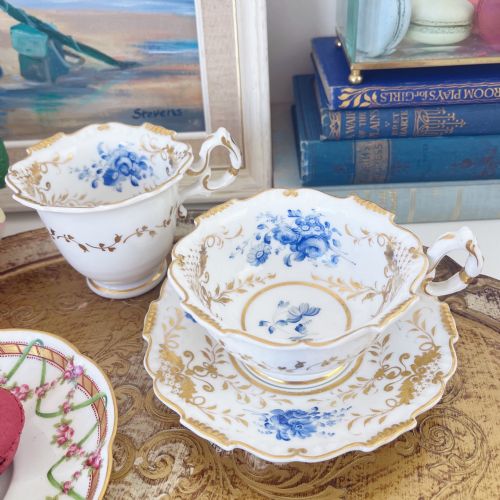
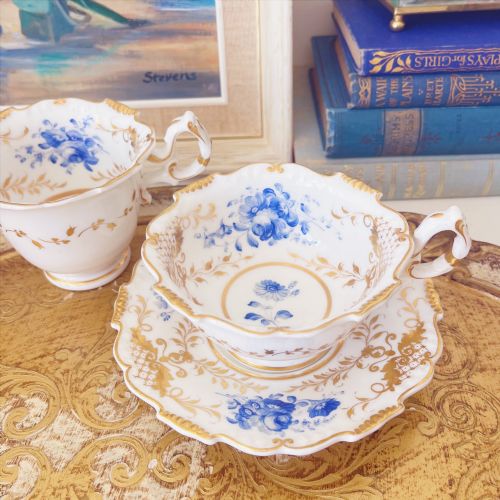
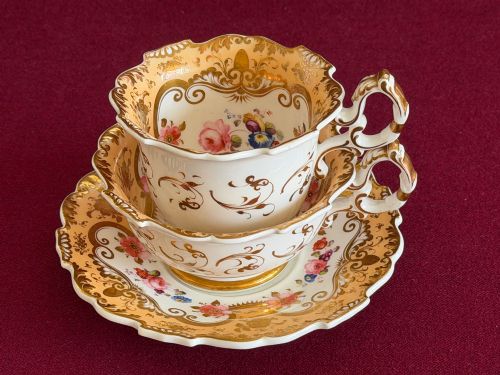
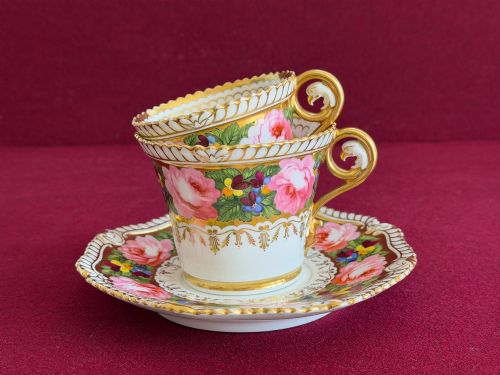
Porcelain tea and coffee sets bring hand-painted elegance to the table, offering a tangible connection to Regency, Georgian and later domestic rituals.
How they were made
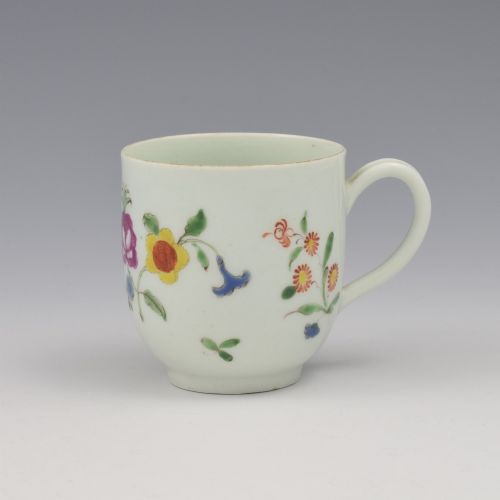
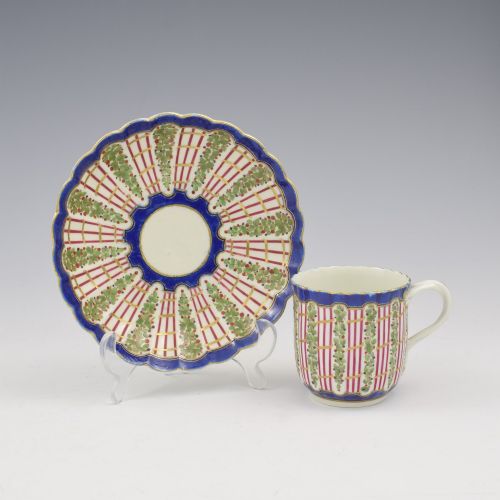
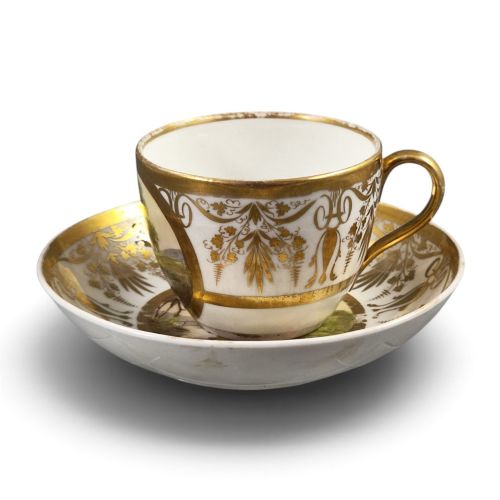
Potters utilised hard-paste porcelain and bone china bodies, shaped on wheels or pressed in moulds before initial firing. Artisans applied enamel pigments by hand, often incorporating detailed landscapes, birds, or botanical motifs directly onto the glazed surface. Gilding with gold leaf or liquid gold added decorative borders and highlights, fixed through subsequent kiln firings.
Factories employed specialised decorators for handpainted scenes, transferring patterns or working freehand across cups, saucers, and pots. Silver mounts occasionally appear on later twentieth-century coffee cans, combining ceramic bodies with metalwork handles or frames. The integration of cobalt blue underglaze decoration, seen in wet blue patterns, required precise control during high-temperature firings.
What varies in quality
The refinement of the porcelain paste and the crispness of the moulding set baseline standards across different factories. Finer pieces demonstrate thinner walls, translucent bodies, and precise potting without warping or kiln distortion. Superior examples maintain stability across complex forms such as tripartite sets and cabinet trios.
Artistic execution dictates the upper tiers of the market, distinguishing standard factory output from master painter work. Handpainted details, rich burnished gilding, and well-preserved enamel colours elevate specific services. Consistency in pattern application and the preservation of delicate decorative elements determine the standing of individual items.
Materials documented across the inventory include bone china, hard-paste porcelain, enamel, and gold leaf gilding.
H & R Daniel·Chamberlain Worcester·Richard Chaffers·Coalport John Rose·KPM Berlin·Sevres·Ahrenfeldt & Asalvary·Davenport·Minton·Russian Imperial Porcelain Manufactory·Hutschenreuter
The Porcelain Tea and Coffee Glossary
- Cabinet trio
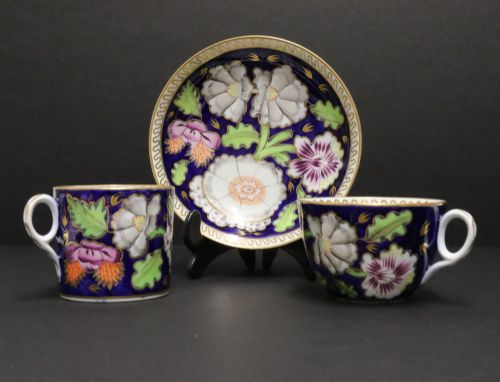
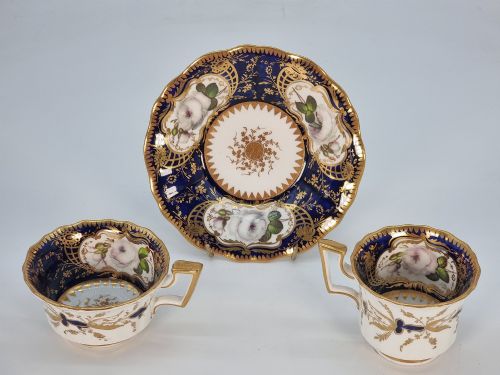
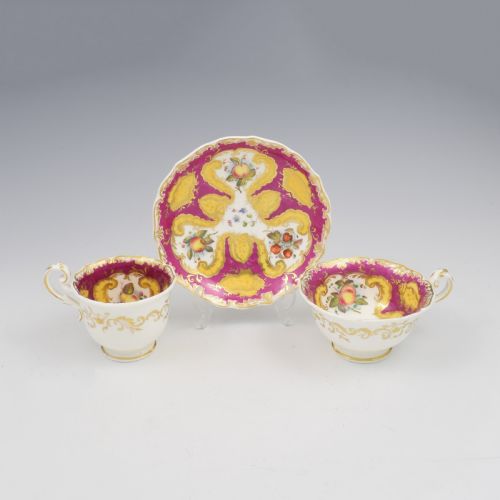
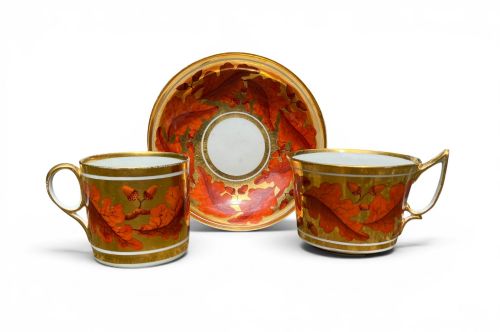
- A matched set consisting of a teacup, coffee cup, and saucer designed for display rather than robust daily use. These pieces often showcase elaborate handpainted decoration from Regency and Georgian makers.
- Hard-paste porcelain
- A dense, durable ceramic composition fired at very high temperatures, composed of kaolin and petuntse. It resists scratching and provides a bright white ground for enamel colours.
- Bone china
- An English ceramic body incorporating bone ash alongside china clay and stone, creating a strong yet translucent material. It became standard for domestic tea and coffee wares during the nineteenth century.
- Gilding
- The application of gold leaf or powdered gold to ceramic surfaces for decorative effect. Burnished gilding offers a matte finish that can be polished to a bright metallic shine.
- Tête-à-tête
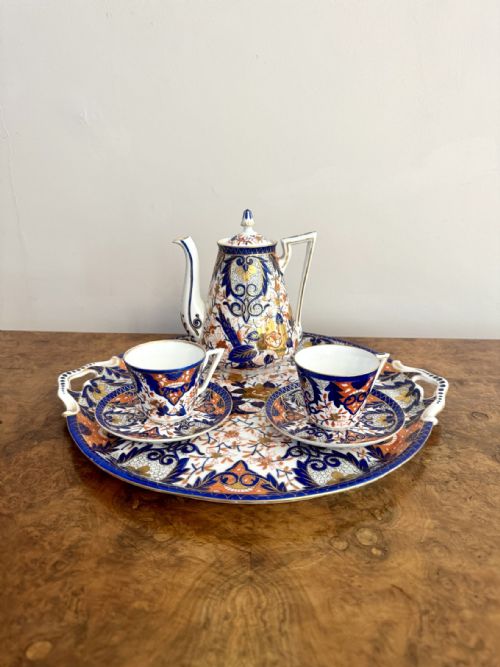
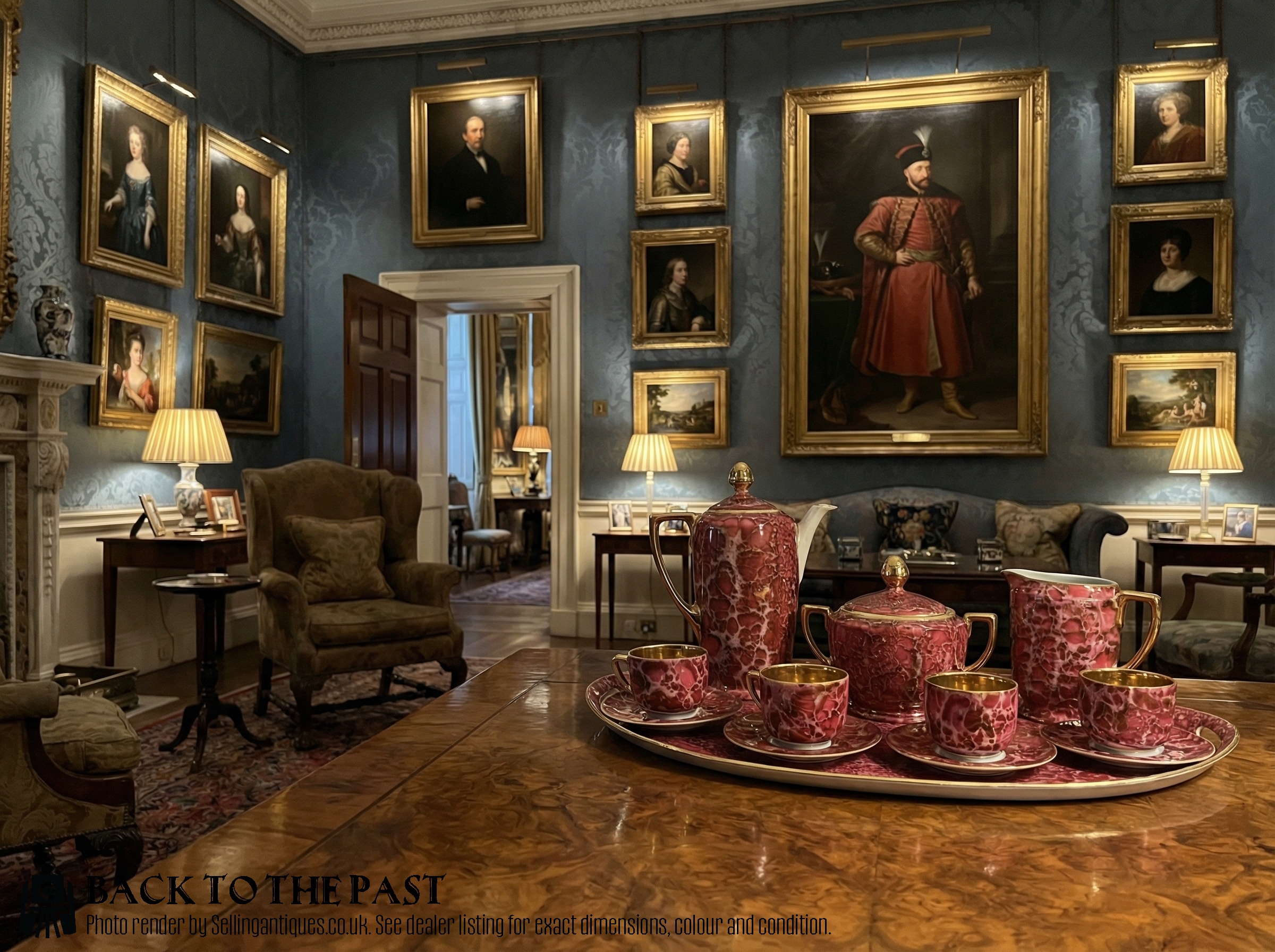
- A small service designed for two people, typically including a coffee pot, cups, saucers, and sometimes a creamer and sugar bowl. These intimate sets frequently date to the eighteenth and nineteenth centuries.
Porcelain Tea and Coffee: Frequently Asked Questions
What is a porcelain trio?
A porcelain trio typically includes a teacup, a coffee cup, and a matching saucer manufactured as a single decorative unit.
This format allowed drinkers to switch between tea and coffee using coordinated tableware during formal morning or afternoon gatherings.
How do I date antique porcelain?
Dating relies on factory marks, paste composition, decorative styles, and shape profiles recorded across different eras.
Changes in ceramic bodies, such as the adoption of bone china, and specific painter signatures help narrow down the period of production.
Are these sets safe to use?
Antique porcelain requires gentle hand washing and is generally preserved for display or careful occasional use rather than daily service.
Historic glazes and gold leaf can wear down under modern dishwasher conditions or abrasive cleaning agents.
What distinguishes a coffee can?
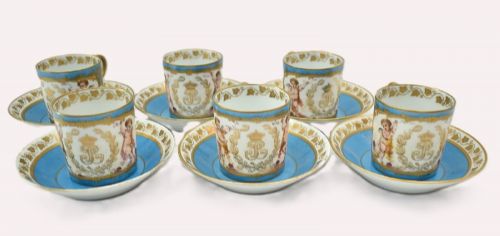
A coffee can is a straight-sided, cylindrical cup designed specifically for serving strong coffee without a handle or with a simple loop handle.
These forms appear frequently in Regency and Georgian cabinet trios alongside standard curved teacups.