


Porcelain Panelled Clock
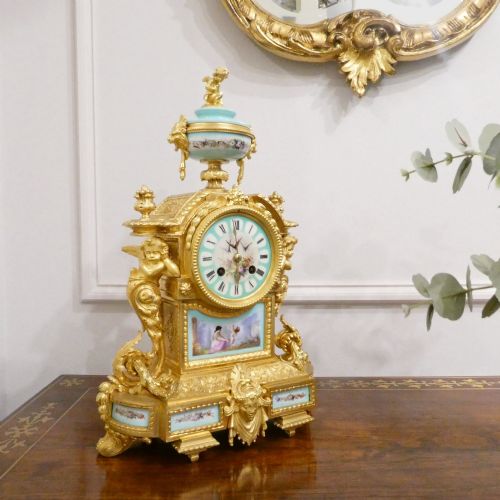
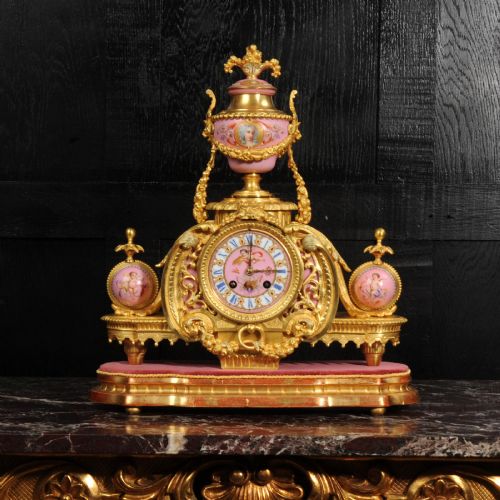
These porcelain panelled clock examples combine heavy gilt metalwork with painted ceramic plaques, bringing decorative nineteenth-century French design into domestic rooms.
Porcelain Panelled Clock
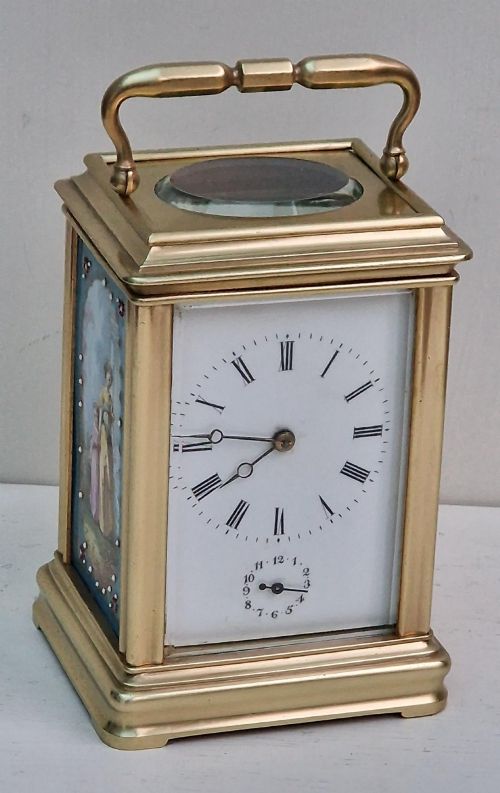
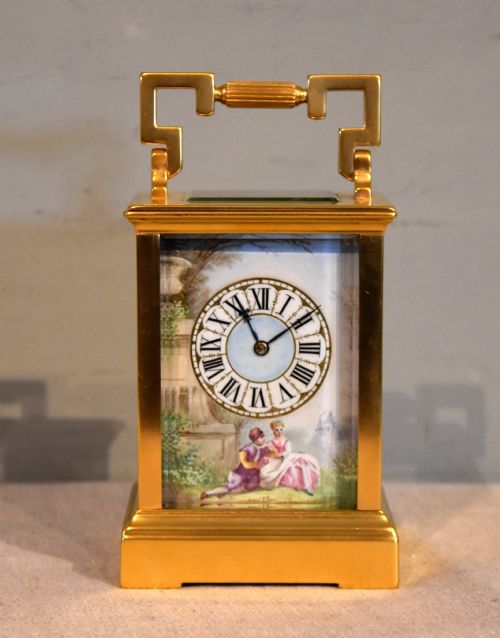
A porcelain panelled clock brings together functional timekeeping and ceramic artistry, mostly originating from nineteenth-century French workshops during the Victorian era. The listings here showcase mantel clocks, carriage clocks, and crystal regulators alongside multi-piece garniture sets.
Most pieces date between eighteen-fifty and eighteen-ninety, covering periods such as the French Second Empire, Napoleon III, and various revival styles. Buyers encounter ornate ormolu and gilt bronze housings inset with painted porcelain plaques, often styled after Sèvres output.
Mantel clocks and carriage clocks dominate the available forms, ranging from modest domestic timepieces to large architectural models enclosed in glass domes. These objects reflect a distinct nineteenth-century taste for combining bright metallic finishes with colourful ceramic panels.
Distinctions in quality
Quality differences emerge in the crispness of the bronze casting and the depth of the gilding across the ormolu and gilt brass surfaces. Superior examples display sharply chased foliage and figures, whereas lesser pieces show softer, shallower detailing in the metalwork.
The standard of the ceramic painting on the porcelain panels also dictates the grade of the piece, with finely detailed hand-painted scenes distinguishing higher-tier clocks from simpler decorative items. Movement makers of note add significant standing to a piece compared to unmarked commercial mechanisms.
Achille Brocot·Japy Frères·JP Delettrez
The Porcelain Panelled Clock Glossary
- Ormolu
- Gilded bronze produced by applying a mercury and gold amalgam to a bronze base, creating a durable golden finish common on nineteenth-century French clock cases. This technique results in a warm, deep metallic lustre.
- Crystal regulator
- A mantel clock housed in a brass or gilt frame with glass panels on all four sides, allowing a clear view of the pendulum and movement within. These models became popular during the latter half of the nineteenth century.
- Carriage clock
- A portable spring-driven timepiece designed for travel, typically featuring a brass or gilt bronze case with a handle on top and glass or porcelain panels. Many incorporate repeater mechanisms to sound the hours and quarters.
- Garniture
- A matching set of decorative objects for a mantelpiece, usually consisting of a central clock flanked by matching vases or candelabra made in the same style and materials. Sets often combine gilt bronze and porcelain plaques.
- Repeater
- A clock mechanism that chimes the hours and quarters when a cord or lever is pulled, a complication often found in finer carriage clocks of the period. This function allowed owners to check the time in the dark.
Porcelain Panelled Clock: Frequently Asked Questions
How do I wind a porcelain panelled clock?
Use the appropriate key on the winding arbors found on the dial face, turning gently until you feel resistance.
Avoid overwinding the mainspring to prevent damage to the internal brass mechanism.
Where were these clocks made?
The vast majority originate from French workshops and factories active during the nineteenth century.
Parisian makers produced most of the gilt bronze housings and assembled movements sourced from regional makers.
How do I tell an 1870 clock from an 1890 one?
Examine the style of the case work and the mounting of the porcelain panels.
Earlier pieces often favour ornate Rococo revival gilt bronze, while later decades introduced cleaner lines seen in crystal regulators.
Can I run a carriage clock daily?
These spring-driven clocks function well as daily timekeepers if properly serviced by a professional horologist.
Regular cleaning ensures the brass train and escapement avoid premature wear over time.