


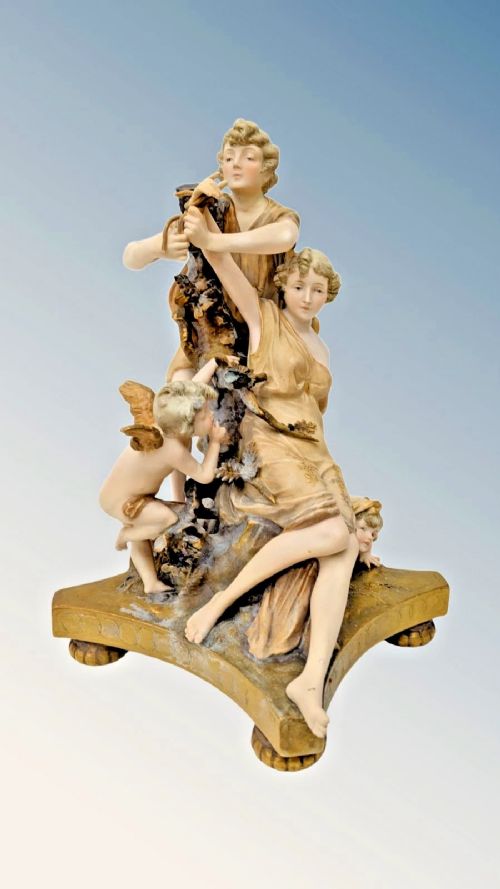


Porcelain Mythological Figures
Porcelain mythological figures bring classical deities and ancient legends straight to the cabinet shelf, cast in fine ceramic and painted with rich enamel colours.
Porcelain Mythological Figures
Porcelain mythological figures capture gods, goddesses, and classical narratives in ceramic form, spanning Georgian, Victorian, and later centuries. These pieces translate marble statuary into intimate cabinet sculptures modelled after classical pantheons.
The versions most commonly met on this page include figures from English and continental factories depicting deities such as Venus, Diana, Neptune, and Jupiter. Makers often drew upon Derby, Chelsea, Meissen, and Samson Paris traditions to shape these subjects.
Forms range from single standing figurines to elaborate multi-figure groups like Venus and Cupid, Pluto and Cerberus, or satyrs with staff. They appear in styles from French Rococo Revival and Regency to Neoclassical and Victorian iterations.
How they were made
Potters utilised soft-paste porcelain, hard-paste porcelain, and terracotta bodies, shaped using press moulds or slip-casting techniques to achieve intricate anatomical details and flowing drapery. Once formed, pieces underwent initial firing to create a biscuit base ready for decoration.
Painters applied coloured enamels and delicate gilding by hand, using gold leaf or liquid gold highlights to accentuate robes, hair, and attributes. A final glaze firing sealed the pigments, imparting the glossy finish characteristic of these sculptural works.
Porcelain Mythological Figures Retail Price Guide 2026
Typical asking prices for porcelain mythological figures among the pieces listed under this phrase on Sellingantiques today, from the lower quarter to the upper quarter. They describe what is for sale here now, not the wider market.
Listings feature porcelain mythological figures spanning the eighteenth and nineteenth centuries, incorporating soft-paste, hard-paste, and terracotta bodies across Rococo and Neoclassical styles.
What varies in quality
The application of gilding and enamel work reveals the factory's ambition, with superior items displaying finely chased gold leaf and nuanced colour blending. Early factory bodies, such as eighteenth-century soft-paste porcelain, exhibit a different translucency compared to later nineteenth-century hard-paste formulations.
Samson Paris·Royal Crown Derby·William Duesbury Co·Royal Worcester·Meissen
The Porcelain Mythological Figures Glossary
- Soft-paste porcelain
- An artificial porcelain composition fired at lower temperatures, popular in eighteenth-century English factories like Chelsea and early Derby. It yields a warm, creamy body that interacts distinctively with glazes.
- Hard-paste porcelain
- A true porcelain mixture of kaolin and petuntse fired at high temperatures to create a dense, vitreous body. Continental factories such as Meissen utilised this durable material for crisp sculptural definition.
- Enamel
- Vitreous pigments applied over or under the glaze to colour the figures. These mineral colours were fixed by secondary firing to ensure permanence.
- Gold leaf
- Beat gold applied to the porcelain surface to highlight borders, attributes, and garments. It adds rich metallic contrast to the painted ceramic.
- Biscuit
- Unglazed fired porcelain that leaves a matte, marble-like surface texture. Some figures utilised this finish to emulate classical carved stone.
Porcelain Mythological Figures: Frequently Asked Questions
What subjects do these figures show?
These ceramic sculptures depict classical deities, heroines, and mythological groups drawn from ancient Greco-Roman literature and Renaissance art. Common subjects include Olympian gods, nymphs, bacchantes, and allegorical figures.
Artists drew inspiration from classical sculpture to render narratives involving figures like Venus, Diana, Neptune, and Jupiter in domestic scale.
Which factories made mythological porcelain?
Major European and English manufactories produced these sculptural pieces, utilising their own distinct clay bodies and modelling styles. Factories such as Meissen, Chelsea, Derby, and Royal Worcester created notable sculptural editions.
Later nineteenth-century makers like Samson Paris and Royal Crown Derby also reinterpreted these classical subjects using period techniques.
How are periods told apart?
Periods are distinguished by body composition, factory marks, and stylistic shifts between Rococo Revival, Neoclassical, and Victorian tastes. Eighteenth-century pieces often employ soft-paste bodies and specific anchor or crown marks.
Nineteenth-century items typically utilise harder porcelain pastes, brighter enamel palettes, and factory ciphers corresponding to the Victorian era.
Where were these figures displayed?
Figures were designed for interior decoration, usually placed on mantelpieces, side tables, and within dedicated display cabinets in period homes. Wealthy collectors arranged them in decorative tableaus alongside urns and vases.
Their domestic scale allowed them to serve as sophisticated conversation pieces within a Georgian or Victorian interior scheme.