





Porcelain Figurine Couple
Porcelain figurine couple pieces capture courtly galants, musicians and harvesters modelled in glazed or biscuit ceramic.
Porcelain Figurine Couple
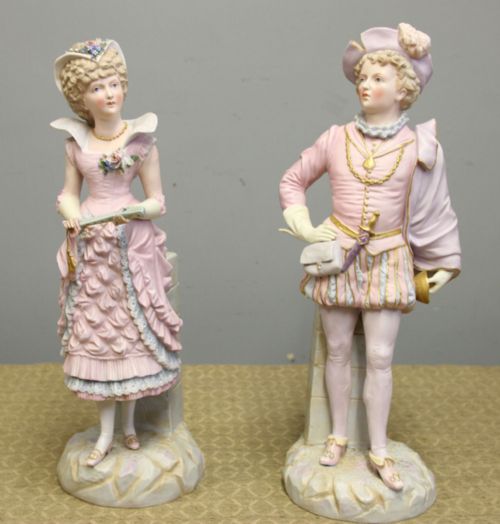
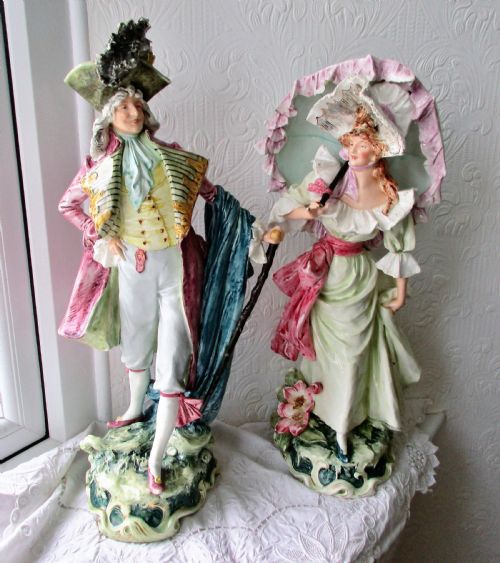
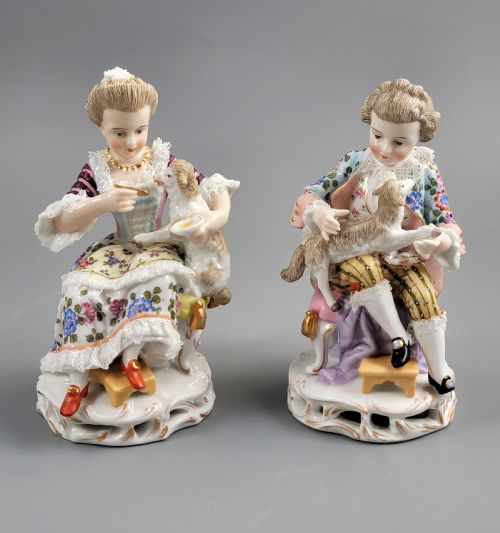
A porcelain figurine couple typically presents a pair of figures, such as a gallant and his lady, shepherds, or musicians, arranged together as a matched set. These dual figures draw on stylistic traditions ranging from Rococo Revival and Victorian aesthetics to French Second Empire designs.
The versions most commonly met on this page span the nineteenth century, including Victorian interpretations and continental European productions from German and French factories. Forms appear as standalone decorative statuettes, musical groups, and occasional spill vases.
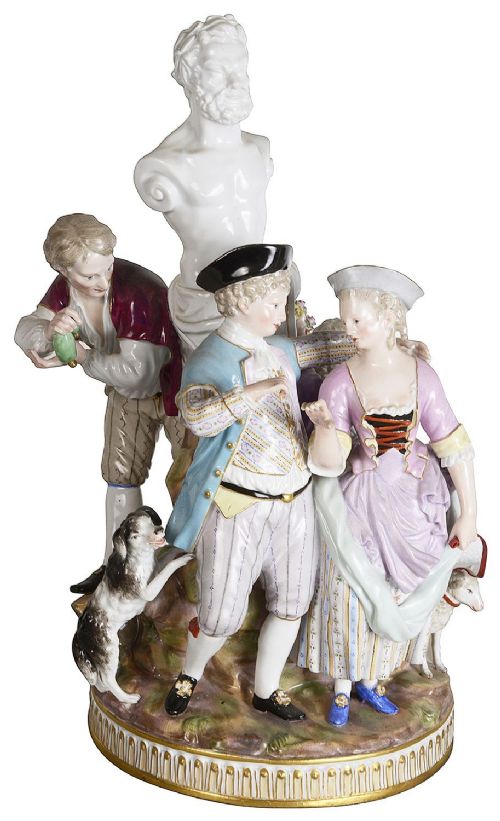
Collectors encounter works originating from renowned European porcelain centres like Meissen, Sitzendorf, Volkstedt, and Paris. These pieces reflect historical tastes for romantic, pastoral, and classical subjects executed in porcelain, earthenware, and faience.
Materials and production methods
Makers utilised hard-paste porcelain, bisque porcelain, and earthenware as the foundational bodies for these sculptures. Biscuit porcelain provided a matte, unglazed surface akin to marble, while glazed finishes offered reflective sheens and bright colour palettes.
Details were enriched through the application of enamel painting, gilt highlights, and occasional gold leaf. Complex pieces incorporated delicate elements such as porcelain lace or applied floral motifs shaped by hand.
Porcelain Figurine Couple Retail Price Guide 2026
Typical asking prices for porcelain figurine couple among the pieces listed under this phrase on Sellingantiques today, from the lower quarter to the upper quarter. They describe what is for sale here now, not the wider market.
Common decorative forms include paired musicians, courting couples, harvesters, and spill vases.
Evaluating craftsmanship and detail
The application of surface decoration also distinguishes standard items from finer works. Controlled enamel work and precise gilding elevate a piece, whereas heavy-handed or flat coloration diminishes the sculptural impact.
Bourdois & Bloch Paris·Letu & Mauger Paris·Volkstedt Porcelain·Vion et Baury·C. G. Schierholz·Chantilly·Sitzendorf·Samson Porcelain·Meissen·Royal Capodimonte Factory·Carl Thieme·Triebner Ens & Co·Ludwigsburg
The Porcelain Figurine Couple Glossary
- Bisque porcelain
- Unglazed porcelain fired to a matte, porous finish that resembles white marble. It is frequently utilised for nineteenth-century figures to emphasise delicate modelling.
- Hard-paste porcelain
- A durable ceramic composition fired at very high temperatures, made from kaolin and petuntse. It forms the robust body of many continental European figurines.
- Faience
- Tin-glazed earthenware produced across Europe, particularly in France. This material yields an opaque surface suitable for painted decoration.
- Spill vase
- A hollow vessel integrated into a figurine design, intended to hold wooden spills for lighting candles or fires. These items combine practical function with decorative sculpture.
- Gold leaf
- Extremely thin sheets of beaten gold applied to ceramic surfaces for ornamentation. It provides metallic accents on garments and bases.
Porcelain Figurine Couple: Frequently Asked Questions
What subjects do these figures show?
The pieces typically depict romantic pairs, gallant ladies and gentlemen, musicians, shepherds, and harvesters. Many draw on pastoral and classical themes.
Grouping them as couples reflects historical interior decoration trends where symmetrical ornaments were placed on mantelpieces and side tables.
How do I distinguish biscuit from glazed porcelain?
Biscuit porcelain has a matte, unglazed surface texture that resembles carved marble. Glazed porcelain possesses a smooth, shiny vitreous coating.
Both finishes were used extensively across the nineteenth century depending on the specific stylistic school and factory.
Where were most of these pieces made?
Manufacturing centres were concentrated in continental Europe, particularly in Germany and France. Prominent regions include Meissen, Dresden, Thuringia, and Paris.
English potteries like Staffordshire and Minton also produced notable figural groups during the same period.
How should I display porcelain figures?
These decorative statuettes require stable placement away from high-traffic areas due to their delicate projections and fine details. Enclosed cabinets protect them from dust and accidental impacts.
Keeping them out of direct sunlight helps preserve the stability of hand-painted enamels and gilt highlights over time.