



Porcelain Dinner Set
A porcelain dinner set brings historic dining tables to life, offering grand Staffordshire services and delicate child’s sets for daily use or display.
Porcelain Dinner Set
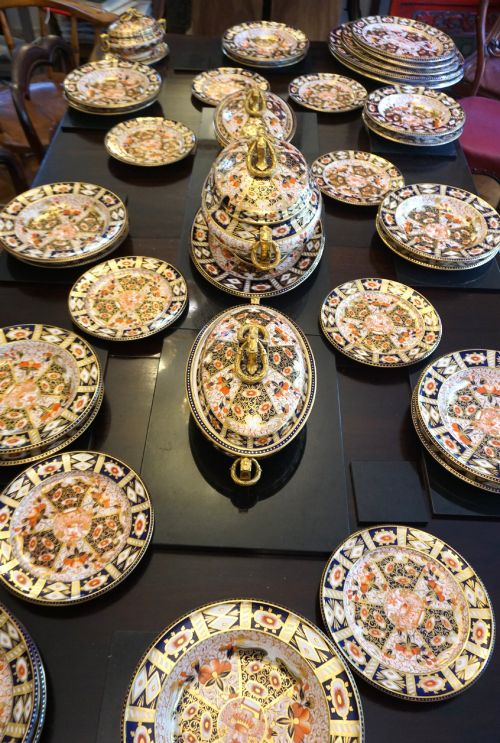
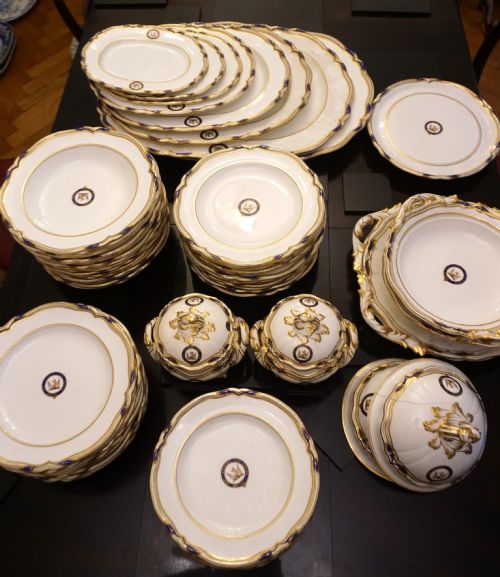
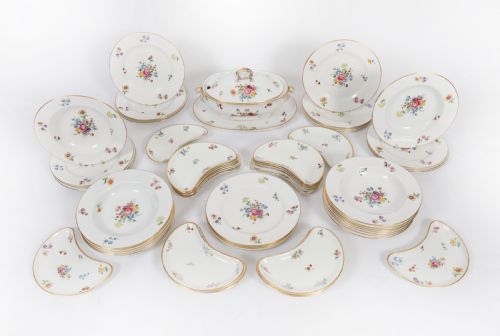
A porcelain dinner set comprises matched or complementary ceramic vessels for serving and eating meals, ranging from full Victorian services numbering over a hundred pieces to smaller Georgian and Edwardian suites. The examples gathered here span the eighteenth, nineteenth, and early twentieth centuries, produced across England and continental Europe in styles such as Rococo, traditional English, and French Provincial.
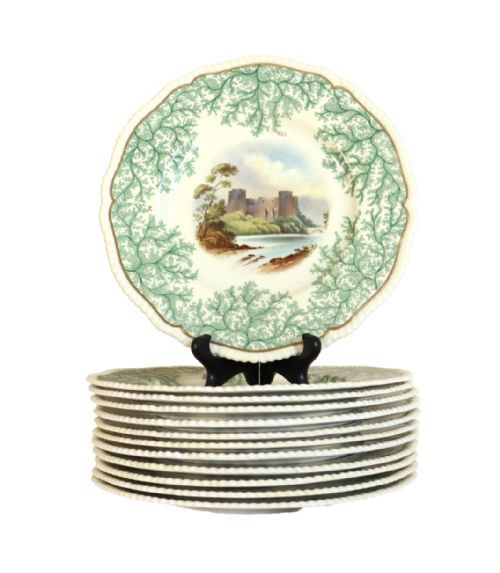
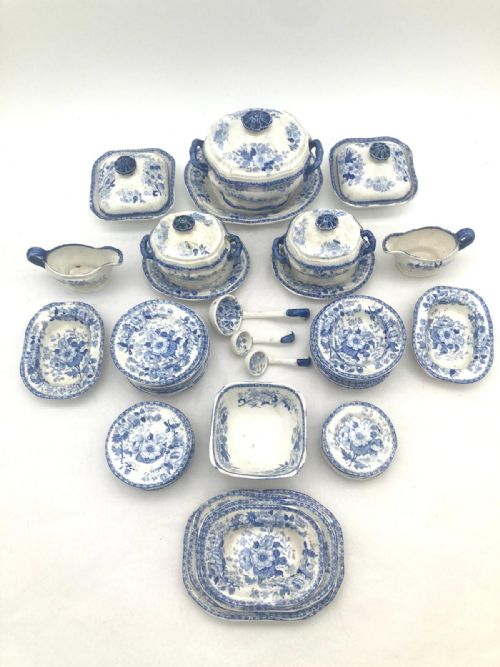
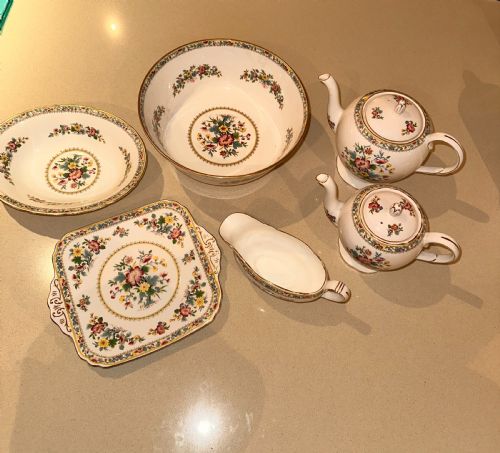
Buyers will encounter extensive multi-piece services alongside smaller assemblages of plates, child’s sets, and miniature dinnerware. Materials include ironstone, ceramic, and traditional porcelain decorated with hand-painted motifs, transfer printing in blue and white, and gold leaf accents.
How they were made
Potteries shaped these wares from refined clay bodies including soft paste porcelain and ironstone, firing them in kilns before applying glazes and enamels. Decoration involved meticulous hand-painting, flow blue transfer printing, and the application of gold leaf borders.
Makers utilised impressed registration marks and factory stamps to record dates and designs, as seen in pieces bearing diamond registration stamps from the nineteenth century.
Porcelain Dinner Set Retail Price Guide 2026
Typical asking prices for porcelain dinner set among the pieces listed under this phrase on Sellingantiques today, from the lower quarter to the upper quarter. They describe what is for sale here now, not the wider market.
The selection includes extensive multi-piece dinner services alongside compact child’s toy sets and individual antique plates.
What varies in quality
The distinction between services rests upon the crispness of the hand-painted details, the uniformity of the glaze, and the preservation of the original gold leaf and enamel colours. Extensive services that retain their original complement of plates and serving pieces command greater attention than partial sets.
Provenance and specific factory origins, such as documented pieces from Sevres, Minton, Spode, or Davenport, elevate the standing of a service. The finesse of the ceramic body, whether delicate soft paste porcelain or durable ironstone, shapes the character of each piece.
Davenport·Spode·Minton·Coalport·Sevres·Chantilly·Müller Volkstedt·Doulton·Wedgwood·Limoges·Copeland Spode
The Porcelain Dinner Set Glossary
- Ironstone
- A heavy, durable type of earthenware patented in the nineteenth century to imitate Chinese porcelain. It provides a sturdy alternative to finer ceramic bodies while holding enamel decoration well.
- Soft paste porcelain
- An artificial porcelain compound fired at lower temperatures than hard paste, used by eighteenth-century European factories like Chantilly. It has a warm, slightly creamy body and a distinctive glaze.
- Flow blue
- A nineteenth-century transfer printing technique where the cobalt blue pigment intentionally blurred slightly into the surrounding glaze during firing. This created a hazy, atmospheric effect popular in domestic services.
- Imari
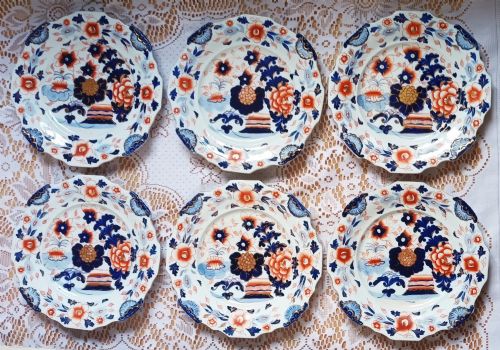
- A decorative style inspired by Japanese export wares, featuring rich cobalt blue and iron red enhanced with gold leaf. English potteries frequently adopted this palette during the Georgian and Victorian eras.
- Transfer printing
- A method of applying detailed designs to ceramics by engraving a copper plate, inking it, and transferring the image via tissue paper onto the biscuit or glazed surface.
Porcelain Dinner Set: Frequently Asked Questions
Can I use an antique dinner set for meals?
Many nineteenth and twentieth-century services remain structurally sound for occasional dining, provided you handle them with care. Older soft paste or earthenware pieces with surface crazing are better suited for gentle use rather than heavy daily dining.
Avoid serving highly acidic foods on antique pieces for extended periods, as old glazes can react with certain ingredients. Hand washing is mandatory for all pieces featuring gold leaf or delicate hand-painted motifs.
What is a child's dinner service?
Child's dinner services are scaled-down versions of full-sized dining sets, produced in the nineteenth century as educational toys or nursery display pieces. They include miniature plates, tureens, and platters decorated in matching transfer prints or floral patterns.
These smaller sets demonstrate the same manufacturing techniques as adult services, from soft paste porcelain bodies to flow blue decoration. They offer collectors a charming way to study factory patterns in a compact format.
How do I identify the period of a set?
Examine the base of the pieces for factory marks, impressed stamps, or diamond registration numbers that indicate the exact year of production. Stylistic clues such as floral sheet patterns, transfer printing techniques, and border styles also point toward specific decades like the eighteen-eighties or Victorian era.
Comparing the ceramic body - whether heavy ironstone, early soft paste porcelain, or refined nineteenth-century ceramic - helps narrow down the manufacturing window.