


Porcelain Boy Figures
Porcelain boy figures bring domestic charm and character to a room, ranging from playful singers to historical harvesters.
Porcelain Boy Figures
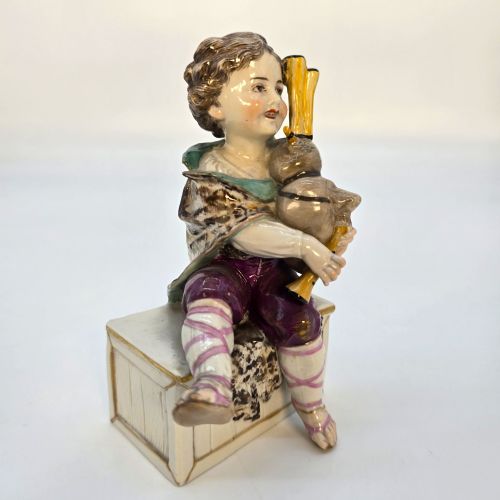
When you search for porcelain boy figures, you encounter a diverse array of ceramic representations depicting young subjects in various activities, ranging from solo singers and readers to groups of harvesters and fisher folk. The examples you are most likely to meet on this page span the eighteenth, nineteenth, and early twentieth centuries, reflecting changing European and Asian tastes.
These pieces function not merely as decorative figurines, but often serve practical purposes such as inkwells, incense holders, or sculptural groups paired with girls, dogs, and farm animals. Originating from renowned factories and lesser-known workshops alike, they capture youthful movement and traditional costume through modeled clay.
How they were made
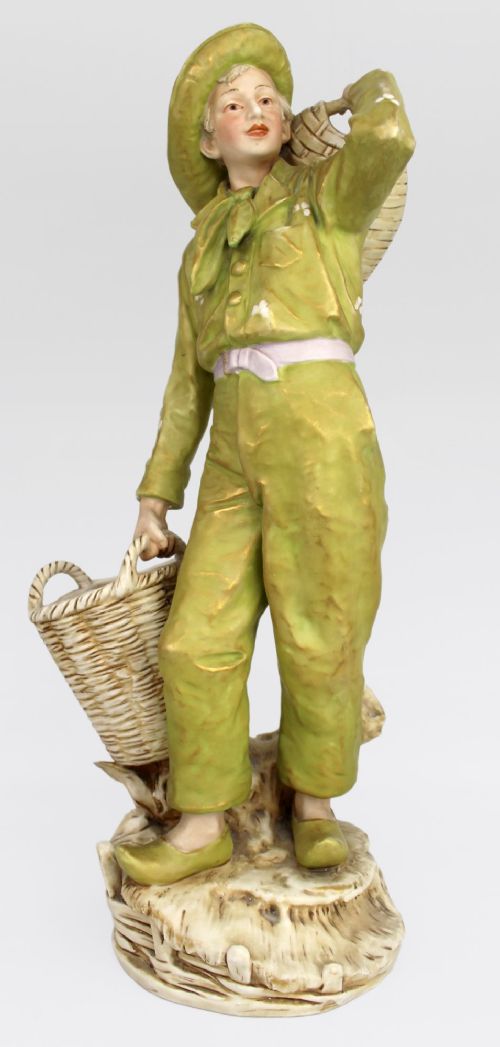
The creation of these figures relies primarily on hard-paste or soft-paste porcelain, earthenware, and bisque porcelain, which is left unglazed to emphasise the matte texture of the ceramic body. Artisans shape the clay into distinct forms, frequently utilising moulds for complex groupings and large-scale sculptures.
Several mischievous boys are captured mid-mischief, including a young drummer, a cheerful skater, and a pair caught fast asleep.
What varies in quality
Painting skill significantly influences overall merit, where delicate hand-painted pastel hues and precise enamel work distinguish master factory output from simpler commercial decoration. The crispness of applied gilding and the preservation of delicate ceramic elements further define the upper tier of these works.
Edmé Samson·Royal Dux Bohemia·Volkstedt Rudolstadt Factory·Royal Worcester·Meissen Porcelain·C. G. Schierholz·Niderviller Porcelain·Shelley porcelain·Bow Porcelain·Triebner Ens and Eckert·Ernst Bohne and Söhne·Sitzendorf porcelain·Helena Wolfsohn·Derby·Royal Berlin
The Porcelain Boy Figures Glossary
- Bisque porcelain
- Unglazed ceramic fired once to produce a matte, porous finish resembling marble. This surface highlights fine sculptural detail without the reflective sheen of a traditional glaze.
- Hard-paste porcelain
- A durable ceramic composition fired at very high temperatures, composed of kaolin and petuntse. It resists scratching and forms the sturdy base for many continental European figures.
- Famille rose
- A palette of opaque enamels dominated by pink or rose colours, introduced to ceramics in the eighteenth century. This decorative scheme appears frequently on imported and export pieces.
- Gold leaf
- Beaten gold applied to the surface of ceramics for decorative embellishment. It provides a bright metallic accent to specific costume details or bases.
- Parian ware
- A type of fine-grained, unglazed porcelain developed in the nineteenth century to imitate white marble. It is frequently utilised for portrait busts and sculptural figures.
Porcelain Boy Figures: Frequently Asked Questions
What were porcelain boy figures used for?
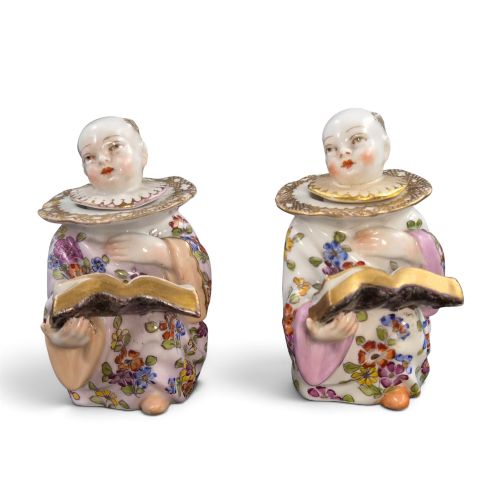
While many served purely as decorative figurines on mantelpieces and tables, some examples fulfilled practical domestic functions. You will find specific models designed as inkwells with lidded wells for writing sand or ink, as well as incense holders.
Larger sculptural groups often told a narrative story or commemorated rural labour, reflecting contemporary romanticized views of childhood and peasant life.
How do I distinguish eighteenth-century figures from nineteenth-century ones?
Eighteenth-century pieces typically exhibit lighter, more translucent paste bodies, softer pastel enamel palettes, and styles rooted in the rococo tradition. They frequently bear early underglaze or painted factory marks associated with foundational European kilns.
Nineteenth-century examples often display heavier modeling, brighter or more varied polychrome schemes, and styles ranging from neoclassical revival to Victorian realism. Examining the base and the application of glaze provides further clues to the firing period.
What is bisque porcelain and how do I clean it?
Bisque porcelain is unglazed ceramic that presents a matte, porous surface resembling white marble, which makes it distinct from shiny glazed wares. Because of its porous nature, it readily absorbs dirt and oils from handling.
Cleaning requires a dry, soft brush or a specialised sponge to gently lift surface dust without moisture penetrating the unglazed body.
How can I tell German porcelain figures apart from English ones?
German factories like Meissen, Sitzendorf, and Volkstedt often utilised hard-paste porcelain and incorporated elaborate rococo scrollwork or naturalistic floral bases. Their figures frequently feature distinct underglaze blue factory marks.
English makers such as Bow and Derby historically experimented with soft-paste porcelain compositions, producing slightly warmer tones and distinct colour palettes before shifting toward bone china in later decades.