


Pop Up Writing Desk
A pop up writing desk brings ingenious mechanical compartments and clever rising storage to your room, combining a compact footprint with hidden functionality.
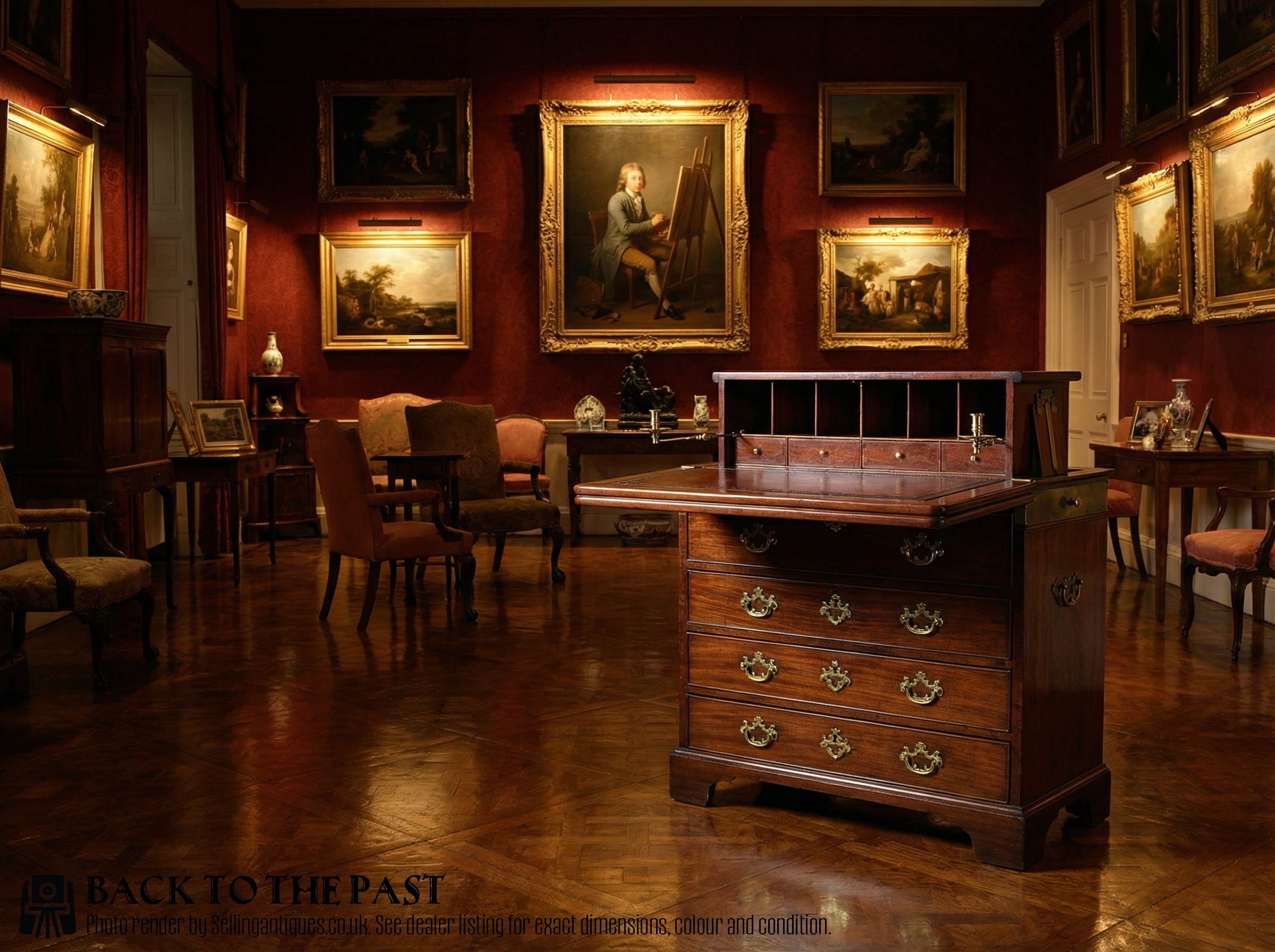
Pop Up Writing Desk
A pop up writing desk is a clever form of antique furniture designed to conceal writing slopes, stationery compartments, and rising superstructures within a compact body. When you search for a pop up writing desk, you encounter sophisticated writing furniture that transforms through internal mechanisms to reveal hidden storage.
The pieces appearing on this page span the Victorian and Edwardian eras, alongside earlier Georgian examples, taking forms such as Davenport desks, piano top desks, and writing tables. Burr walnut and mahogany dominate the selection, frequently enhanced by rosewood, maple, boxwood inlay, and brass hardware.
Victorian burr walnut models make up the majority of what you meet here, often featuring piano tops or rising stationery boxes that lift automatically when the main desk lid opens. These desks serve as practical writing surfaces while concealing the clutter of correspondence inside mechanical compartments.
Materials and construction
Cabinet makers utilised dense timbers like mahogany and burr walnut as foundational materials, applying figured veneer across surfaces to display rich grain patterns. Boxwood inlay provides sharp contrast against dark woods, while brass fittings reinforce internal mechanisms and drawers.
Internal spring-loaded or weighted mechanisms govern the pop up action, allowing the superstructure to rise smoothly when released. Leather writing surfaces inset into wood provide a traditional, durable plane for daily correspondence.
The listings here span the eighteenth, nineteenth, and early twentieth centuries, dominated by Victorian burr walnut.
Quality and craftsmanship
The distinction between ordinary and exceptional pieces lies in the precision of the internal mechanism and the quality of the timber veneers. Smooth, silent movement in the rising compartments indicates superior engineering by the cabinet maker.
Figured burr walnut with book-matched grain patterns and clean boxwood stringing elevates an item aesthetically. Original brass hardware and well-preserved leather inserts further separate standard examples from finer commissions.
The Pop Up Writing Desk Glossary
- Davenport desk
- A compact box-shaped writing desk featuring a sloping top and drawers to one side. This form provides substantial storage within a small footprint.
- Piano top
- A desk style where the sliding or lifting lid resembles the fall of a piano keyboard. It often conceals a rising interior tier of stationery slots.
- Metamorphic furniture
- Pieces designed to transform from one form or function into another through mechanical ingenuity. These items change shape to reveal hidden writing surfaces.
- Burr walnut
- Timber taken from a growth on a walnut tree, yielding swirling, highly decorative grain patterns. Cabinet makers prized this wood for high-status surfaces.
- Boxwood inlay
- Narrow strips of pale boxwood set flush into dark wood surfaces to create geometric borders or decorative motifs. This technique highlights the edges of drawers and panels.
Pop Up Writing Desk: Frequently Asked Questions
How do the pop up mechanisms work?
Internal springs, weighted weights, or interconnected levers cause the upper stationery compartments to rise when the main writing flap is opened.
These hidden systems require careful adjustment to ensure the rising action remains smooth and reliable over decades of use.
Where were these desks placed?
Cabinet makers designed these compact desks for principal reception rooms, ladies' boudoirs, or smaller studies where floor space was restricted.
Their finished backs often allowed them to sit in the middle of a room rather than pushed directly against a wall.
How do I care for the leather writing surface?
The leather insert benefits from gentle cleaning with a slightly damp cloth and occasional application of appropriate leather dressing to prevent drying.
Avoiding excessive moisture and direct sunlight preserves the suppleness and colour of the hide.
How do I distinguish Victorian from Edwardian examples?
Victorian pieces frequently display rich burr walnut veneers and heavy, figured wood surfaces with ornate internal pop up stationery boxes. Edwardian models often feature lighter mahogany frames, delicate stringing, and restrained Sheraton Revival influences.