


Polychrome Wall Sconces
Polychrome wall sconces bring painted colour and metallic leaf directly to a room, turning everyday lighting into a striking decorative feature.
Polychrome Wall Sconces
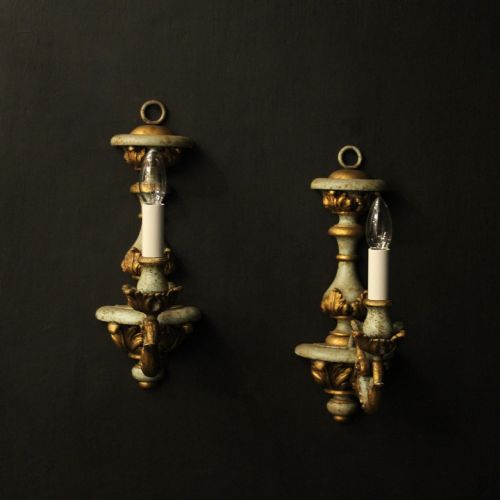
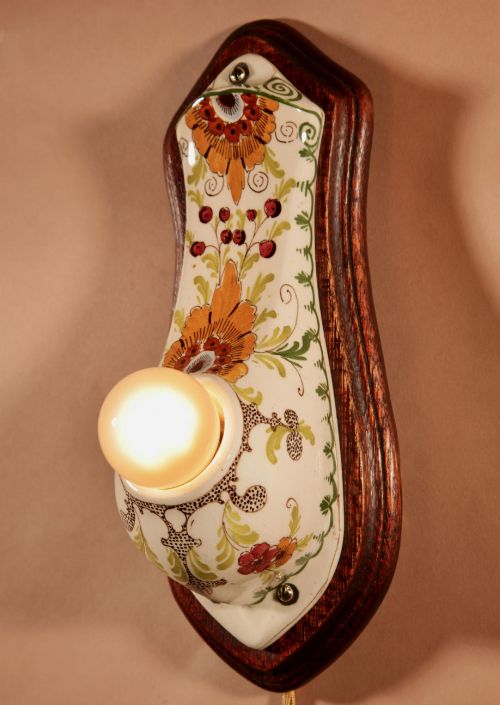
When searching for polychrome wall sconces, buyers encounter lighting fixtures finished in multiple painted colours, often accented with gilding or metallic leaf. These pieces span from the nineteenth century through the 1930s, reflecting regional European aesthetics.
The versions most commonly met on this page originate from Italy and France, taking the form of single, twin, or triple arm wall lights. Many examples adopt specific regional styles such as Italian Baroque, Florentine, or French Provincial, bringing distinct historical character to an interior.
Makers and workshops across Europe produced these fixtures in pairs or larger sets, utilising carved wood, iron, and gesso to build up complex three-dimensional forms. Buyers will find both floral motifs and fruit carvings integrated into the painted surfaces.
Materials and Construction
Artisans constructed the foundation of these wall lights using carved wood, wrought iron, or moulded gesso. Metal components such as toleware and iron provided sturdy armatures, while wooden bases allowed for intricate floral and fruit carvings.
Surfaces were prepared with primers before receiving layers of polychrome paint and gold leaf or silver gilt. This layered technique created rich textures and vibrant colour combinations that defined the appearance of each piece.
Some nineteenth-century makers snuck painted fruit directly onto wooden branches, ensuring your walls stay permanently harvested.
Assessing Quality and Execution
The distinction between standard pieces and finer examples rests upon the depth of the carving and the nuance of the paintwork. Hand-carved wooden details and finely brushed polychrome layers show greater artistry than simpler moulded versions.
The integration of precious finishes such as gold leaf or silver gilt alongside the polychrome paint elevates the overall presence of the fixture. Preserved original surfaces carry greater decorative authority than later overpainting.
Von Schierholz
The Polychrome Wall Sconces Glossary
- Polychrome
- Decorated in multiple colours. This term describes any object featuring a palette of various painted hues.
- Giltwood
- Wood that has been treated with gold leaf or a gold-coloured metallic finish. It often appears alongside painted details on decorative wall lights.
- Toleware
- Painted or enamelled sheet metal items. French examples frequently utilise this material for floral wall light designs.
- Girandole
- A branched wall sconce featuring mirrors or reflective backplates. These fixtures amplify candlelight or electric illumination within a room.
- Gesso
- A plaster-like mixture applied to wood or metal to create a smooth surface for painting and gilding. It allows for intricate relief ornamentation.
Polychrome Wall Sconces: Frequently Asked Questions
How do I install antique wall sconces?
These fixtures require professional electrical installation to ensure they mount securely to standard wall junction boxes. Qualified electricians can adapt older wiring to meet modern safety standards.
Positioning the sconces at eye level or flanking a mirror creates balanced illumination and highlights the painted polychrome details.
Can I use modern bulbs in these lights?
Most antique wall lights accept standard modern lamp holders once checked by an electrician. Low-heat LED bulbs protect delicate painted and gilded surfaces from thermal damage.
Choosing low-wattage bulbs preserves the gentle ambiance intended by the original nineteenth and early twentieth-century designs.
How do I clean painted wall lights?
Dust the fixtures regularly with a soft, dry brush to prevent accumulation in carved crevices. Avoid harsh chemical cleaners that can strip or dull the polychrome paint.
For stubborn marks, a lightly damp cloth used sparingly on non-porous surfaces preserves the integrity of the original finish.
What rooms suit polychrome wall sconces?
Living rooms, hallways, and dining areas benefit from the decorative presence and warm illumination these fixtures provide. Pairing them with complementary period furnishings enhances the overall interior aesthetic.
Their varied Italian and French styles allow them to anchor both traditional and eclectic decorative schemes.