



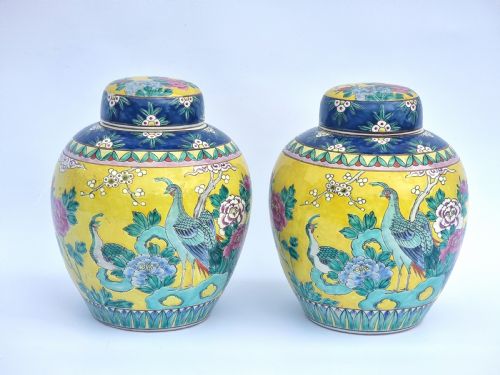


Polychrome Painted Lidded Jar
These polychrome painted lidded jar pieces bring bright colour and hand-painted detail to any room, offering a functional vessel that doubles as a striking centrepiece.
Polychrome Painted Lidded Jar
When you search for a polychrome painted lidded jar, you encounter a diverse array of ceramic vessels created across multiple centuries and geographical regions. The selection ranges from eighteenth-century European tin-glazed earthenwares to nineteenth-century Asian porcelains, each serving as a lidded container or decorative urn.
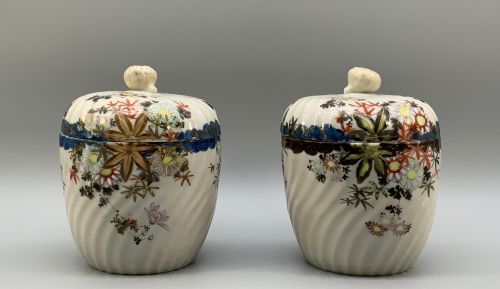
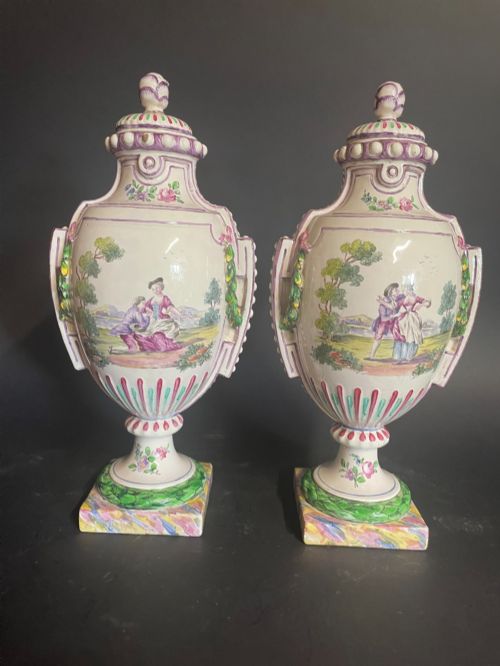
The most common forms on this page include ginger jars, pot pourri vases, and classical lidded urns featuring hand-painted botanical, floral, and figural scenes. These pieces span centuries of production, capturing both Asian export wares and European interpretations of classical and baroque styles.
Materials and Techniques
The construction relies primarily on porcelain and earthenware bodies, shaped by hand or on a potter's wheel before undergoing initial firing. Artisans then applied tin-glazes or translucent glazes to create a smooth, protective base for subsequent decoration.
Makers utilised various coloured pigments to hand paint intricate designs directly onto the surface, occasionally incorporating gold leaf and gilding for added richness. A final high-temperature or muffle kiln firing fixed the polychrome pigments and metallic accents permanently into the glaze.
Polychrome Painted Lidded Jar Retail Price Guide 2026
Typical asking prices for polychrome painted lidded jar among the pieces listed under this phrase on Sellingantiques today, from the lower quarter to the upper quarter. They describe what is for sale here now, not the wider market.
Listings feature pieces spanning the eighteenth, nineteenth, and twentieth centuries, utilising porcelain, earthenware, and tin-glazed ceramic bodies.
Markers of Superior Quality
Quality in these pieces depends heavily on the precision of the hand-painted brushwork and the vibrancy of the polychrome palette. Superior examples display crisp outlines, deliberate shading, and a harmonious balance of colour across both the vessel and its matching cover.
The crispness of the ceramic moulding and the refinement of the glaze also separate finer examples from standard production wares. Pieces bearing specific artist signatures or well-documented factory marks tend to demonstrate a higher level of individual artistic execution.
Royal Worcester·Sceaux Faience·Berlin·Coalport
The Polychrome Painted Lidded Jar Glossary
- Polychrome
- Decorated in multiple colours. This technique allows artisans to create complex, pictorial scenes across the ceramic surface.
- Tin-Glazed Earthenware
- Pottery fired with a lead glaze made opaque by the addition of tin oxide. This creates a white background suitable for painting.
- Ginger Jar
- A high-shouldered storage jar with a domed lid, originally used for shipping spices. Later European and Asian makers adopted this shape purely for decorative display.
- Pot Pourri Vase
- A lidded vessel pierced with small holes to release the fragrance of dried flowers and herbs placed inside. These often feature elaborate painted decoration.
- Gilding
- The application of gold leaf or gold powder to ceramic surfaces. It highlights specific design elements and adds a reflective quality.
Polychrome Painted Lidded Jar: Frequently Asked Questions
How do I date a polychrome painted lidded jar?
Dating relies on examining the characteristics of the ceramic body, the formulation of the glaze, and the style of the painted decoration. Maker's marks and factory stamps, where present, provide the most precise chronological indicators.
Secondary clues include the potting technique and the ageing of the foot rim. Comparing the pigment palette to documented periods helps narrow down the century of manufacture.
Were these jars used for food storage?
While many forms originated as functional containers for spices, ginger, or dry goods, those featuring delicate hand-painted polychrome surfaces and gilding were primarily decorative. Over time, their role shifted entirely to ornamental display.
Many examples, such as pot pourri vases, were specifically designed to hold aromatic mixtures rather than provisions. Lids often served to keep dust out or to contain scents within the vessel.
What is the difference between Delftware and Maiolica?
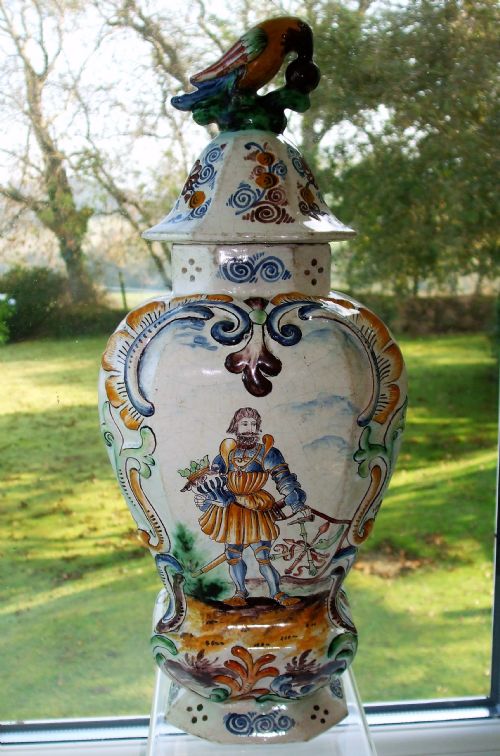
Delftware refers to tin-glazed earthenware produced in the Netherlands, heavily influenced by imported Chinese porcelain styles. The palette often utilises blue and white alongside other enamel colours.
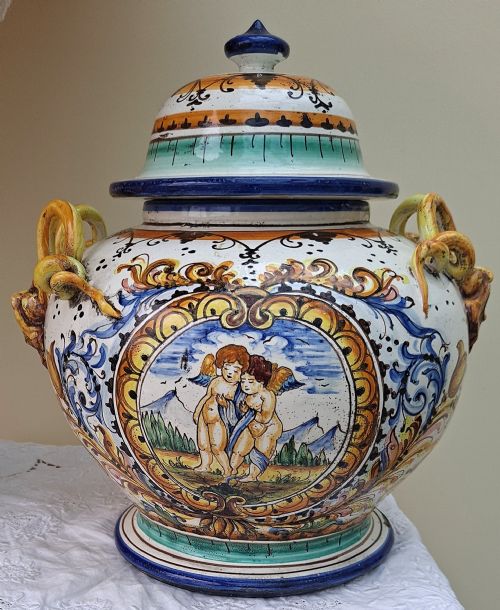
Maiolica is the Italian term for tin-glazed earthenware, known for bright, opaque polychrome pigments and Renaissance-inspired pictorial scenes. Both share a tin-oxide glaze foundation but developed distinct regional artistic traditions.