



Polychrome Majolica Ceramic Vase
A polychrome majolica ceramic vase brings rich tin-glazed earthen colours and Italian revival form straight into a room.
Polychrome Majolica Ceramic Vase
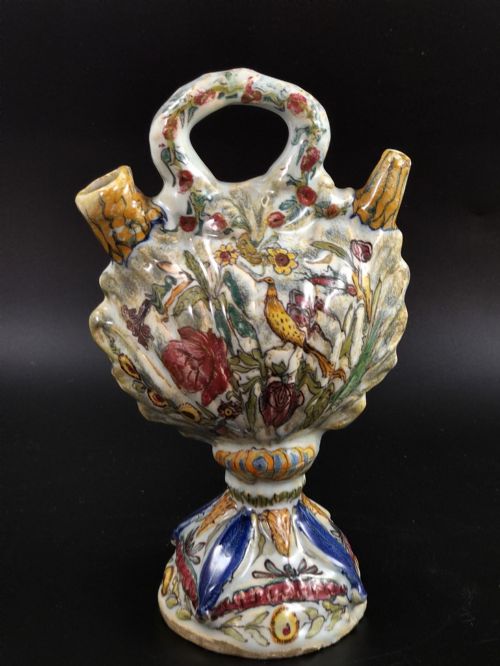
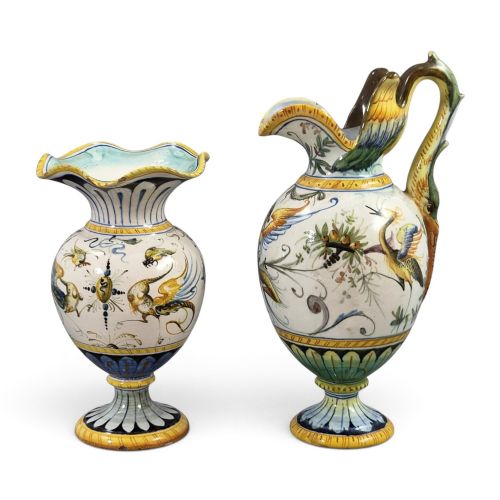
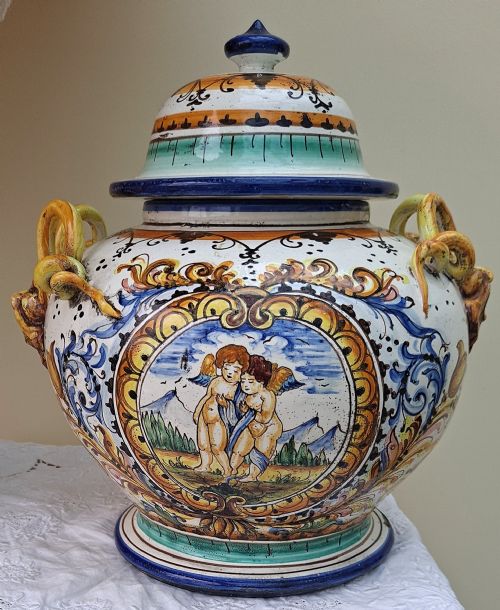
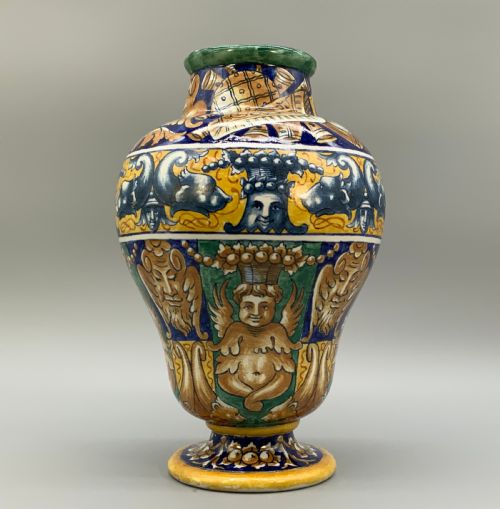
A polychrome majolica ceramic vase represents centuries of Italian tin-glazed earthenware tradition, appearing in forms ranging from lidded vessels and ewers to scallop-shell pilgrim flasks and standard urns. When searching for a polychrome majolica ceramic vase, a buyer encounters pieces originating primarily from the eighteenth and nineteenth centuries, spanning periods such as Italian Baroque, Renaissance Revival, and Victorian interpretations of earlier Italian majolica. These items function principally as decorative vases, jugs, and vessels designed to display bright palettes on tin-glazed earthenware bodies.
The pieces most commonly met on this page date to the nineteenth century, particularly reflecting nineteenth-century revivals of Italian styles like Italian Maiolica and eighteenth-century Italian designs. Such pieces include pairs of hand-painted vases from around eighteen-eighty alongside older eighteenth-century specimens like the Garofano vase or the scallop-shell pilgrim flask. Forms vary between lidded vessels, handled ewers, and flasks, all sharing the distinct coloured tin glaze characteristic of the tradition.
How they were made
Makers shaped these objects using earthenware or terracotta bodies, forming vessels, flasks, jugs, and urns by hand or on the wheel before applying a tin glaze to create a smooth, opaque white surface for painting. Artisans then brushed polychrome enamel pigments directly onto this unfired or raw glaze, allowing the colours to fuse into the surface during the firing process.
The resulting tin-glazed earthenware holds bright enamel pigments securely, producing the characteristic glossy and colourful finish seen on Renaissance Revival and Italian Baroque style pieces.
Polychrome Majolica Ceramic Vase Retail Price Guide 2026
Typical asking prices for polychrome majolica ceramic vase among the pieces listed under this phrase on Sellingantiques today, from the lower quarter to the upper quarter. They describe what is for sale here now, not the wider market.
Certain pilgrim flasks take the shape of literal scallop shells, turning a travel flask into a sea-inspired ceramic sculpture.
What varies in quality
Quality in these items rests upon the precision of the hand-painted polychrome decoration and the complexity of the vessel form, distinguishing standard nineteenth-century revival pieces from finer eighteenth-century works or notable factory productions. The crispness of the enamel details, the stability of the tin glaze over the earthenware body, and the ambition of the vessel shape - such as sculptural scallop shells or lidded ewers - drive the distinction across the range.
The refinement of the glaze application and the historical fidelity to Italian Maiolica traditions also separate simpler decorative items from more accomplished examples originating from established workshops like Cantagalli.
Cantagalli Florence
The Polychrome Majolica Ceramic Vase Glossary
- Majolica
- A type of tin-glazed earthenware decorated with opaque metallic oxide glazes and colourful enamel pigments. It forms the primary ceramic group for these Italian and revival vessels.
- Tin Glaze
- An opaque white glaze made by adding tin oxide to a lead glaze, providing a smooth surface for painting polychrome designs. This layer defines the base of the ceramic body before firing.
- Pilgrim Flask
- A flattened, round-bodied flask fitted with side lugs or handles for suspension, often taking a scallop-shell form in Italian earthenware. These pieces served decorative and functional roles.
- Ewer
- A large jug with a wide spout and a looped handle, frequently produced in ceramic during the Renaissance Revival period. It matches the vessel forms commonly found in majolica collections.
- Polychrome
- The application of multiple distinct enamel colours in the decoration of an object. This palette brings vibrancy to the tin-glazed surface.
Polychrome Majolica Ceramic Vase: Frequently Asked Questions
What is a polychrome majolica ceramic vase?
A polychrome majolica ceramic vase is an earthenware vessel finished with an opaque tin glaze and painted with bright enamel colours. These pieces draw on historical Italian styles ranging from the eighteenth century to nineteenth-century revivals.
They take various forms including urns, ewers, lidded vessels, and pilgrim flasks, all utilising tin-glazed earthenware to support complex painted decoration.
How do you date a majolica vase?
Dating relies on examining the specific ceramic body, the style of the tin glaze, and the character of the polychrome enamel painting. Nineteenth-century revival pieces often display distinct Victorian interpretations of earlier Italian designs.
Comparisons with documented works from makers like Cantagalli or specific periods such as the eighteenth century help establish the likely era of production.
Where were these ceramic vases made?
These pieces originate primarily from Italy, reflecting regional traditions of majolica production that stretched from earlier centuries into nineteenth-century revivals. Workshops in centres like Florence produced significant quantities of revival wares.
English and continental makers also reinterpreted these Italian forms during the Victorian era, producing similar tin-glazed earthenware vessels.
How should I clean my majolica vase?
Cleaning requires gentle dusting with a soft, dry cloth to protect the tin glaze and enamel surface from abrasion. Moisture should be kept away from the earthenware body, especially if any historic hairline cracks or chips are present.
Harsh cleaning agents must be avoided entirely to preserve the delicate polychrome pigments on the glaze.