



Pollard Oak Mirror
Pollard oak mirror pieces bring remarkable burr-figured timber and reflective glass together, offering a striking focal point for traditional interiors.
Pollard Oak Mirror
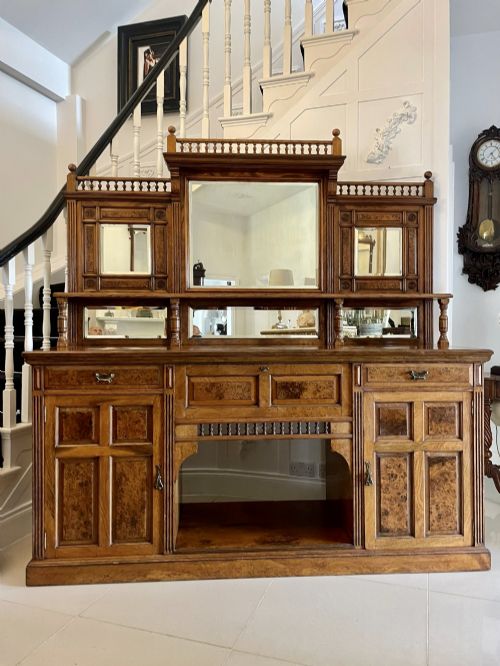
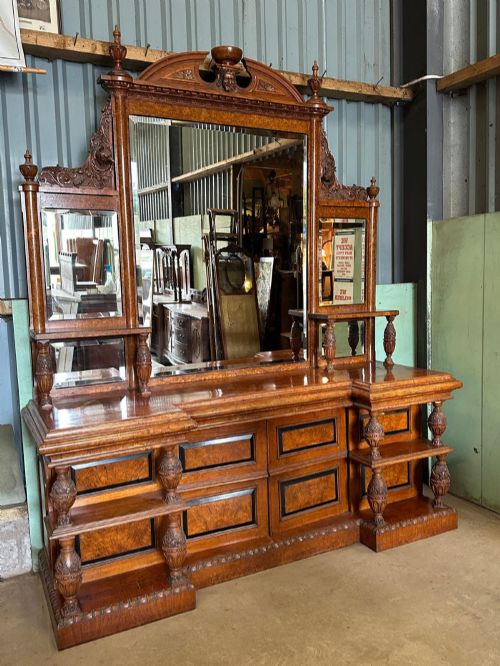
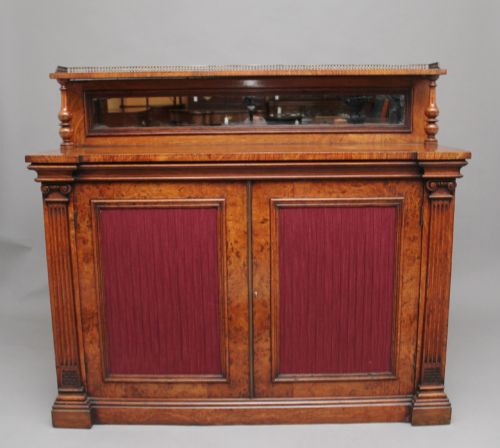
A pollard oak mirror typically appears as part of a larger mirror back sideboard or as an overmantel or wall mirror from the 19th Century, Victorian, and Edwardian eras. These items display the distinctive knotted growth patterns of pollarded timber, creating rich decorative surfaces that command attention in a room.
The most common formats on this page are large mirror back sideboards and wall mirrors originating from the Victorian period around 1880, alongside Edwardian examples. They combine functional glass with substantial oak structures, sometimes incorporating Gothic Revival or Aesthetic Movement details.
How pollard oak mirror pieces were made
Craftsmen utilised pollarded oak timber, prized for its dense cluster of small knots and swirling grain patterns, paired with clear glass plates. Additional materials such as brass, ebony, and specimen wood inlay frequently appear to accent the primary oak construction.
Makers built these pieces using traditional joinery, setting bevelled or flat mirror plates securely into carved wooden frames or integrating them into large cabinet backs. Surface finishes were polished to highlight the natural figuration of the burred wood.
Pollard Oak Mirror Retail Price Guide 2026
Typical asking prices for pollard oak mirror among the pieces listed under this phrase on Sellingantiques today, from the lower quarter to the upper quarter. They describe what is for sale here now, not the wider market.
James Schoolbred put his name to so many grand mirror back sideboards that he practically invented the Victorian dining room selfie.
What varies in quality
Quality rests heavily on the intensity and distribution of the burr figuring across the pollard oak surface, with denser patterns commanding greater visual interest. The crispness of carved details and the integration of subsidiary materials like specimen wood inlay also distinguish finer examples.
Structural integrity of the heavier mirror back sideboards and the clarity of the original glass plates separate standard items from exceptional ones. Maker attribution to known firms adds a distinct layer of distinction to the construction.
The Pollard Oak Mirror Glossary
- Pollard oak
- Timber harvested from trees that were cut back close to the trunk to encourage dense, highly figured branch growth. This process produces the characteristic swirled knots seen on these items.
- Mirror back sideboard
- A large dining room base cabinet surmounted by an upright wooden frame holding a large mirror plate. These fixtures dominated formal rooms during the Victorian period.
- Overmantel mirror
- A wide looking glass designed to hang on the wall directly above a fireplace mantelpiece. They often reflect the surrounding room light and amplify the presence of the hearth.
- Specimen wood inlay
- Decorative patterning created by fitting small geometric pieces of various contrasting timber species into the main surface. It demonstrates high levels of cabinet-making skill.
- Gothic Revival
- A design style drawing inspiration from medieval architecture, pointed arches, and heavy carved ornamentation. Pieces in this style often display dramatic architectural proportions.
Pollard Oak Mirror: Frequently Asked Questions
What is pollard oak?
Pollard oak comes from trees pruned specifically near the trunk to produce a dense network of branches, resulting in a heavily knotted and swirled timber grain. This unusual grain makes each mirror frame or sideboard visually unique.
Cabinet-makers sliced this timber into veneers or used solid sections to highlight the organic patterns across large surfaces like sideboard backs and mirror surrounds.
How do I style a mirror back sideboard?
A mirror back sideboard works best against a solid wall in a dining room or hallway where its height and reflective glass can open up the space. Keep the main surface uncluttered to let the timber grain remain the primary focus.
Pair the piece with traditional furnishings from the Victorian or Edwardian periods to maintain a cohesive interior style that complements the rich oak tones.
Are these mirrors original to the 19th century?
Most pieces originate from the 19th Century, Victorian era, or Edwardian period, featuring period glass and traditional timber construction methods. The presence of original silvering and backboards helps confirm the age of the glass.
Examine the joints and framing techniques to understand how the mirror plate was secured within the pollard oak structure during its initial manufacture.
How do I clean pollard oak?
Clean pollard oak surfaces using a soft, dry cloth to remove dust without disturbing the polished finish of the burred grain. Avoid harsh chemical cleaners that can strip the historic polish from the timber.
Apply a quality beeswax occasionally to nourish the oak and maintain a soft lustre across the intricate knot patterns of the wood.