

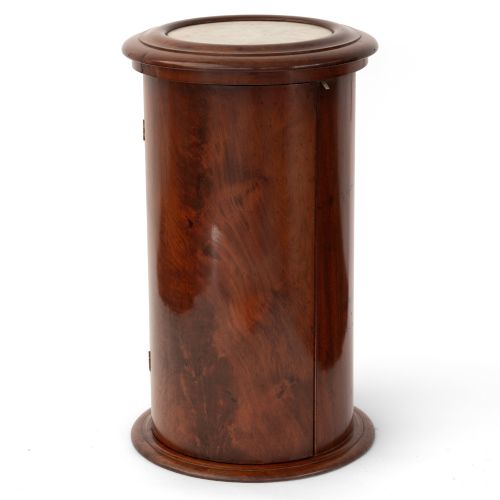
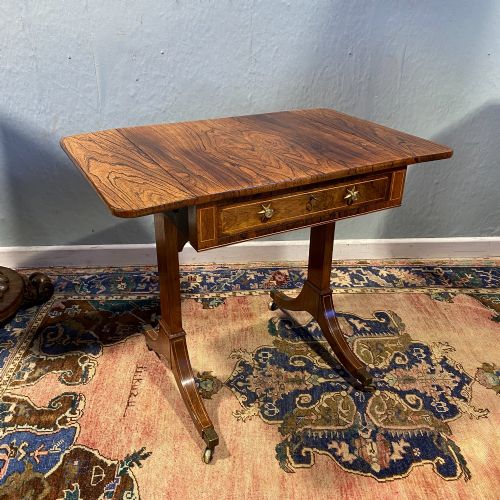
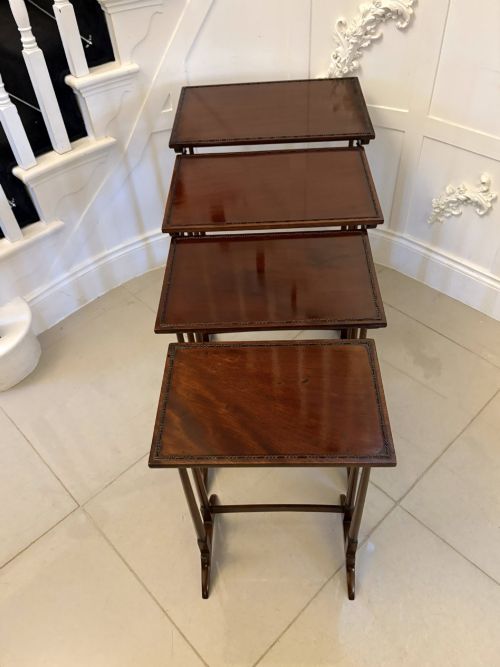
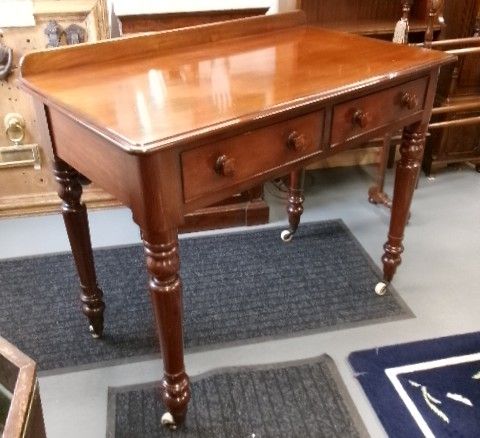


Polished Mahogany Side Table
These polished mahogany side table pieces offer sturdy timber surfaces and rich grain, grounding a room with traditional British craftsmanship.
Polished Mahogany Side Table
The most common versions met on this page date from the nineteenth and early twentieth centuries, reflecting both formal Georgian styling and later Edwardian utility. These pieces function as versatile surfaces in a hallway, parlour, or drawing room.
Makers utilised various formats, from demilune console shapes to pedestal Pembroke tables and nested sets, adapting the timber for specific domestic tasks. Free-standing centre tables and compact lamp tables further demonstrate the adaptability of mahogany in period interiors.
Materials and Construction
Joiners relied on solid mahogany and figured veneers, frequently accenting primary timber surfaces with contrasting inlay work in boxwood and satinwood. Brass hardware, including castors, handles, and drawer pulls, added functional detail to writing desks and console tables.
Structural framing often incorporated mixed hardwoods alongside primary mahogany to ensure stability in weight-bearing legs and drawer carcases. Cabinetmakers shaped cabriole legs, turned pedestals, and demilune aprons using traditional hand tools to achieve smooth, curved profiles.
Polished Mahogany Side Table Retail Price Guide 2026
Typical asking prices for polished mahogany side table among the pieces listed under this phrase on Sellingantiques today, from the lower quarter to the upper quarter. They describe what is for sale here now, not the wider market.
Listings span the Georgian, Victorian, and Edwardian periods, showcasing mahogany alongside brass, boxwood, and satinwood.
Distinguishing Quality
The selection of timber grain separates standard utility items from exceptional examples, with highly figured mahogany and meticulous book-matching commanding attention. Subtle details such as fine boxwood stringing, crisp carving on cabriole legs, and balanced proportions elevate a piece's visual weight.
Integrity of construction in the joints, drawers, and turned pedestals dictates how well a table survives centuries of domestic use. Original brass fittings and a mellow, undisturbed surface finish indicate superior historical care and more refined workshop origin.
The Polished Mahogany Side Table Glossary
- Demilune
- A half-moon shape characteristic of console tables designed to sit flush against a wall. This profile became particularly popular during the Georgian period.
- Pembroke table
- A small, versatile table featuring two hinged drop leaves on opposing sides. It often includes a single drawer and slender legs.
- Nest of tables
- A set of graduated tables designed to slide neatly beneath one another when not in use. Edwardian makers produced these frequently in mahogany.
- Stringing
- A narrow strip of contrasting wood, such as boxwood or satinwood, inlaid into the primary mahogany surface to create decorative borders.
- Wine table
- A small, lightweight occasional table, frequently featuring a tripod base, traditionally used for holding glasses or decanters.
Polished Mahogany Side Table: Frequently Asked Questions
What is a polished mahogany side table used for?
These tables provide practical surfaces for lamps, books, and decorative objects in living spaces and hallways.
Specific forms like writing desks and wine tables also served dedicated functional roles in period homes.
How do I identify a Georgian piece?
Georgian tables typically display restrained classical proportions, solid timber construction, and understated decorative carving.
Later Victorian and Edwardian interpretations often adopted lighter frames and added decorative inlay work.
Where should I place a console table?
Console tables feature flat backs designed to stand directly against a wall in an entrance hall or drawing room.
Demilune shapes work especially well in narrow spaces because their curved fronts soften the room's geometry.
How do I care for mahogany furniture?
Keep the wood away from direct sunlight and strong heat sources to prevent the timber and polish from drying out.
Dust the surface regularly with a soft cloth and apply quality wax sparingly to maintain the natural lustre.