


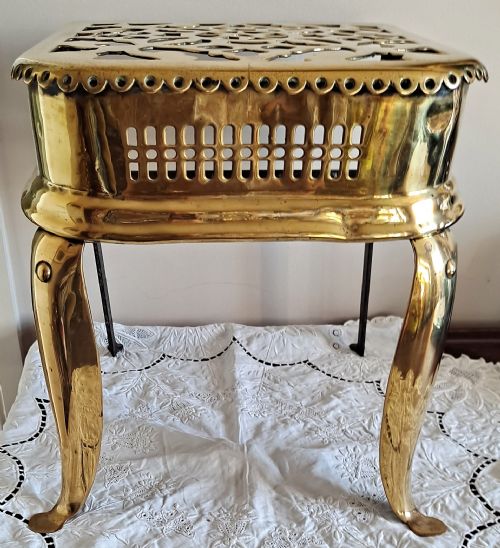
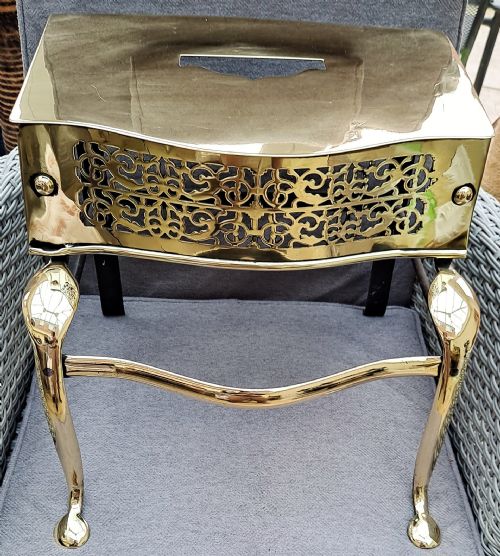


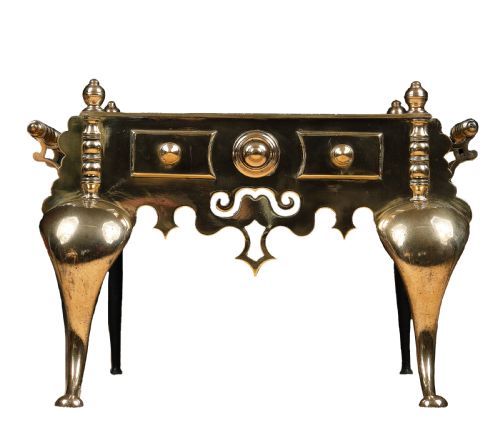


Polished Brass Kettle Stand
A polished brass kettle stand brings warmth and heavy metal character beside an active hearth.
Polished Brass Kettle Stand
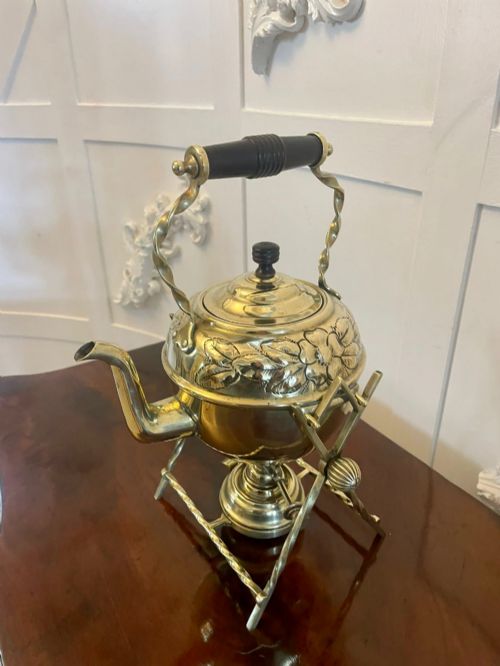
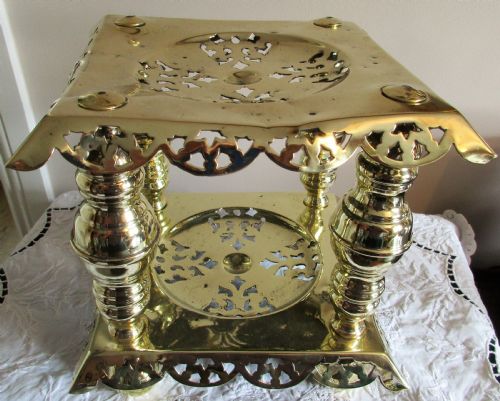
A polished brass kettle stand serves as a sturdy hearth accessory for keeping tea warm beside the fire. These pieces emerge from Georgian, Victorian, and Edwardian periods, often taking the traditional form of a footman or a two-tier trivet.
The buyer most frequently encounters examples forged in 19th century England, alongside Welsh and Dutch regional variations. They combine practical fireplace equipment with domestic display, functioning as plate warmers as well as stands for spirit kettles.
The selection ranges from simple tripod arrangements to dresser-style setups involving multiple metals. Each item reflects the domestic routines of historic British and European sitting rooms.
Construction and materials
Makers constructed these stands using heavy brass for the visible surfaces, often pairing it with iron and steel for structural strength. Ebonised wood occasionally appears on handles and turned components, adding contrast to the bright metalwork.
Forging techniques included wrought iron shaping and brass casting, creating rigid frames capable of supporting heavy water vessels. Surfaces were polished to a bright finish, accentuating the decorative pierced tops and sturdy legs.
Current listings feature items spanning the Georgian, Victorian, and Edwardian eras, constructed from brass, iron, steel, and ebonised wood.
Distinguishing quality
Quality rests in the weight of the metal and the precision of the piercing on the top plate. Heavier gauges of brass and integrated steel components indicate a stand built for hard domestic service rather than light display.
The refinement of the casting and the crispness of any turned wood elements separate standard utility pieces from finer examples. Proportion and stability dictate how well a stand holds its kettles without rocking.
The Polished Brass Kettle Stand Glossary
- Footman
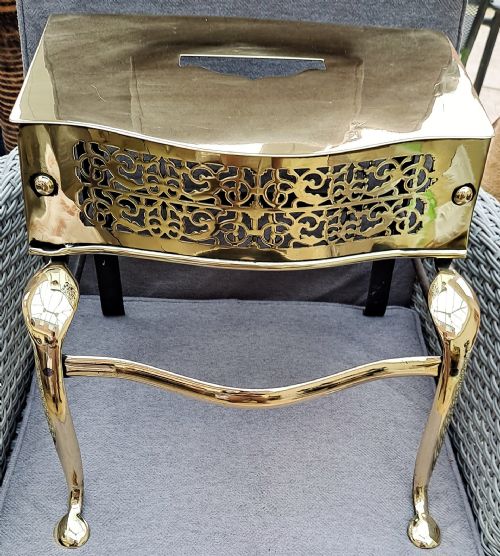
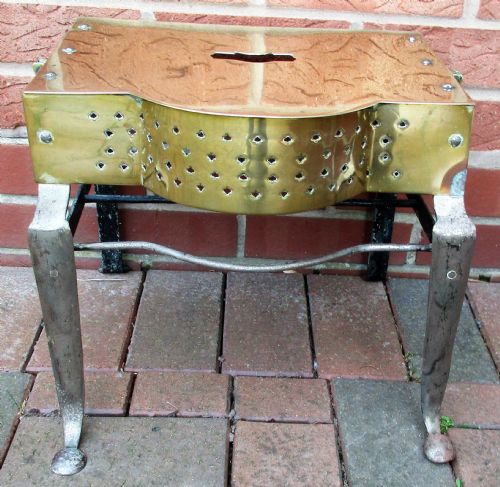
- A metal stand placed before a fire to keep food or water hot. These low tables typically feature pierced tops and four legs.
- Trivet
- A small three-legged or four-legged support for a kettle or cooking vessel. They sit directly on the hearth or hook onto a grate.
- Spirit kettle
- A water kettle mounted on a metal stand equipped with its own burner. They allowed tea service without returning to the kitchen.
- Ebonised wood
- Timber treated to resemble ebony, providing a dark surface. It frequently appears on handles to prevent heat transfer.
Polished Brass Kettle Stand: Frequently Asked Questions
What is a brass footman?
A brass footman is a low hearth stand used historically for warming plates or holding a kettle near the fire. They were essential pieces of fireplace furniture in British homes.
These stands often feature flat tops with decorative pierced patterns and sturdy iron or steel supports beneath the brass surface.
How were these stands used?
They sat directly in front of the fireplace to keep tea water hot or meals warm before serving. The elevated platform protected surfaces from direct ash and heat.
In many homes, they also served as small display tables for kettles when the hearth was not in active use.
How do I date a kettle stand?
Dating relies on stylistic clues like the shape of the legs, the engraving patterns, and the combination of metals used. Georgian pieces often incorporate more steel and ironwork.
Victorian and Edwardian versions tend to feature brighter polished brass and standardised casting methods typical of later industrial production.
What is a spirit kettle?
A spirit kettle is a water vessel suspended over a small burning lamp fuelled by spirits. This setup kept tea boiling at the table or hearth.
The metal stand holds both the kettle and the burner at a fixed height for safe operation during tea service.