
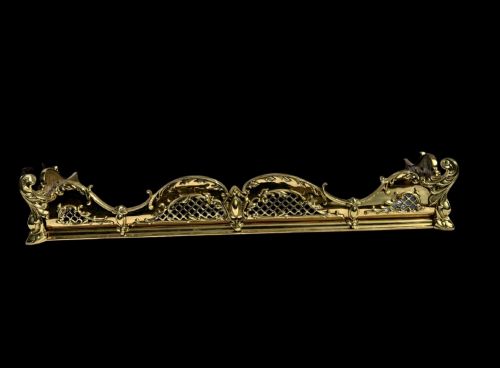
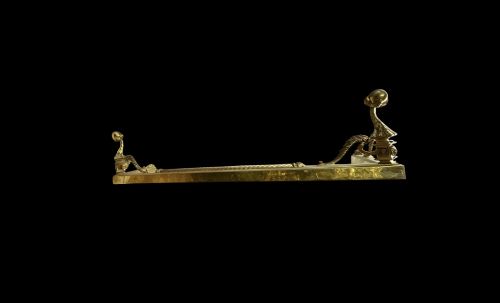


Polished Brass Hearth Curb
A polished brass hearth curb protects the room from stray embers while framing the fireplace with bright metallic warmth.
Polished Brass Hearth Curb
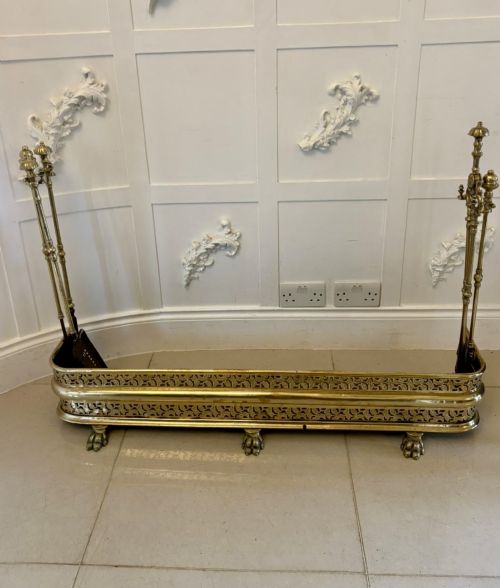
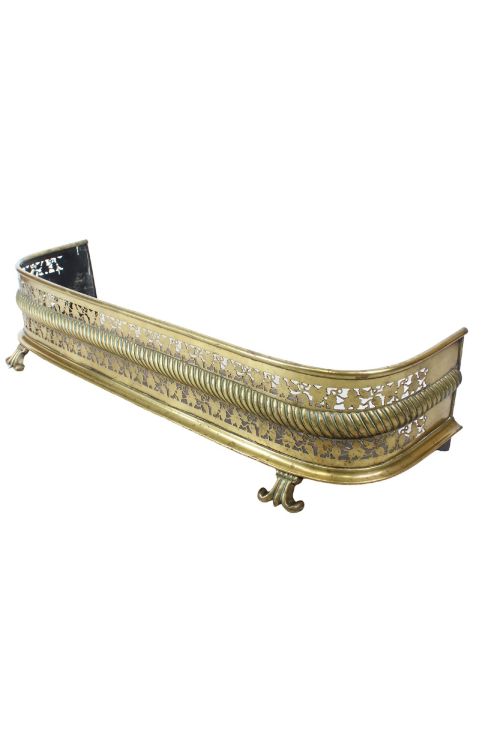
A polished brass hearth curb, also known as a fireplace fender, sits directly on the floor in front of an open fire to keep coal and ash contained. The examples available span several eras, with Victorian and Edwardian pieces appearing most frequently alongside earlier Regency and Georgian designs.
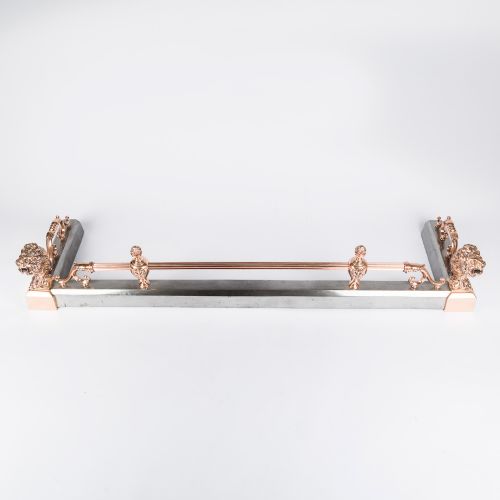
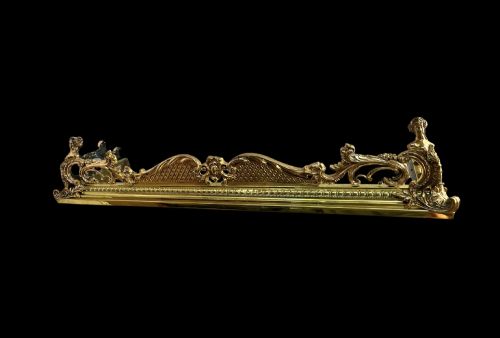
These metal barriers take various structural forms, from simple pierced metal guards to ornate designs incorporating lions, scrolls, or fire irons. Buyers will encounter both fixed widths and extending versions designed to fit different hearth dimensions.
How they were made
Maker workshops primarily used brass, cast brass, and polished steel, frequently combining these metals with iron, copper, or bronze accents. Metalworkers employed casting, piercing, and polishing techniques to create smooth reflective surfaces and intricate decorative patterns.
Many items incorporate structural iron or steel frames to provide necessary weight and rigidity around the hearth. Surface detailing often relies on applied decorative motifs, pierced ventilation slots, or structural scrolls.
Listings feature items spanning the Georgian, Victorian, and Edwardian periods, constructed primarily from brass, steel, and cast iron.
What varies in quality
The distinction between standard items and superior examples lies in the thickness of the metal sheet and the crispness of any cast decoration. Heavier gauges of brass and refined hand-finishing separate standard production items from pieces produced by skilled workshops.
Design complexity also marks out better examples, particularly where makers have integrated detailed pierced work, matched fire irons, or sculptural elements such as lions. The integrity of the joints and the quality of the original polish further distinguish finer specimens.
The Polished Brass Hearth Curb Glossary
- Curb fender
- A low metal barrier placed around the hearth to contain falling embers. This term is frequently used interchangeably with fireplace fender.
- Pierced brass
- Metal sheet perforated with decorative patterns using punches or saws. This technique allows for airflow while creating intricate visual designs.
- Regency style
- A British design aesthetic spanning the early nineteenth century characterised by classical restraint and neat symmetry. Pieces from this period often draw on ancient Greek and Roman motifs.
- Art Nouveau
- A decorative style popular around nineteen hundred featuring flowing organic lines and plant-inspired asymmetry. It appears on several later hearth curbs.
Polished Brass Hearth Curb: Frequently Asked Questions
How do I measure for a fender?
Measure the width and depth of your hearth stone to ensure the metal barrier sits securely within the perimeter. Allow sufficient clearance for any fire irons or tools stored alongside.
Extending models offer some flexibility if you require adjustment for varying fireplace openings.
Can I polish vintage brass safely?
Use a mild, non-abrasive metal polish applied with a soft cloth to maintain the reflective shine without removing the underlying surface layer. Avoid harsh wire wool or abrasive pads that can scratch the antique brass.
Many collectors prefer to retain a gentle patina rather than achieving a bright modern mirror finish.
Were these used with coal fires?
These metal curbs served primarily around open coal and wood-burning hearths in nineteenth-century and early twentieth-century homes. Their construction helped prevent rolling embers from damaging carpets or wooden flooring.
Many period examples also included matching fire irons or companion stands for tending the fire.
How do I identify a Victorian fender?
Victorian examples often feature heavier cast brass components, pierced geometric or floral patterns, and substantial iron bases. Stylistic markers range from ornate Rococo Revival scrolls to later Art Nouveau curves.
Construction methods typically involve heavier gauge metals than twentieth-century reproductions.