
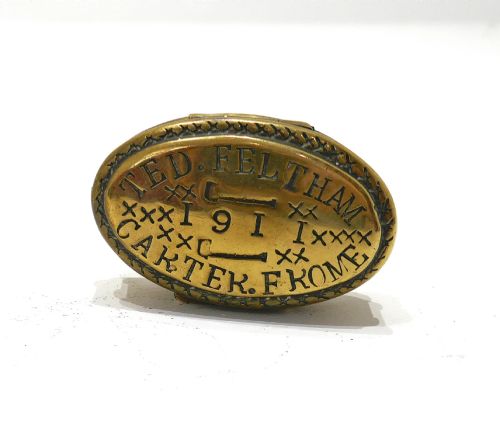
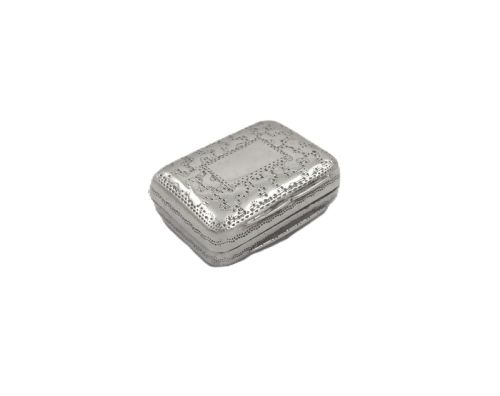
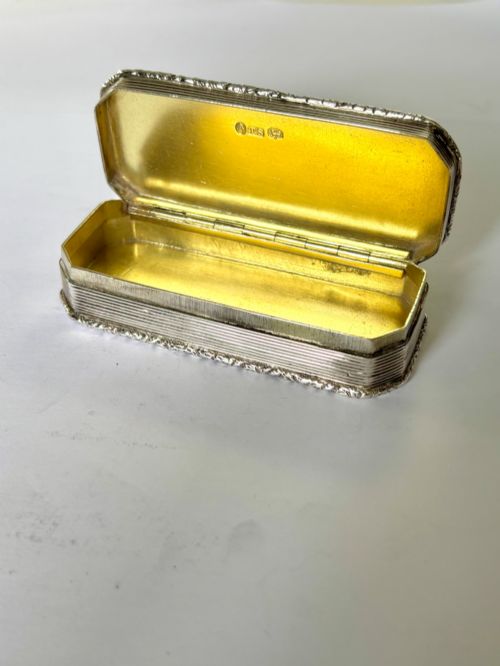
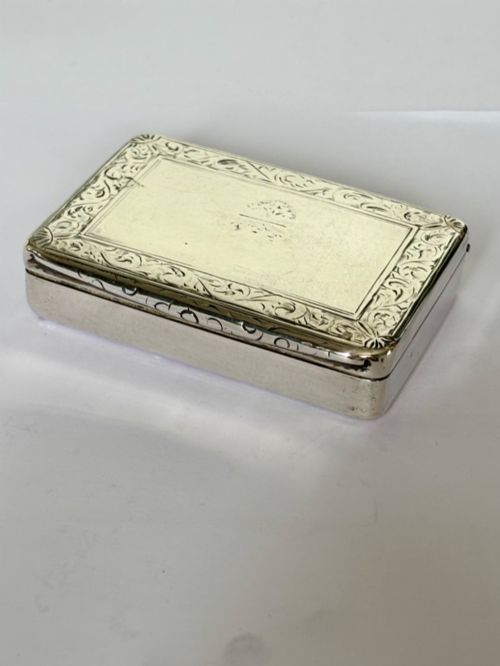

Pocket Trinket Box
A pocket trinket box is a small receptacle carried in the waistcoat or pocket for snuff, pills or personal items.
Pocket Trinket Box
When you search for a pocket trinket box, you encounter small personal containers spanning the Georgian, Victorian and Edwardian periods.
The objects on this page consist primarily of snuff boxes, vinaigrettes and pill boxes formed in metal or organic materials.
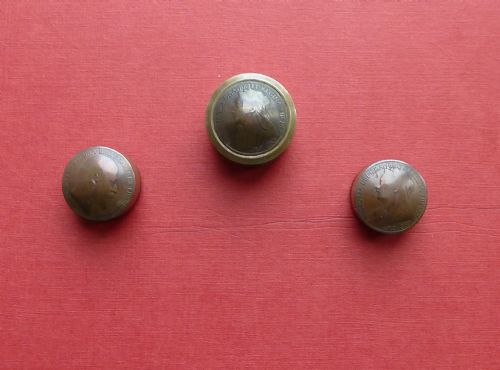
Silver and silver gilt pieces predominate, alongside horn, fruitwood, tortoiseshell and brass examples designed to be carried on the person.
How They Were Made
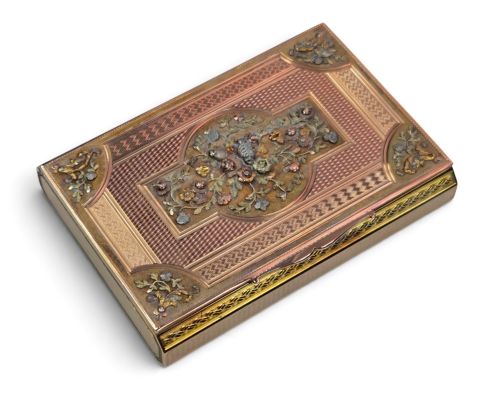
Makers utilised sterling silver and 18ct gold, often applying silver gilt to the interior surfaces to protect the metal from corrosive contents.
Organic materials such as horn, fruitwood, ebony and coquilla nut were turned, carved and frequently inlaid with bone, tortoise-shell or faceted gemstones.
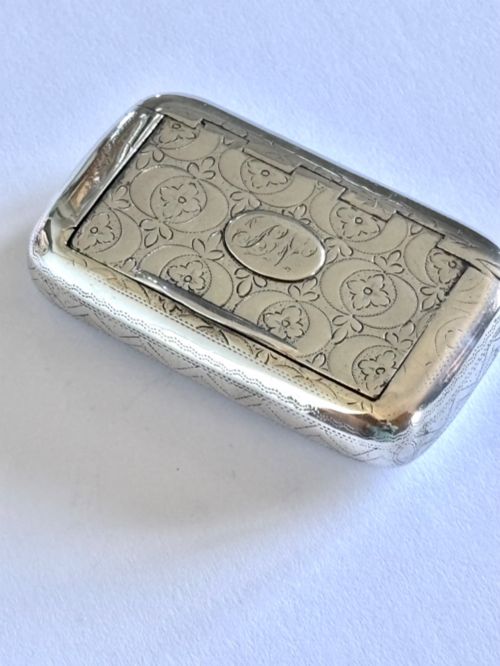
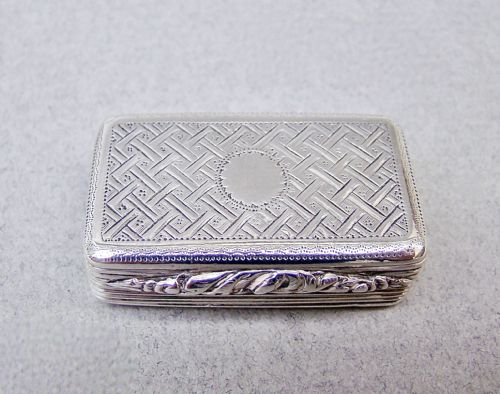
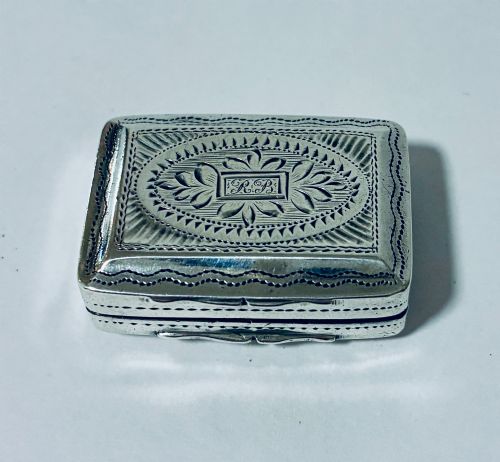
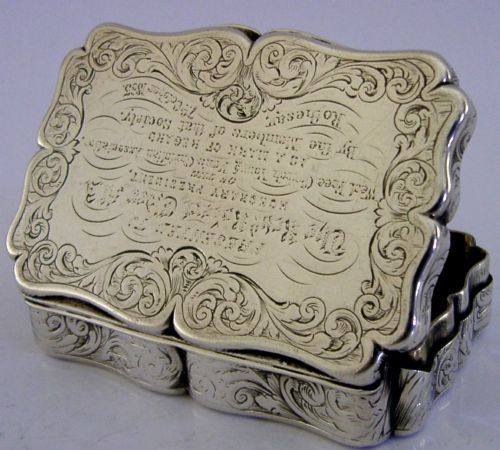
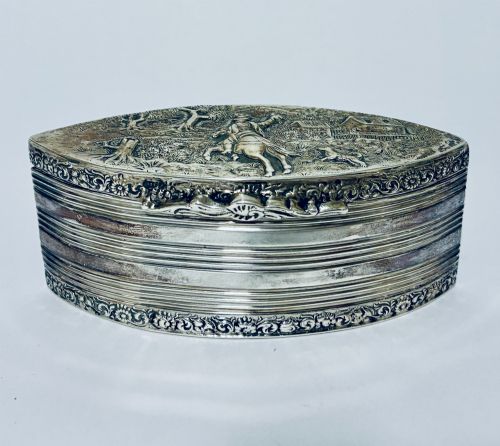
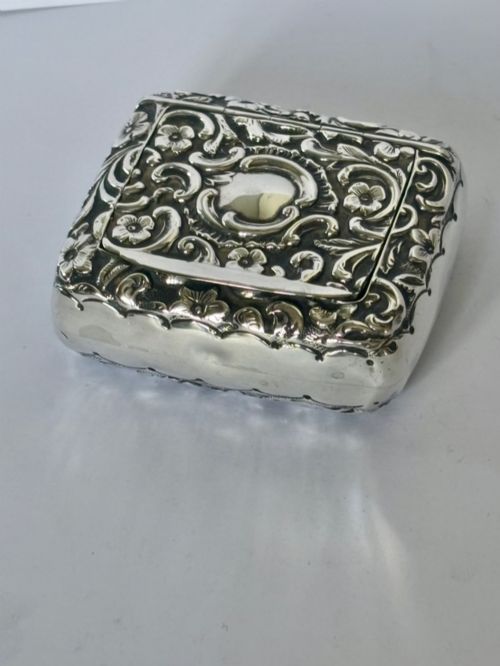
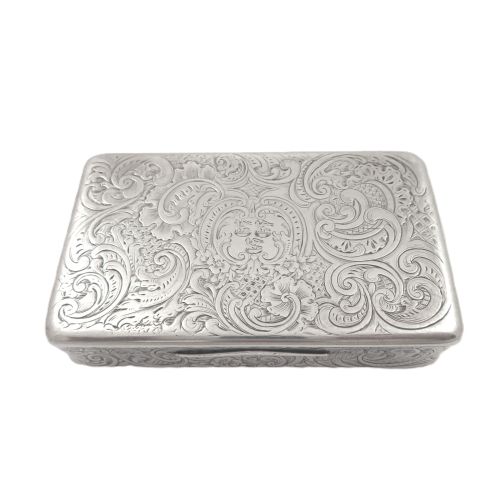
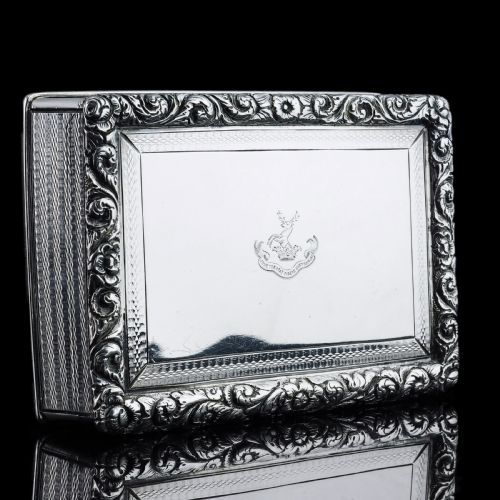
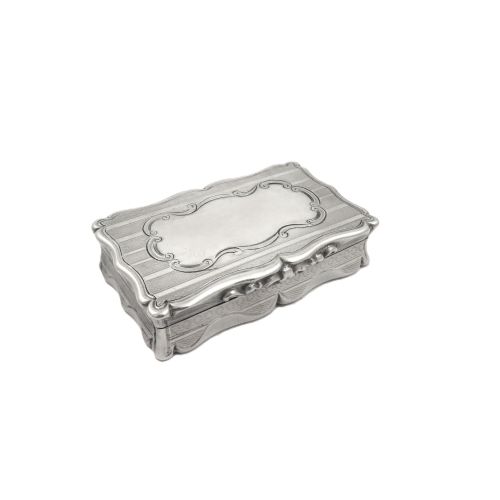
Metal boxes display techniques including engine turning, bright cut engraving, floral chasing and embossed decoration executed by regional silversmiths.
Listings span the Georgian, Victorian and Edwardian periods, utilising sterling silver, gold, brass, horn, tortoiseshell and fruitwood.
What Varies in Quality
The standard of a pocket trinket box depends on the crispness of the chasing, the precision of the hinge alignment and the integrity of any applied inlay.
Makers marked pieces with hallmarks and maker stamps that distinguish standard commercial output from the work of recognised specialists.
Internal gilding preservation and the depth of hand engraving separate ordinary containers from pieces finished with pictorial scenes or bespoke heraldic crests.
Henry Matthews·Thomas Shaw·Edward Smith·Joseph Willmore·Samuel Pemberton·John Bettridge
The Pocket Trinket Box Glossary
- Vinaigrette
- A small ornamental box featuring an internal pierced grille, designed to hold a sponge soaked in aromatic vinegar.
- Silver gilt
- Sterling silver that has been coated with a thin layer of gold on its surface, usually applied to the interior.
- Engine turned
- A geometric pattern of fine lines mechanically engraved into the metal surface of a box.
- Treen
- Small handmade wooden objects, including fruitwood and ebony boxes formed by turning or carving.
- Bright cut engraving
- A technique using faceted cutting tools to create shallow, light-reflecting grooves in silver.
Pocket Trinket Box: Frequently Asked Questions
What were pocket trinket boxes used for?
These small containers were carried in pockets to hold dry snuff, medicinal pills or scented vinegars for personal refreshment.
Their compact scale allowed gentlemen and ladies to keep daily necessities close at hand throughout the Georgian and Victorian eras.
How do I identify a Georgian silver box?
Georgian silver boxes often feature hallmarks indicating London, Birmingham or provincial assay offices alongside date letters from the eighteenth or early nineteenth century.
Stylistic markers include bright cut engraving, floral chased borders and heavy cast mounts typical of the period.
Are wooden snuff boxes durable?
Wooden boxes shaped from fruitwood, ebony or coquilla nut withstand normal handling when kept away from excessive moisture.
The organic materials require gentle care to protect delicate bone inlay and fitted tortoiseshell surfaces.
What is the difference between a vinaigrette and a snuff box?
A snuff box has a solid interior designed to hold loose tobacco powder for inhalation.
A vinaigrette contains a hinged, pierced internal grille beneath the lid to house a fragrant sponge.