



Pocket Tobacco Case
A pocket tobacco case carries the personal smoke of another era in silver, tortoise-shell, or leather, fitting neatly into a waistcoat.
Pocket Tobacco Case
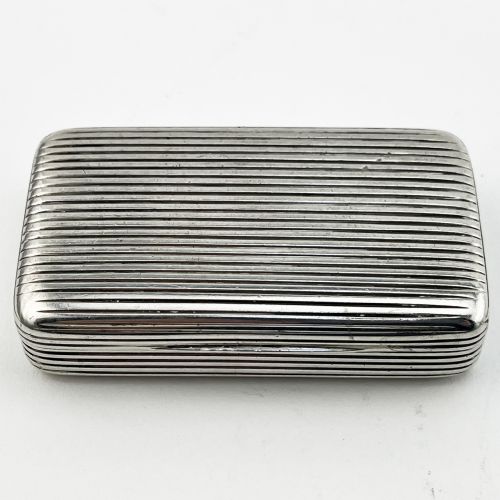
A pocket tobacco case encompasses personal containers for smoking materials, including snuff boxes, cigar cases, and cigarette cases from periods such as the Georgian, Victorian, and Edwardian eras. These portable pieces served smokers who carried their tobacco, cheroots, or snuff on the move, reflecting the personal habits of past centuries.
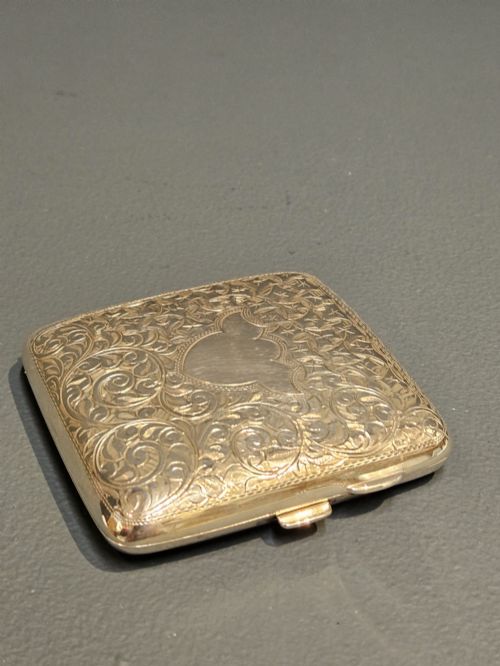
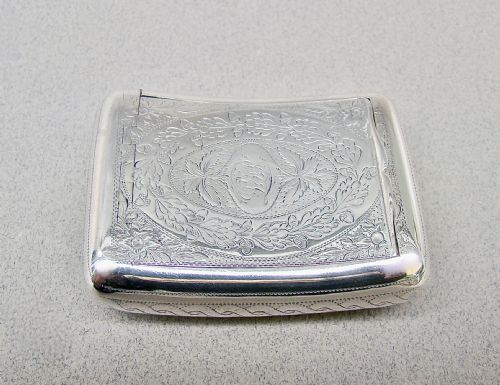
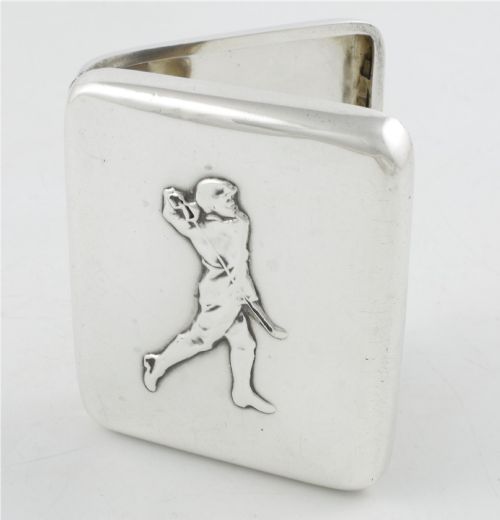
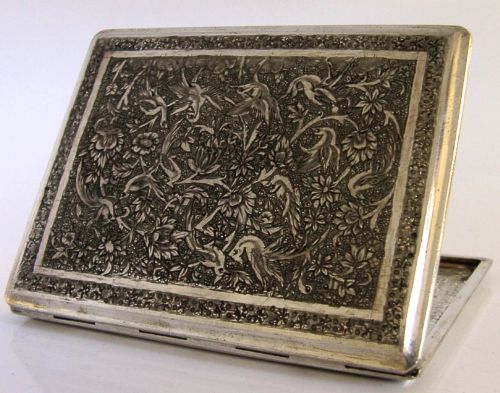
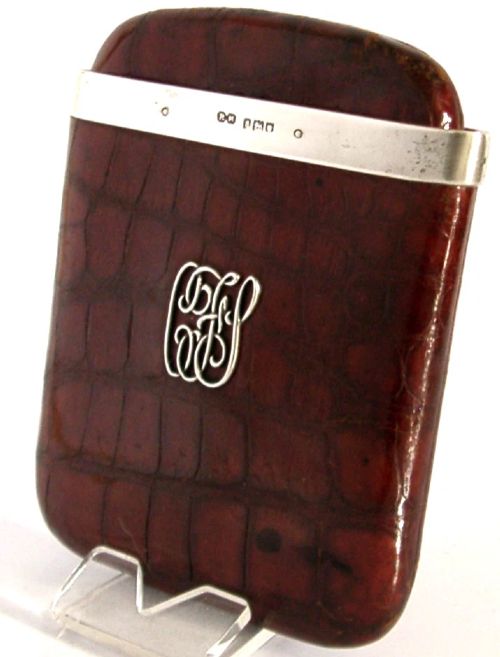
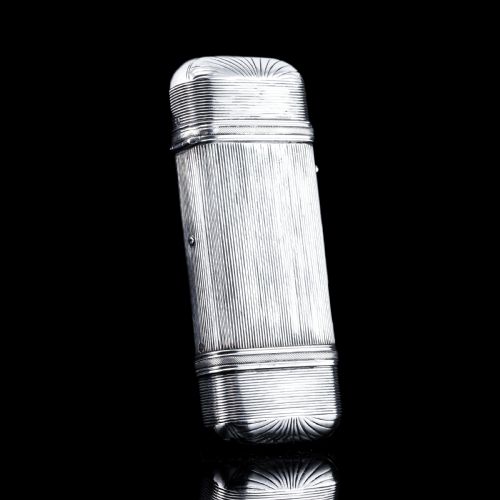
The versions most commonly met on this page span the nineteenth and early twentieth centuries, fashioned primarily in silver and occasionally in organic materials like tortoise-shell or crocodile skin. Their forms range from curved silver shells designed to follow the line of a pocket to rigid tubes and double compartments that also housed vestas.
Materials and Making
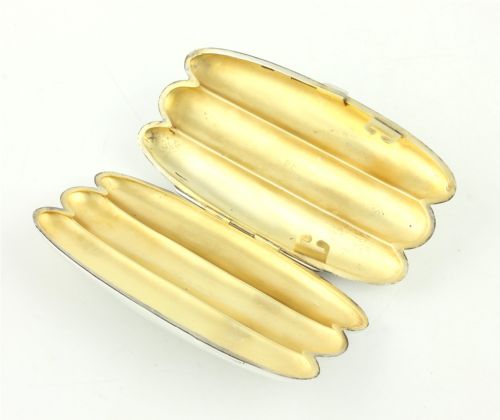
Makers utilised sterling silver and solid silver for protective rigidity, employing techniques such as engine turning, heavy casting, and fine engraving to decorate the exterior surfaces. These metal cases often featured gilt interiors or compartments tailored to hold specific lengths of cigars, cigarettes, or loose tobacco securely.
Organic materials like tortoise-shell and crocodile leather provided alternative textures, frequently paired with silver mounts, hinges, and clasps. Wood was also carved into small boxes, demonstrating the variety of craft traditions applied to personal smoking gear across English, Dutch, Ottoman, and Russian workshops.
Pocket Tobacco Case Retail Price Guide 2026
Typical asking prices for pocket tobacco case among the pieces listed under this phrase on Sellingantiques today, from the lower quarter to the upper quarter. They describe what is for sale here now, not the wider market.
Listings span multiple origins, including English, Dutch, Ottoman, and Russian workshops, highlighting diverse regional styles of smoking accessories.
Judging Quality
Quality rests upon the crispness of the chasing, the precision of the engine-turning, and the integrity of the hinges and closures. A superior piece maintains a snug, secure fit between lid and base without looseness.
The weight of the silver and the subtlety of internal gilding or fitted divisions separate standard utility items from finer workshop output. Maker marks and clear hallmarks also contribute to the standing of an individual piece.
Zimmerman·The Sampson Mordan·Edward Edwards·Matthew Linwood
The Pocket Tobacco Case Glossary
- Engine turned
- A method of mechanical decoration that cuts geometric patterns into metal surfaces using a lathe. This technique provides texture and catches the light on silver cases.
- Vesta
- A small box or compartment designed to hold matches, frequently integrated into combination smoking cases alongside sections for cigars or snuff.
- Silver gilt
- Silver that has been coated with a thin layer of gold on its interior or exterior surfaces. This finish helps protect the metal from the corrosive oils of tobacco.
- Cheroot
- A cylindrical cigar with cut ends, popular in the nineteenth century. Cases made specifically for them are often narrower and rigid.
Pocket Tobacco Case: Frequently Asked Questions
What fits inside a pocket tobacco case?
These containers held loose snuff, rolled cigars, cheroots, or cigarettes depending on the specific internal depth and shape of the piece.
Many examples feature internal straps or rigid divisions to keep the contents from shifting during carriage.
How do I tell a cigar case from a cigarette case?
Cigar and cheroot cases tend to be longer, narrower, or tubular, often built with curved profiles to accommodate thicker rolls of tobacco.
Cigarette cases are typically flatter and wider, designed to hold rows of slender paper-wrapped cigarettes.
Were these cases used daily?
Most pieces show signs of handling through minor surface wear, indicating they were carried regularly in pockets or waistcoats.
Silver and leather developed patinas over decades of routine use by their original owners.
How do I clean a silver tobacco case?
Gentle dusting with a soft cloth preserves the historic surface without stripping away the subtle details of engraving or engine turning.
Harsh chemical dips should be avoided, particularly on pieces with tortoise-shell panels, gilt interiors, or leather elements.