
Plinth Base Tallboy
A plinth base tallboy is a sturdy, vertical chest of drawers offering serious storage with a grounded, architectural footprint.
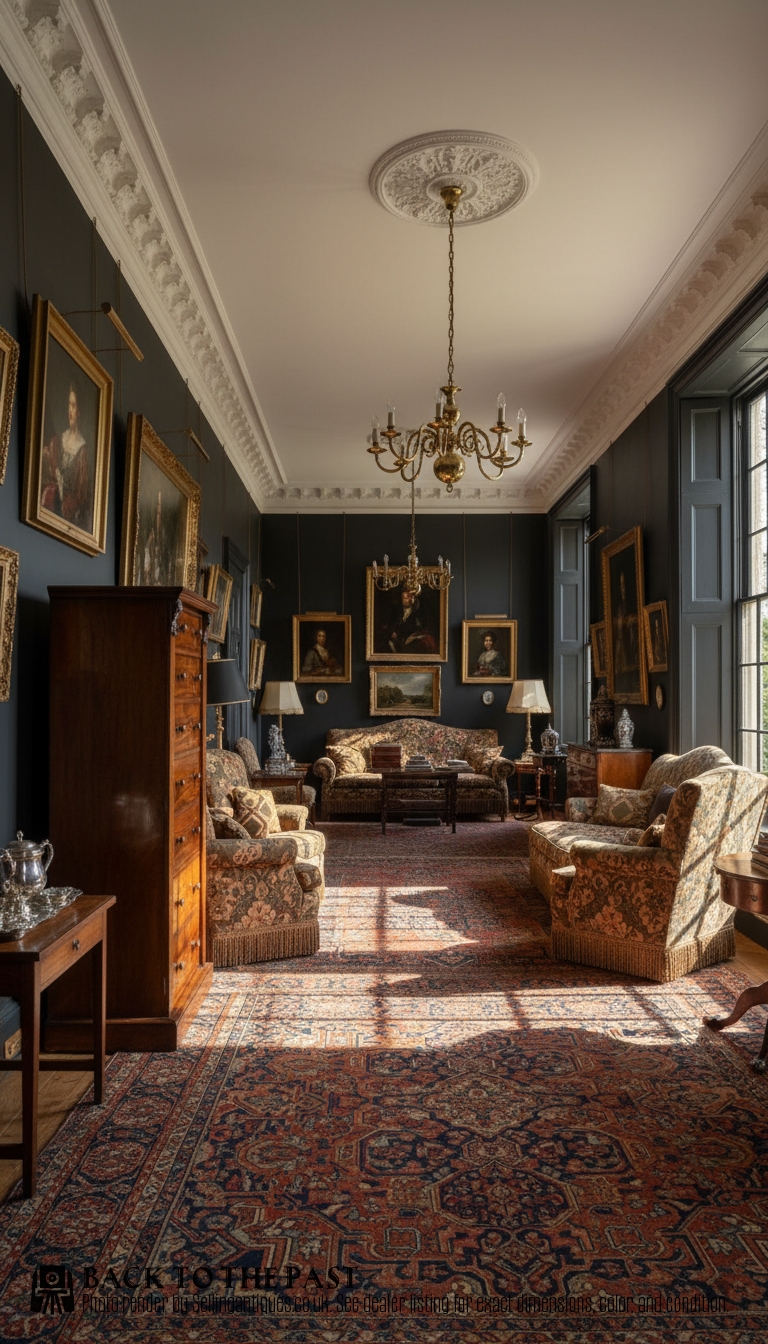
Plinth Base Tallboy
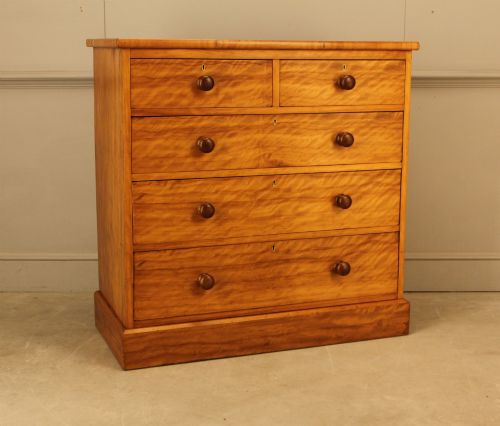
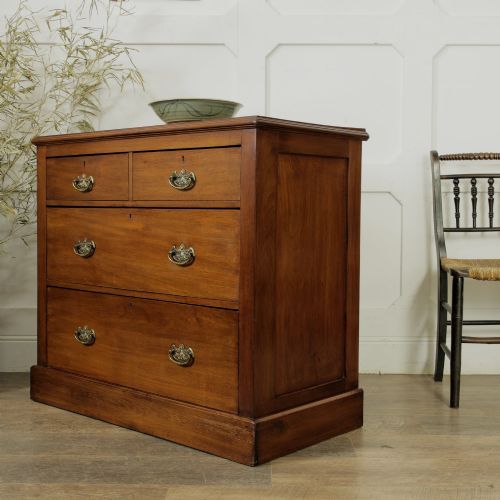
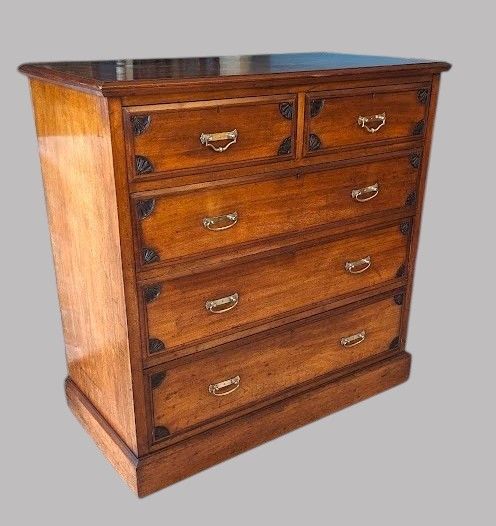
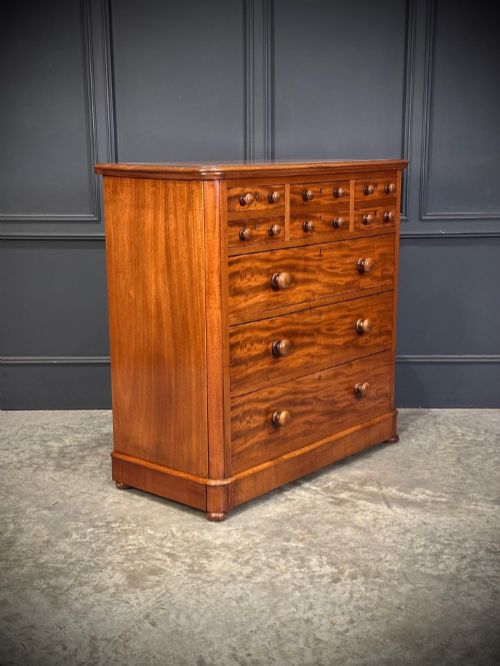
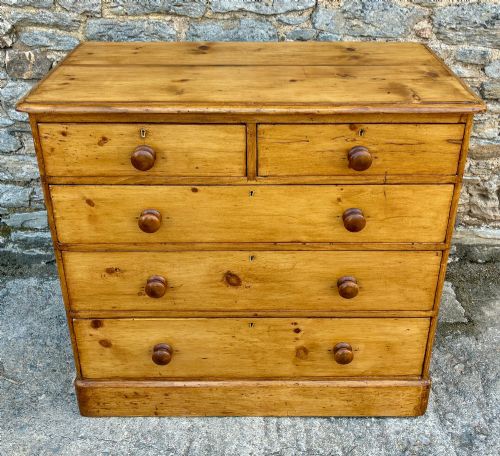
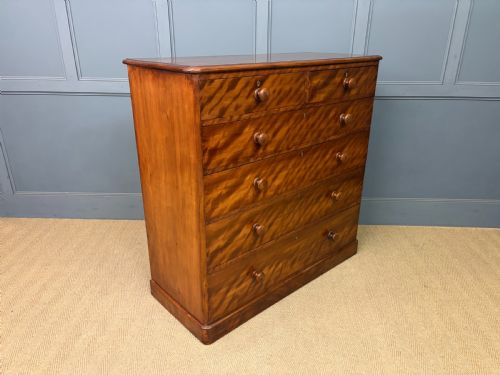
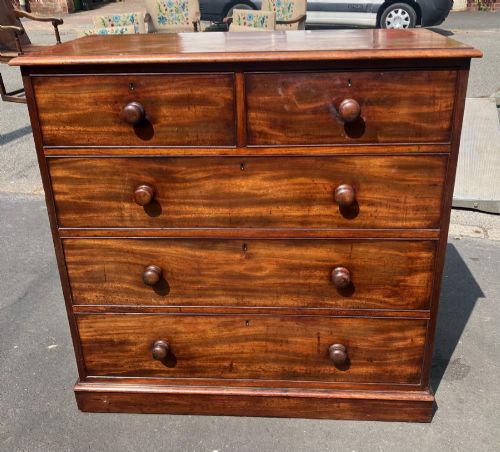
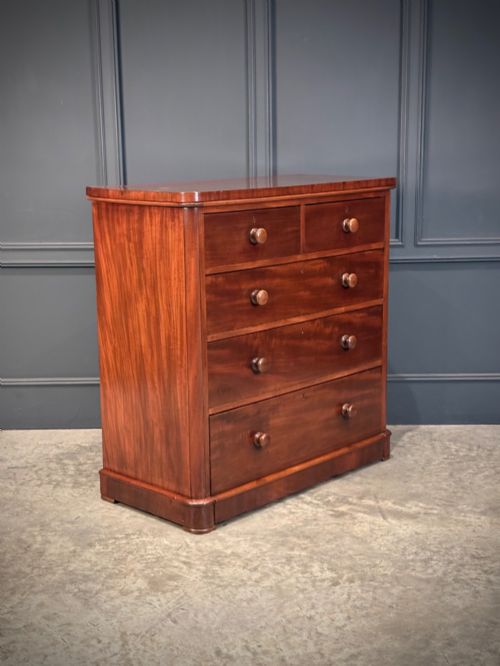
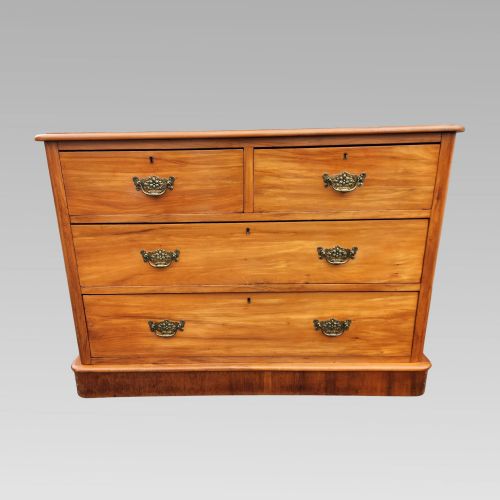
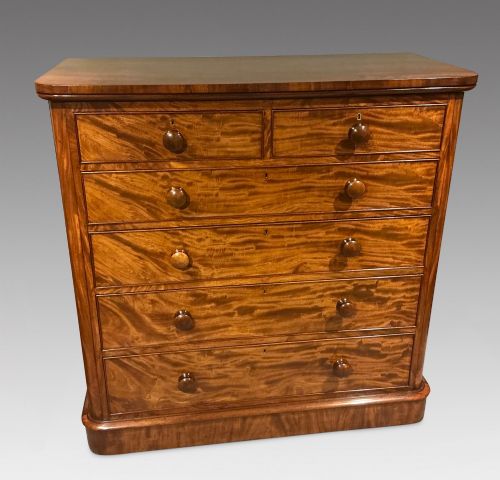
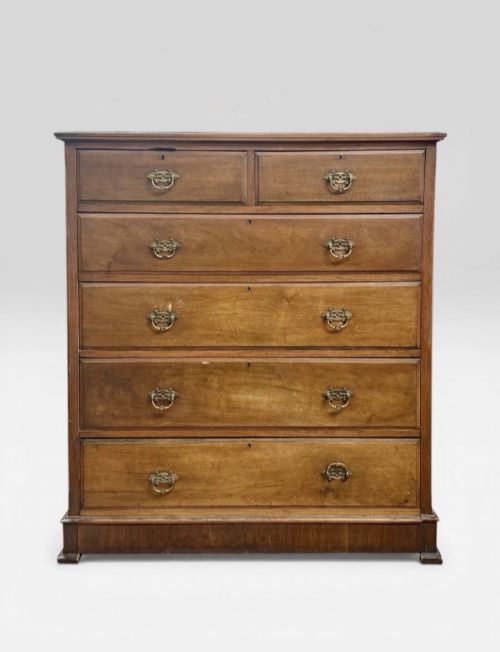
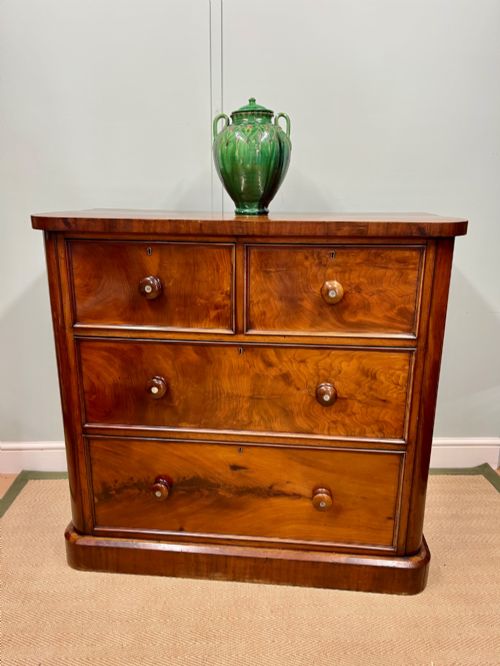
When you search for a plinth base tallboy, you are looking at tall storage chests of drawers designed to maximise vertical capacity without dominating floor space. The examples on this page are overwhelmingly Victorian and Edwardian pieces, stretching from the William IV period through to the early twentieth century.
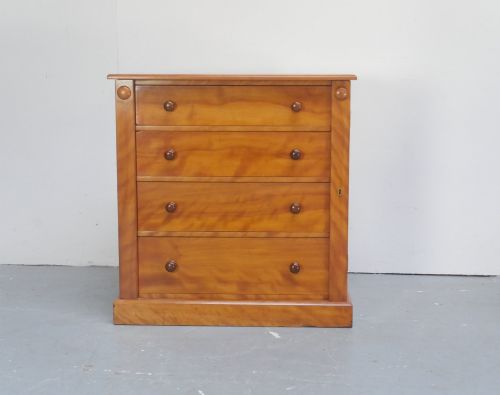
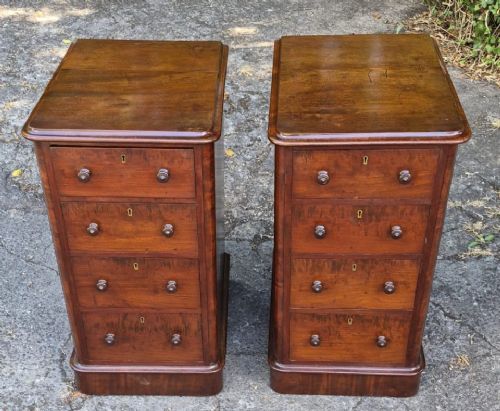
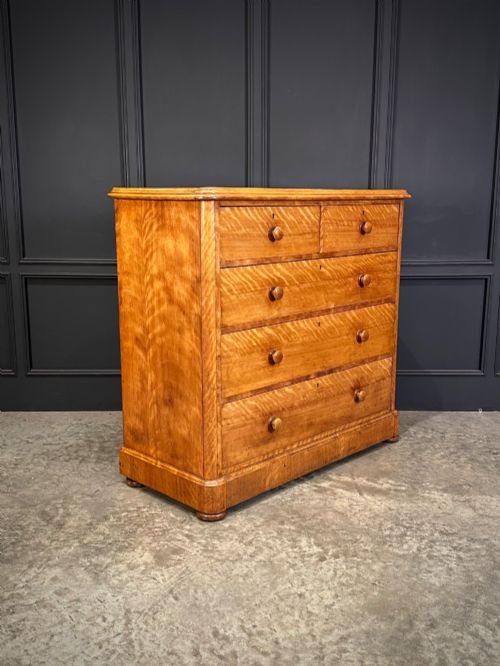
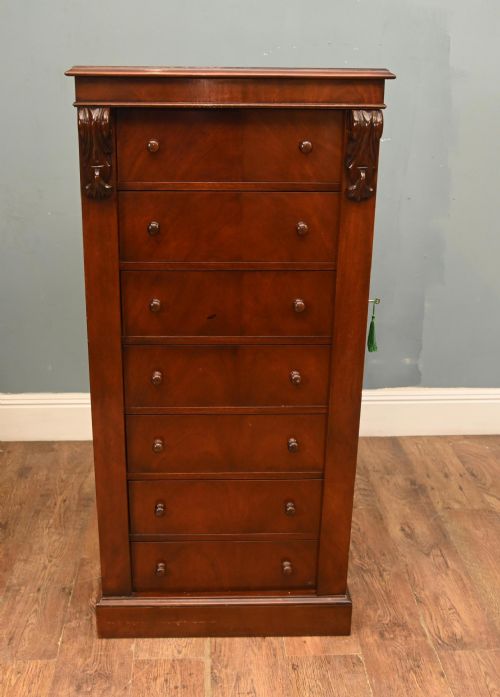
Most entries in this category take the form of chests of drawers or Wellington chests, standing on solid plinth foundations rather than conventional legs. You will regularly find mahogany, flame mahogany veneer, and satinwood constructions, alongside occasional pine and oak variants.
Materials and construction methods
Cabinet makers built these pieces using solid timbers like mahogany, oak, and pine, frequently applying figured veneers such as flame mahogany and satinwood to the primary surfaces for visual depth. Drawer interiors often relied on secondary woods like cedar, constructed with traditional joinery to endure daily use.
Hardware such as brass handles and locking mechanisms were integrated into the design, particularly on secure Wellington chests that featured side locking bars. The plinth base itself provided a heavy, stable foundation that anchored the tall structure securely to the floor.
Listings feature woods including mahogany, flame mahogany veneer, satinwood, pine, oak, chestnut, and cedar.
Distinguishing quality in tall chests
The degree of refinement in timber selection separates standard storage from exceptional cabinet work, particularly where book-matched flame mahogany veneers or finely figured satinwood are present. Subtle details such as inlaid stringing, original brass hardware, and clean interior secondary woods elevate a piece.
Structural integrity also dictates worth, as the weight of a tall chest requires a true, unwarped plinth base to keep the drawer tiers running smoothly. Pieces bearing documented maker stamps demonstrate higher workshop standards than anonymous vernacular equivalents.
Heal & Son·Mawer & Stephenson
The Plinth Base Tallboy Glossary
- Tallboy
- A tall chest of drawers, often comprising a chest stacked upon another or built as a single high vertical unit to save floor space.
- Plinth base
- A heavy, flat architectural block or box foundation replacing traditional legs, providing a solid ground-level platform for the cabinet.
- Wellington chest
- A narrow vertical chest of seven drawers secured by a hinged vertical locking stile on one side, popular in the nineteenth century.
- Flame mahogany veneer
- A sliced timber veneer displaying a distinct, rippling flame pattern derived from the fork of the mahogany tree.
- Satinwood
- A dense, hard timber with a natural golden sheen and smooth texture, frequently utilised for high-end decorative nineteenth-century furniture.
Plinth Base Tallboy: Frequently Asked Questions
How do I use a tallboy in a modern bedroom?
A tall vertical chest provides deep vertical storage capacity while occupying minimal floor space, making it ideal for smaller rooms where horizontal furniture will not fit.
Use the upper drawers for daily items and the lower drawers for bulkier linens, keeping the flat top clear or styled with simple decor.
What is the difference between a tallboy and a Wellington chest?
While both offer vertical storage, a traditional tallboy usually consists of stacked drawer sections, whereas a Wellington chest is a specific narrow form featuring a locking side bar.
Wellington chests typically contain a sequence of seven shallow drawers designed to hold folded shirts or documents securely.
How do I date a nineteenth-century chest of drawers?
Dating relies on examining secondary woods, handle styles, and construction techniques like dovetailing inside the drawer boxes.
Heavier plinth foundations and timber choices like flame mahogany or satinwood generally point toward the Victorian and Edwardian eras represented here.
Are plinth base chests stable on uneven floors?
The flat, solid footprint of a plinth base distributes the weight evenly across the floor surface, offering steady support for high structures.
Because the base sits directly on the ground, small shims may be needed underneath if your floorboards slope significantly.