


Plinth Base Office Desk
A plinth base office desk is a substantial Victorian workspace built with solid pedestals, offering practical surface area and deep drawer storage.
Plinth Base Office Desk
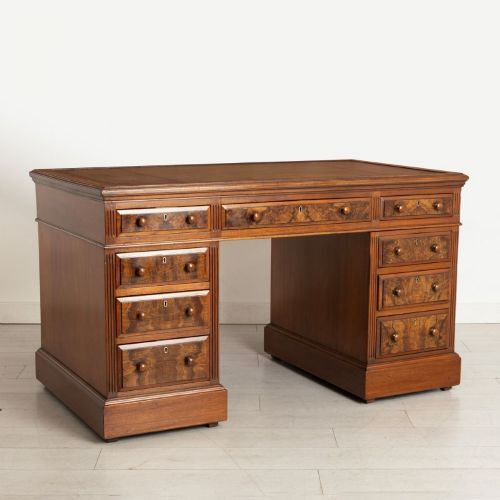
A plinth base office desk is primarily a nineteenth-century pedestal form, built to provide a heavy, grounded workspace with multiple drawers. The pieces seen here date from the mid to late Victorian era, spanning the decades between eighteen fifty and eighteen ninety.
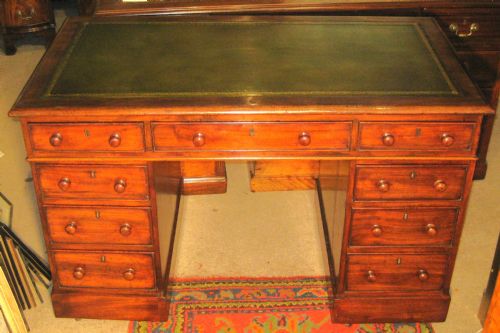
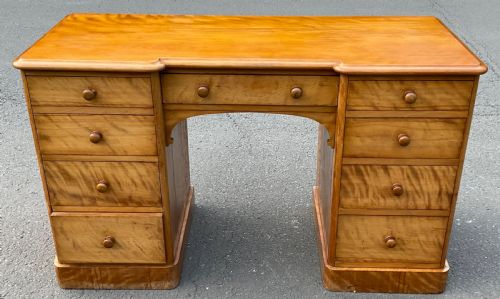
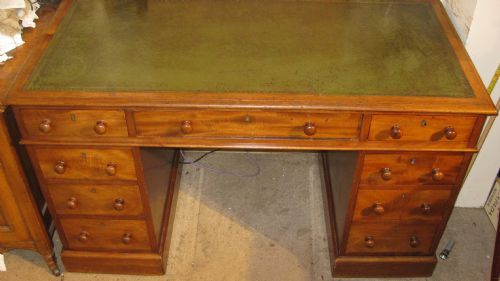
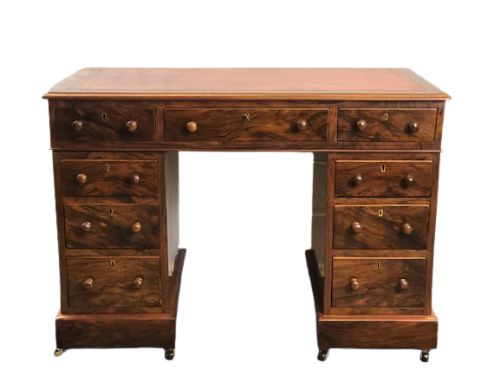
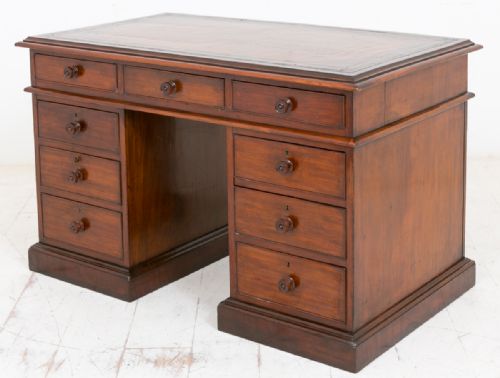
Most examples encountered on this page are constructed as pedestal desks or kneehole writing tables, finished in timbers such as mahogany, walnut, burr walnut, oak, and satin birch. These large freestanding items typically feature banks of drawers flanking a central recess.
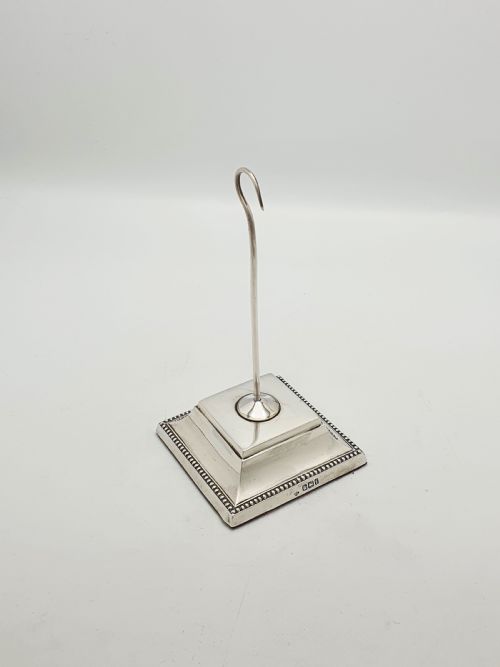
Buyers also encounter smaller desk accessories with plinth bases, such as receipt hook stands mounted on sterling silver bases. However, the dominant form remains the full-size Victorian pedestal desk designed for a study or office.
How they were made
Cabinet makers utilised dense hardwoods like mahogany, walnut, and oak to build the structural carcase and drawer linings of each plinth base office desk. Burr walnut and satin birch were selected for decorative veneering on drawer fronts and panels, adding rich grain patterns.
Working surfaces were frequently inset with tooled leather writing skivers, bordered by blind tooling or gilt decoration. Brass handles, escutcheons, and hinges were fitted to drawers and cupboard doors, providing both function and contrast against the dark timber.
Listings feature nineteenth-century pedestal desks and accessories in mahogany, walnut, oak, and satin birch.
What varies in quality
The choice of timber creates a clear distinction across the range, with figured burr walnut and golden mahogany achieving a more decorative appearance than standard oak or plain mahogany. Figured veneers require precise matching across drawer fronts, which elevates the visual harmony of the piece.
Construction methods and maker attribution also influence the character of each desk, particularly when workshop stamps or London addresses are present on the drawer carcase. The refinement of the brass hardware and the crispness of the cockbeading around the drawers reflect the original maker's skill.
Deighton and Dunthorne Holborn London
The Plinth Base Office Desk Glossary
- Pedestal desk
- A freestanding office desk comprising two banks of drawers that support a large top surface. This configuration creates a central kneehole for the seated user.
- Plinth base
- A heavy, solid box-like foundation running along the floor beneath the pedestals. It anchors the furniture firmly and protects the lower woodwork from wear.
- Burr walnut
- A highly prized timber veneer taken from the wart-like growths on walnut trees. It displays swirling, organic patterns that make each drawer front unique.
- Kneehole
- The central recess beneath the desktop where the user sits. It is often flanked by pedestals containing multiple graduating drawers.
- Cockbeading
- A narrow, rounded wooden moulding projecting around the edges of drawer fronts. It protects the drawer edges from chipping and frames the facade.
Plinth Base Office Desk: Frequently Asked Questions
What is a plinth base office desk?
A plinth base office desk is a nineteenth-century pedestal form that rests directly on a solid timber platform rather than on legs or castors. This construction gives the furniture a heavy, grounded appearance and encloses the base of the pedestals.
Most examples seen on this page originate from the Victorian era and incorporate multiple banks of drawers flanking a central seating recess. The solid plinth design was chosen to provide maximum stability and substantial storage capacity for heavy ledgers and papers.
How do I identify a Victorian desk?
Victorian pedestal desks are identified by their dense hardwood construction, typically mahogany, walnut, or oak, combined with traditional hand-cut dovetail joints inside the drawers. The presence of a solid plinth base rather than open legs is characteristic of the period's preference for robust, substantial office furniture.
Listing dates and stylistic markers such as tooled leather writing surfaces and brass drawer pulls further confirm a nineteenth-century origin. Maker signatures or stamps inside the drawer linings can sometimes narrow down the exact decade and workshop.
Which timbers were used for these desks?
Cabinet makers relied primarily on mahogany, walnut, and oak to build the main structure and drawer carcases of these nineteenth-century workspaces. These dense hardwoods offered the necessary durability and weight for daily use in a Victorian study or office.
Finer decorative elements involved burr walnut and satin birch veneers applied to drawer fronts for visual contrast. Details like sterling silver and brass were occasionally incorporated into smaller desk accessories sharing the same architectural base.
How should I care for a vintage desk?
Maintain the timber by keeping the desk away from direct heat sources and strong sunlight, which can dry out the wood and fade decorative veneers. Regular dusting with a dry cloth and occasional application of appropriate beeswax help preserve the natural lustre of the polished surface.
Protect the inset leather writing surface from sharp instruments and moisture by using blotters or pads. Avoid harsh chemical cleaners that can damage the antique polish and the gilt tooling around the edges of the leather.