


Plinth Base Cupboard
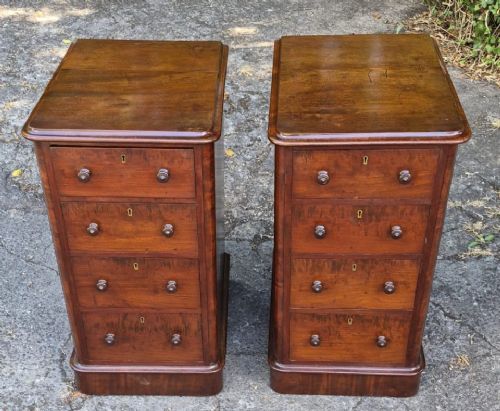
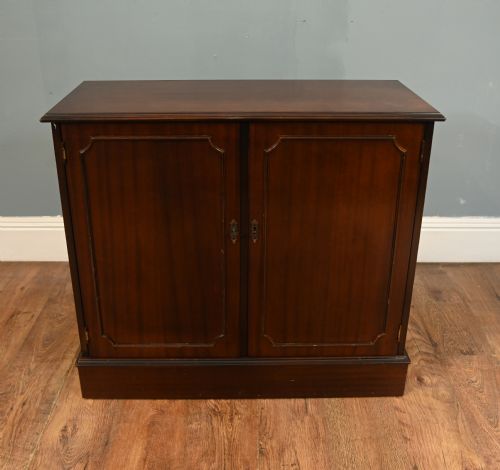
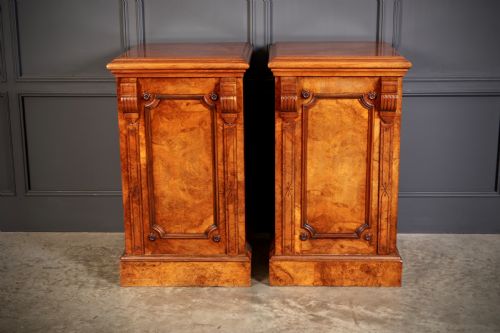
These plinth base cupboard examples are solid storage pieces built low to the floor, offering sturdy utility and rich timber surfaces for the modern interior.
Plinth Base Cupboard
A plinth base cupboard sits directly on a flat wooden platform rather than on traditional legs or feet, creating a grounded silhouette. These pieces appear across the nineteenth century and the Georgian era, fashioned in forms such as bedside chests, pedestal cabinets, and larger sideboards.
The most common version met on this page is the Victorian mahogany bedside cabinet or small chest, often standing with a single door or small drawers above a cupboard section. Alongside these, larger side cabinets and sideboards emerge in rosewood, walnut, and burr walnut.
Origins span English workshops of the nineteenth century back into the Georgian period, utilising timbers selected for deep grain patterns and rich natural colour. The scale ranges from compact bedside furniture to substantial multi-door sideboards suited to dining spaces.
Materials and construction
Cabinet makers utilised dense hardwoods like mahogany, rosewood, and walnut, often applying figured walnut or burr walnut veneers to display dramatic grain movement across the main body. Solid timber frames support the internal shelving and structural weight, while brass fixtures provide functional hardware.
Surface finishing relies on hand-polished techniques that seal the timber while highlighting the natural depth of the grain. The plinth construction demands precise joinery to ensure the base sits level and supports the upper cabinet without distortion.
Some nineteenth-century bedside chests cleverly concealed chamber pots behind heavy panelled doors before plumbing moved indoors.
Judging the quality
Quality rests on the selection of timber and the precision of the veneer work, where finer pieces display book-matched grain patterns across doors and drawer fronts. The integrity of the plinth base and the smoothness of the door alignment indicate the skill of the original maker.
Proportion and restraint distinguish superior examples from plain utility items, particularly in pieces featuring subtle mouldings or integrated brass elements. The condition of the original polished surface and the tightness of the carcass joints reveal how carefully the piece has been maintained.
Holland & Sons
The Plinth Base Cupboard Glossary
- Plinth base
- A flat, solid block or platform forming the lowest part of a cabinet, lifting the body slightly off the floor. This construction style replaces traditional legs and provides a heavy, stable foundation.
- Mahogany
- A durable tropical hardwood prized for its reddish-brown colour and fine grain. It served as the primary timber for high-quality nineteenth-century cabinet making.
- Pedestal cabinet
- A freestanding piece of furniture built on a vertical column or plinth format, often fitted with a single door enclosing interior shelves. These compact units served various rooms including bedrooms and reception spaces.
Plinth Base Cupboard: Frequently Asked Questions
What is a plinth base cupboard?
A plinth base cupboard is a low storage unit that rests on a solid wooden platform rather than legs. These items include bedside cabinets, side cabinets, and sideboards built primarily in mahogany and walnut.
Such furniture offers enclosed storage with a heavy, grounded silhouette that suits traditional and contemporary interiors alike.
How do I date a Victorian mahogany cupboard?
Dating relies on timber selection, construction methods, and hardware styling typical of the nineteenth century. Victorian pieces often combine solid mahogany carcasses with hand-finished surfaces.
Examining the interior construction and drawer dovetails helps narrow the period between the early decades and the late nineteenth century.
Where were bedside cabinets used?
Bedside cabinets and chests served domestic bedrooms as convenient storage for night-time essentials and personal items. Their compact proportions allowed them to sit neatly beside period bed frames.
Today, these versatile pieces function equally well as small side tables in living rooms or hallways.
What woods were used for these cabinets?
Cabinet makers predominantly used mahogany, walnut, and rosewood for their durability and rich grain patterns. Figured walnut and burr walnut veneers appeared on higher-end pieces to create decorative surfaces.
Secondary timbers formed the internal shelves and drawer linings, ensuring structural stability across the cabinet body.