

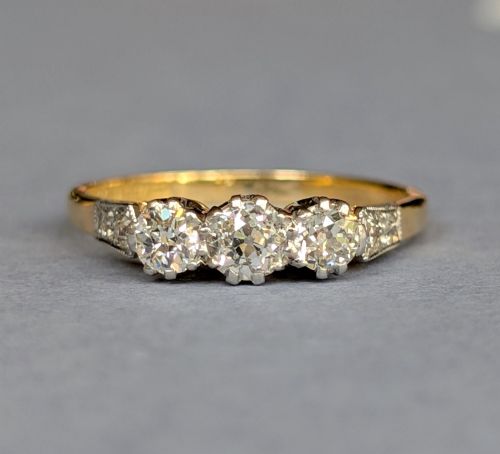


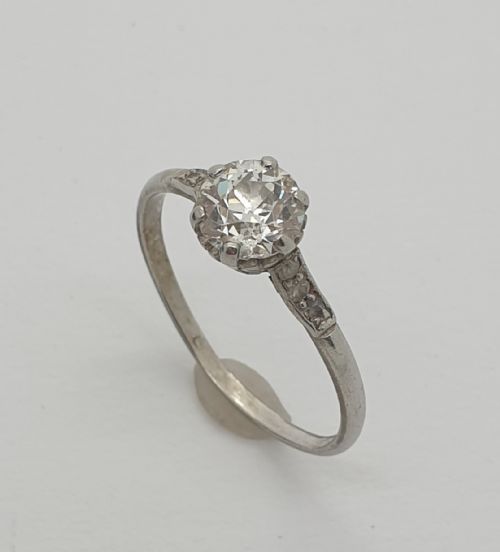

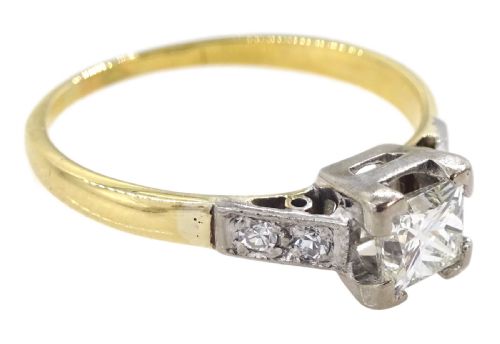

Platinum Setting Gold Band Ring
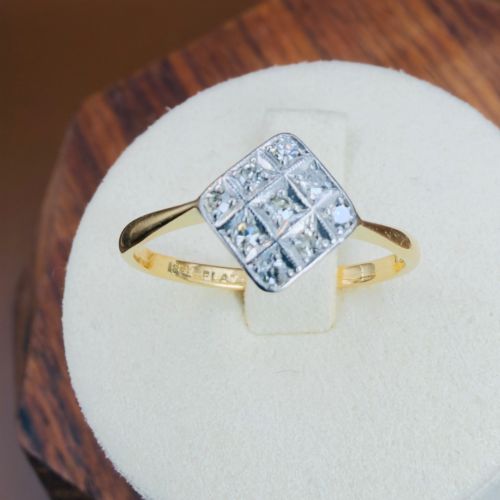
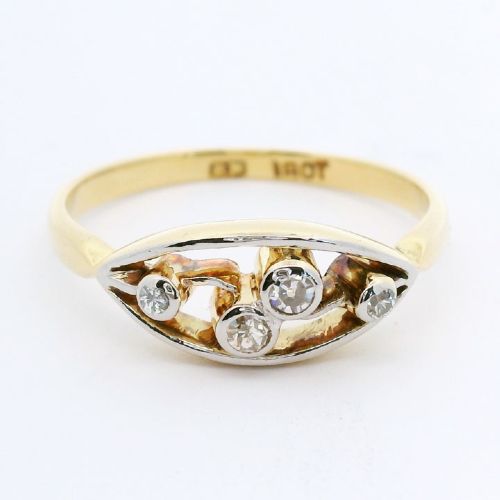
These platinum setting gold band ring examples combine white metal settings with yellow or white gold shanks, spanning Edwardian, Art Deco, and mid-century periods.
Platinum Setting Gold Band Ring
A platinum setting gold band ring pairs a durable white metal claw or bezel top with an 18ct or 9ct gold shank. When you search for a platinum setting gold band ring, you meet pieces designed to showcase diamonds securely while maintaining a warm yellow or white gold band.
The selections here span the Edwardian era, the 1910s and 1920s, Art Deco designs, the 1940s, and 1960s contemporary fine jewellery. The most common survivals on this page are Art Deco and 1930s diamond rings featuring old cut, transitional, or brilliant cut stones.
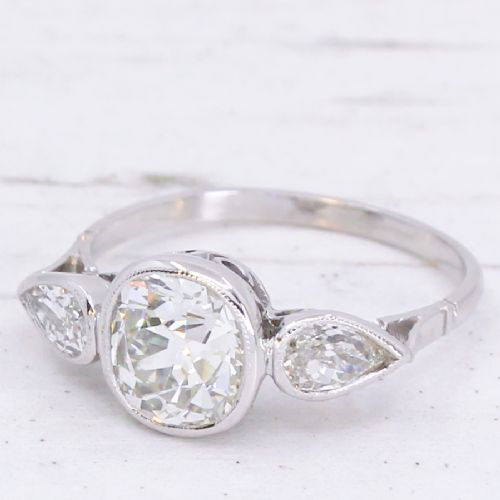
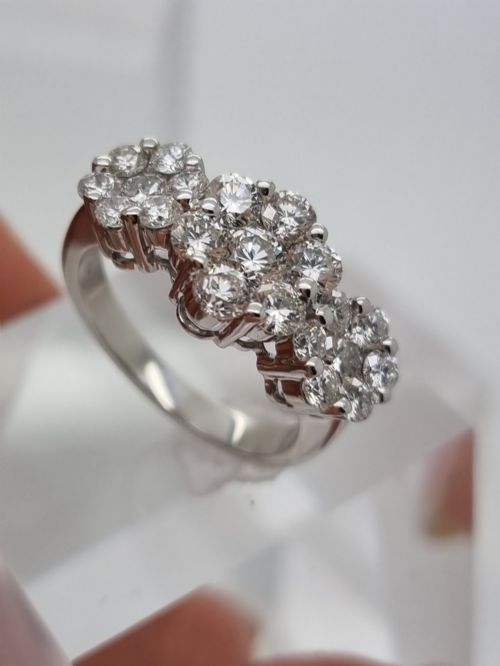
Configurations range from single stone solitaires and three stone trilogies to five stone rows, cluster settings, and full eternity bands holding diamonds or a natural ruby.
Materials and construction
Goldsmiths utilised a combination of platinum for the upper setting and gold for the band to provide both visual contrast and structural strength. Platinum allowed for fine, secure claw work around diamonds without the risk of tarnishing or splitting that softer metals might face.
The shanks are cast or fabricated from 18ct yellow gold, 18ct white gold, or 9ct gold, joined to platinum basket settings or box collets. Stones such as old cut diamonds are held by precise prongs or pave settings as seen in Edwardian French tank styles.
Platinum Setting Gold Band Ring Retail Price Guide 2026
Typical asking prices for platinum setting gold band ring among the pieces listed under this phrase on Sellingantiques today, from the lower quarter to the upper quarter. They describe what is for sale here now, not the wider market.
Listings feature rings from the Edwardian era, 1910, 1920, 1930, 1940, and 1960, utilising platinum, 18ct gold, and 9ct gold.
What separates the best from the rest
Quality rests in the crispness of the platinum basket work and the secure seating of the diamonds. Superior examples display neat, minimal metal work around the stones, allowing maximum light reflection through old cut or transitional diamonds.
The integrity of the join between the platinum top and the gold band determines the longevity of the piece. Well-preserved pieces retain distinct hallmarks and firm claw settings that have not been thinned down by excessive polishing over the decades.
The Platinum Setting Gold Band Ring Glossary
- Platinum setting
- A precious white metal head fused or soldered to a gold ring shank to hold diamonds securely. It provides a bright reflective surface that enhances the appearance of old cut stones.
- Old cut diamond
- A hand-faceted diamond cut before modern automated standards, typically featuring a smaller table and a higher crown. These stones exhibit distinct facet patterns under magnification.
- Trilogy ring
- A ring set with three stones, often signifying past, present, and future. In this selection, they appear frequently with platinum settings on gold bands.
- Pave set
- A mounting technique where small gems are set closely together with minimal visible metal. This creates a continuous surface of sparkling stones.
- Collet
- The collar or metal rim that holds a gemstone in place within the ring mount. It forms the direct housing for the diamond before the claws are shaped over the girdle.
Platinum Setting Gold Band Ring: Frequently Asked Questions
What is a platinum setting gold band ring?
It is a hybrid ring construction where the upper portion holding the gemstones is forged from platinum, while the lower shank is made from yellow or white gold. This method became popular because platinum offered superior strength for securing diamonds while gold provided a warm, traditional band.
The pieces on this page primarily date from the Edwardian period through to the 1960s, encompassing Art Deco geometric designs and mid-century modern styles.
How do I date a platinum and gold ring?
Dating relies on stylistic clues such as the geometric lines of Art Deco pieces, the delicate filigree of Edwardian examples, or the heavier profile of 1940s Retro and 1960s rings. Stone cuts also offer guidance, as old mine and old European cuts generally point to the early twentieth century.
Assay marks and maker stamps inside the gold band provide official verification of the period when present.
Are these rings suitable for daily wear?
Most antique and vintage rings with platinum settings and gold bands can be worn daily if treated with care. Platinum is exceptionally durable for holding stones, though the gold shank may require occasional inspection by a jeweller for thinning.
Removing the ring during heavy manual work or swimming preserves the structural integrity of the claws and the band.
What diamond cuts will I find on this page?
The listings feature a variety of historic diamond cuts, including old cushion cuts, old cut diamonds, transitional cuts, and brilliant cut stones. These cuts display softer, deeper facet patterns compared to modern standard round brilliants.
Stones range from single solitaires to multi-stone trilogy, cluster, and eternity arrangements.