


Platinum Marquise Ring
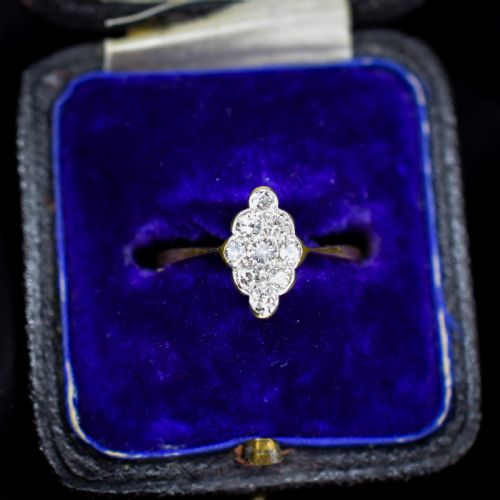
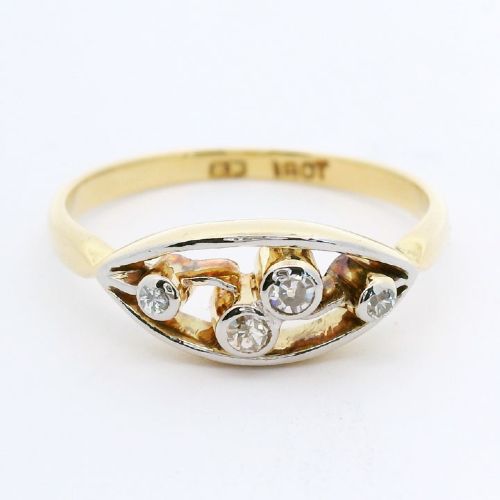
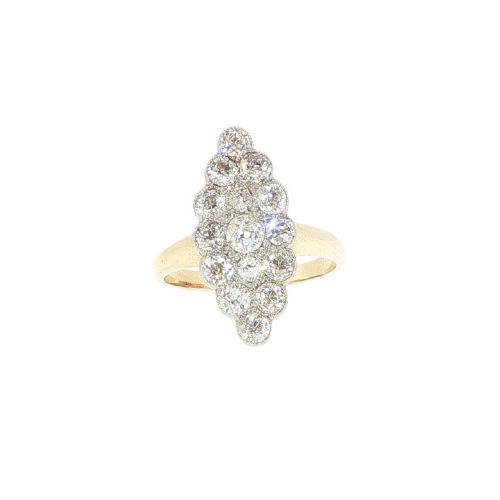
A platinum marquise ring sits low on the hand, offering elongated elegance and bright old cut stones from the Edwardian and Art Deco decades.
Platinum Marquise Ring
A platinum marquise ring is defined by its pointed, boat-shaped silhouette designed to maximise finger coverage with minimal metal weight. You will most commonly encounter Art Deco and Edwardian examples on this page, often pairing central diamonds with platinum settings.
Forms range from strict geometrical navette clusters to elaborate cocktail rings set with old mine cuts and pear cuts. These pieces hail from periods including the Victorian era, the 1910s, 1920s, 1930s, and mid-century decades.
Materials and construction
Makers utilised strong, ductile platinum to create delicate, needle-sharp points and fine millegrain bezels that could securely hold multiple small stones without heavy prongs. This metal strength allowed workshops to craft airy, lace-like mountings.
Yellow gold frequently formed the inner shank or gallery while platinum faced upward to keep diamonds and sapphires looking as white and brilliant as possible. Stones were hand-set with old cut, old mine cut, and rose cut facets tailored by hand.
Legend says King Louis XV commissioned the marquise shape to mimic the smile of his mistress, creating a ring built for royalty.
Judging quality in platinum marquise rings
Quality rests upon the crispness of the geometric piercing and the preservation of fine millegrain edges along the boat-shaped outline. Finer examples maintain symmetrical symmetry across the elongated points without thinning metal from wear.
The selection of stones heavily dictates the standing of a piece, particularly when matching sapphire saturation or ensuring old cut diamonds sit flush and secure in their platinum housing. Original settings that retain their structural integrity without replacement shanks command greater appreciation.
The Platinum Marquise Ring Glossary
- Marquise
- A pointed, boat-shaped gemstone or ring silhouette designed to elongate the finger. This shape is also historically known as a navette.
- Navette
- French for little ship, this term describes the elongated, pointed shape shared by many antique cluster rings. It is used interchangeably with marquise in period jewellery.
- Millegrain
- A decorative technique involving tiny raised metal beads along the edge of a setting. It softens the transition between metal and stone in Edwardian and Art Deco pieces.
- Old Cut
- A diamond facet style hand-cut before modern brilliant standards were established. These stones feature smaller tables and larger culets that catch candlelight warmly.
- Rubover
- A setting style where a thin strip of metal is folded over the rim of the gemstone. It offers a smooth, snag-free profile compared to traditional claw settings.
Platinum Marquise Ring: Frequently Asked Questions
How do I wear a marquise ring daily?
The pointed ends of a platinum marquise ring require gentle care to avoid catching on heavy knitwear or tweed fabrics during routine daily tasks.
Storing the ring separately in a fabric-lined box prevents the sharp platinum tips from scratching neighbouring jewellery items in your collection.
What is the difference between marquise and navette?
Marquise and navette refer to the same boat-shaped profile, though dealers often apply navette more specifically to multi-stone Edwardian clusters.
Both terms describe an elongated silhouette designed to sit horizontally or vertically across the knuckle for maximum visual impact.
How can I tell an Art Deco ring from Edwardian?
Edwardian rings lean toward softer floral motifs and lacy openwork, whereas Art Deco pieces embrace strict geometric lines and sharp symmetry.
Platinum was the dominant metal choice for both eras, but the later Art Deco items favour bolder sapphire contrasts and streamlined platinum mountings.
Were these rings always made of platinum?
Platinum gained widespread favour for fine settings around the turn of the twentieth century because of its tensile strength and bright white finish.
Many pieces combine a platinum top face with an 18ct yellow gold shank, blending the secure modern metal with traditional gold working techniques.
How do I clean a sapphire and diamond ring?
Warm soapy water and a very soft brush will safely clear away everyday oils from the platinum settings and stone facets.
Avoid harsh chemical dips, especially on pieces containing pearls or softer gems like jadeite that require gentle manual care.