




Calibre Sapphire Ring
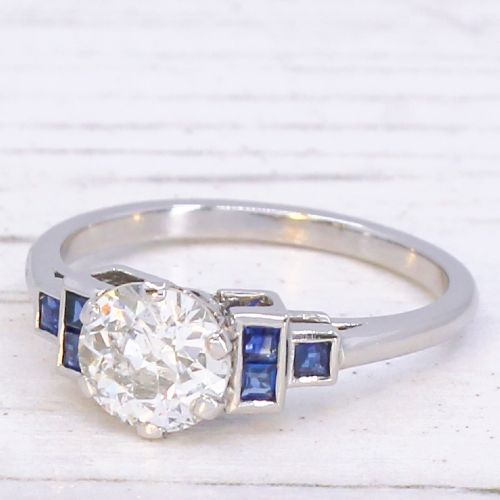
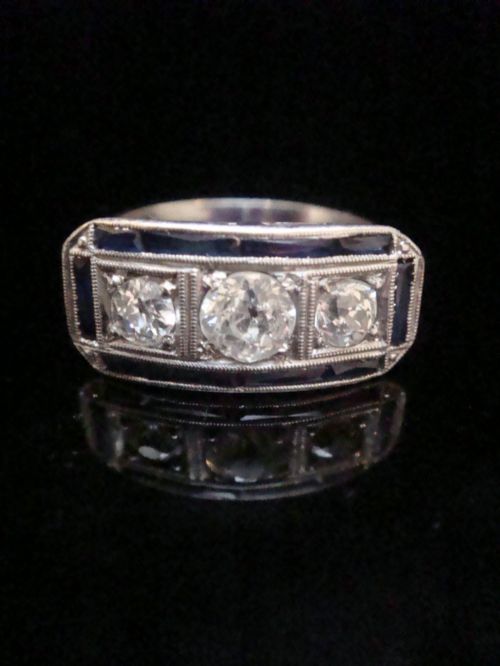
A calibre sapphire ring brings together precise, closely fitted gemstones and bright diamonds, offering sharp geometric lines that define the height of twentieth-century design.
Calibre Sapphire Ring
The selections span the 1920s and 1930s predominantly, with occasional Edwardian, 1940s, and 1960s examples appearing. Target rings, cluster rings, and marquise shapes form the bulk of the available forms.
Platinum and 18ct white gold provide the crisp mounting required for these geometric layouts. Yellow gold and combinations involving ruby also feature in specific French pieces.
Materials and construction
Platinum and 18ct white gold serve as the primary metals for mounting these stones, holding the intricate settings securely. Old cut and rose cut diamonds accent the sapphire centerpieces.
The calibre technique involves grinding and shaping each sapphire by hand so that individual stones abut precisely without intervening claws. This method creates continuous lines of blue colour across target, cluster, and rectangular motifs.
Platinum dominates the metal choices across these listings, frequently paired with 18ct white gold and standard 18ct gold.
Distinctions in craftsmanship
The precision of the stone-to-stone fitting dictates the refinement of the piece, with superior examples showing seamless continuity in the sapphire borders. The crispness of the platinum or white gold millgraining further separates standard work from finer atelier output.
The weight, age, and cutting style of the accompanying diamonds influence the overall presence of the jewel. Old cut stones with distinct facets contrast against simpler melee to alter the visual depth.
The Calibre Sapphire Ring Glossary
- Calibre cut
- A method of cutting small gemstones, typically sapphires, rubies, or emeralds, to fit tightly into a specific geometric channel without metal partitions between them. This technique produces continuous colour paths.
- Art Deco
- A design movement spanning the 1920s and 1930s characterised by sleek geometric shapes, symmetrical layouts, and industrial influences. It remains the dominant aesthetic for these sapphire rings.
- Target ring
- A ring design featuring a central stone surrounded by concentric circles of contrasting gems, such as sapphires and diamonds. This configuration creates a bullseye visual effect.
- Old cut diamond
- A hand-faceted diamond cut popular before the standardisation of modern brilliants, featuring a smaller table and higher crown. These stones display distinctive warm light dispersion.
- Marquise ring
- A ring featuring a pointed, boat-shaped silhouette that elongates the finger. This form often combines calibre sapphires with clustered diamonds.
Calibre Sapphire Ring: Frequently Asked Questions
What is a calibre sapphire ring?
A calibre sapphire ring uses meticulously shaped sapphires fitted tightly together to form continuous lines of colour without visible metal claws between them. These pieces typically date from the Art Deco period and pair the blue stones with diamonds in platinum or white gold settings.
Such rings rely on geometric precision to create sharp patterns, ranging from target motifs to rectangular clusters. The technique allows the vibrant sapphire colour to dominate the design.
How do I date a sapphire ring?
Dating involves examining the metal choices, mounting styles, and diamond cuts present in the piece. Platinum and 18ct white gold combined with geometric layouts point directly to the 1920s and 1930s.
Old cut diamonds and French hallmarks provide further chronological clues. Pieces from the Edwardian era lean towards lighter filigree, while 1940s and 1960s iterations introduce heavier or alternate retro proportions.
Are these rings suitable for daily wear?
Platinum and white gold mountings offer robust security for the stones, making them durable enough for regular use with proper care. The tight setting of calibre work requires occasional checks by a jeweller to ensure stones remain secure.
Owners should remove such rings during strenuous physical activities to protect the intricate stone alignments and delicate metalwork from impact.