

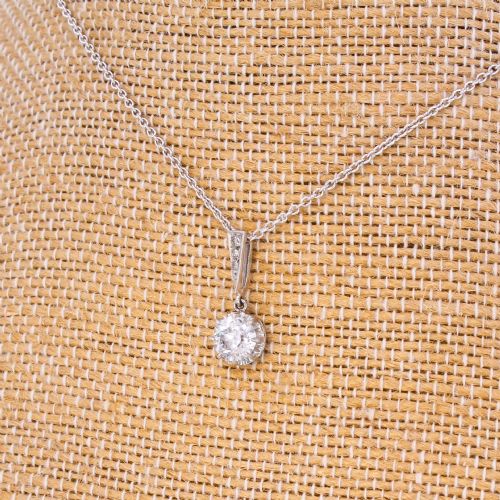


Platinum Gold Necklace
A platinum gold necklace combines the bright strength of platinum with the warm tone of gold, creating a secure setting for diamonds and gemstones.
Platinum Gold Necklace
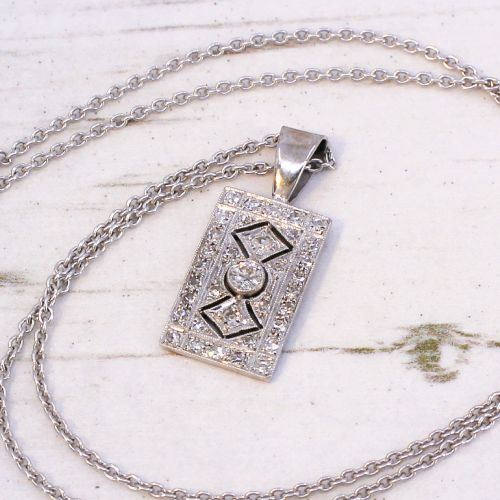
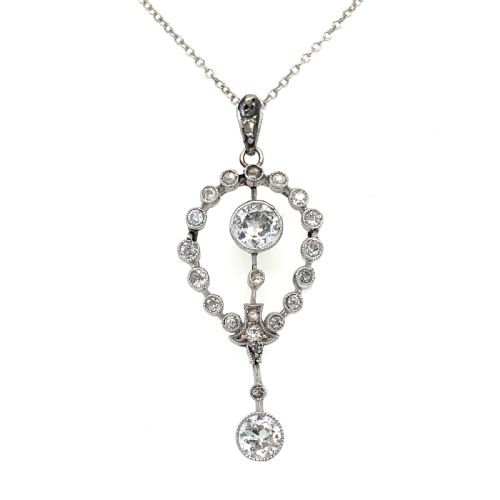
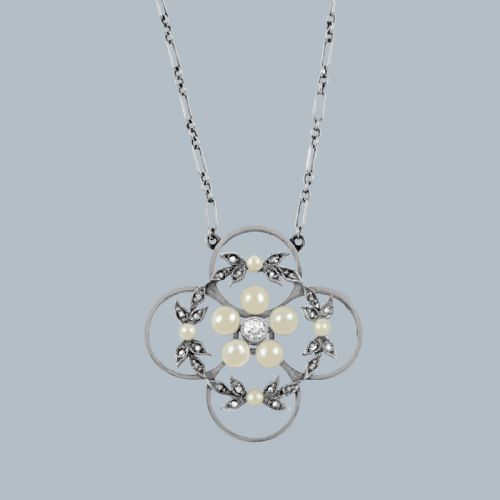
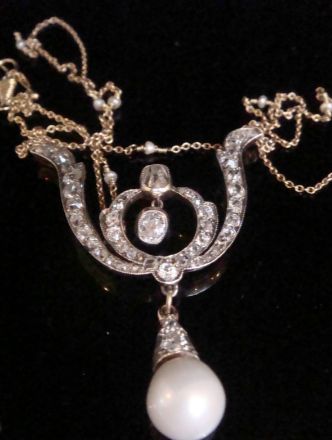
A platinum gold necklace brings together two distinct metals in a single piece, most frequently seen on this page as Edwardian, Art Deco, and Victorian pendants or chains. Buyers seeking this combination encounter delicate pendant necklaces and pearl chains made from the late nineteenth century through to the mid-century period.
The objects span formal diamond pendants, pearl and gemstone necklaces, and convertible pendant brooches that demonstrate transitional metalwork. Early twentieth-century examples dominate the selection, showing platinum-topped gold techniques that maximise the brilliance of set stones while retaining a warm golden reverse or chain.
Shorter lengths predominate, alongside drop pendants and graduated stone arrangements designed to sit high on the collarbone. Pieces often integrate seed pearls, old-cut diamonds, and coloured stones such as emeralds, rubies, and peridots within their multi-metal structure.
Materials and technique
Makers utilised platinum for the upper faces of settings because its density allowed for fine, secure claws and millgrain edges around diamonds without adding excessive bulk. Beneath this white metal surface, yellow or white gold in 9ct, 15ct, or 18ct provided the structural strength for chains, hinged mounts, and pin fittings.
Gemstones such as old-cut diamonds, pearls, and calibre-cut sapphires were hand-set into platinum-faced galleries, whilst backplates and links relied on the malleability of gold. This dual-metal construction allowed jewellers to present a bright white background to gemstones whilst maintaining the traditional warmth of gold components.
Dog clips on these antique chains were originally designed to secure pocket watches to waistcoats before finding a second life holding pendants.
Quality variations
The fineness of the platinum work and the precision of the metal fusion distinguish finer pieces from standard production. Superior examples display crisp millgrain decoration and seamless integration where the platinum top meets the gold base without visible solder seepage.
Stone selection and matching dictate the upper tier of the range, visible in the uniformity of seed pearls or the clarity and old-cut faceting of diamonds. The robustness of integrated clasps, such as dog clips and bolt rings, further separates everyday items from exceptional workshop output.
The Platinum Gold Necklace Glossary
- Millgrain
- A decorative border of tiny raised metal beads rolled onto the edge of a platinum setting. This technique softens the transition between metal and stone.
- Old-cut diamond
- A hand-facetted diamond shape characteristic of earlier periods, featuring a smaller table and larger culet than modern brilliant cuts. These stones display a distinctive soft glow under artificial light.
- Dog clip
- A spring-loaded swivel fastening commonly found on nineteenth and early twentieth-century chains. It allows secure attachment to fob medals or matching pendants.
- Platinum-topped
- A manufacturing method where a thin layer of platinum is fused over a gold base. This allowed Victorian and Edwardian jewellers to achieve a bright white face for gemstones while utilising gold for structural support.
Platinum Gold Necklace: Frequently Asked Questions
How do I care for a platinum gold necklace?
Store the necklace flat in a lined box to prevent chains from tangling and softer gems from scratching against harder diamonds. Clean the piece gently using warm water and a soft brush to remove oils from the platinum and gold settings.
Avoid harsh chemical dips, particularly if the necklace contains pearls or emeralds, which are sensitive to strong solutions. Periodic inspection by a specialist ensures the tiny platinum claws holding the stones remain secure.
Can I wear these antique necklaces every day?
Many of these pieces were designed for regular wear, but Edwardian and Art Deco constructions require mindful handling due to their delicate platinum wirework and seed pearls. Removing the necklace before sleeping or strenuous physical activity preserves the integrity of the chain links.
Heavier pendant drops and antique clasps like bolt rings benefit from gentle fastening and unfastening. With sensible care, a robust gold and platinum chain adapts well to contemporary occasions.
What is the difference between Edwardian and Art Deco styles?
Edwardian pieces emphasise lace-like platinum settings, floral motifs, and flowing garlands inspired by eighteenth-century aesthetics. They frequently pair platinum with pearls and softer-hued gemstones in delicate pendant arrangements.
Art Deco design shifts towards geometric symmetry, sharp lines, and stylised patterns influenced by modernity. Settings from this later period often feature calibrated rubies, sapphires, and stronger contrasts between the metals.
How can I tell if a necklace is Edwardian or Victorian?
Victorian pieces often incorporate warmer yellow or rose gold alongside platinum highlights, featuring bold motifs like crescents and lockets. The stone cuts and mounting styles tend to be heavier and more substantial.
Edwardian items lean towards lighter, airier filigree and platinum-topped gold work designed to catch the light. The overall impression is one of lightness and intricate floral or ribbon-like geometry.