


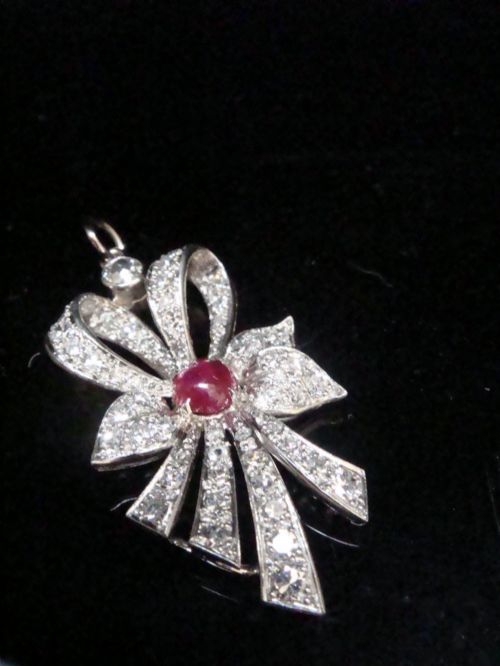


Platinum Drop Necklace
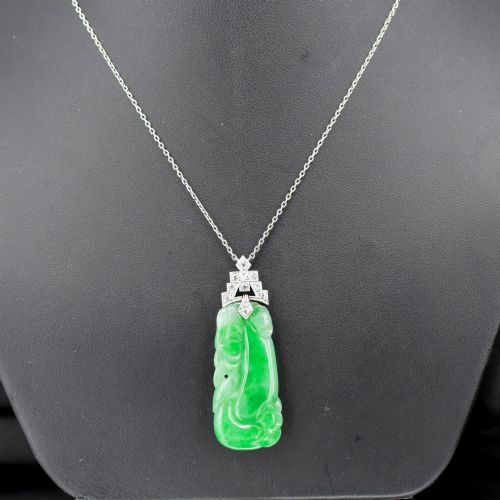
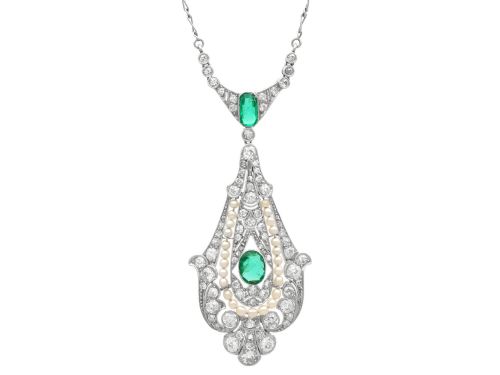
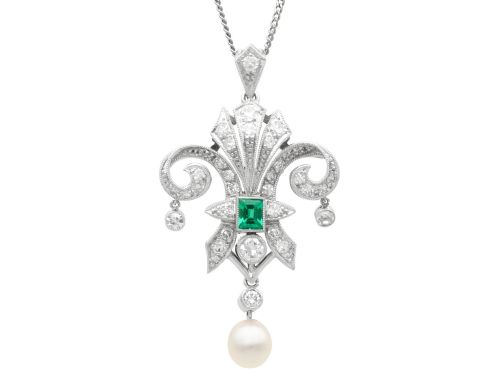
When you search for a platinum drop necklace, you look for intricate metalwork suspending diamonds, pearls, or coloured stones from the Edwardian and Art Deco periods.
Platinum Drop Necklace
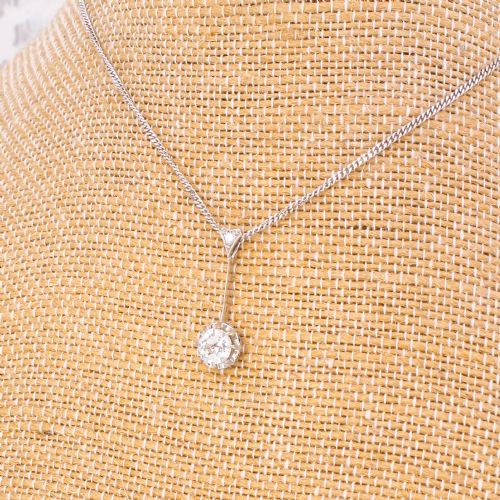
A platinum drop necklace combines a fine metal chain with a suspended pendant, drawing the eye down the neckline with delicate proportions. These jewels primarily emerge from the Edwardian, Art Deco, and Victorian eras, bringing distinct period aesthetics to the chest.
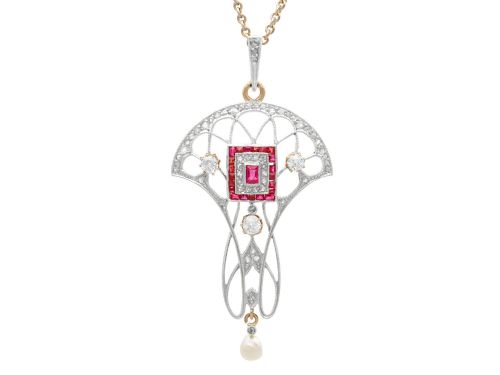
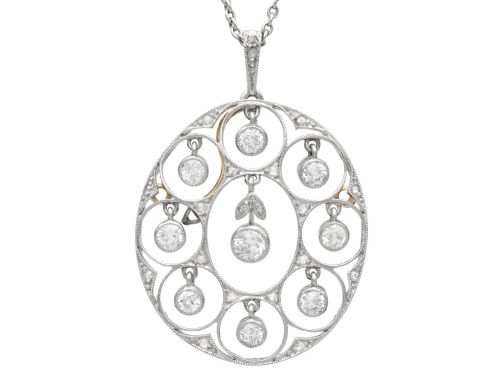
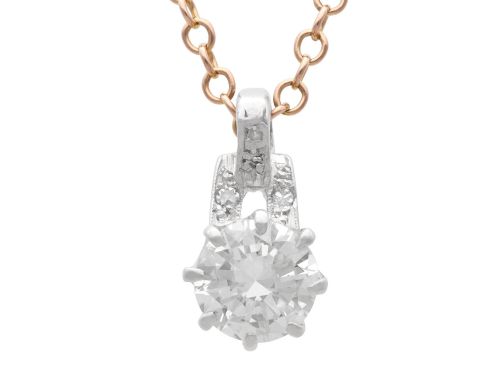
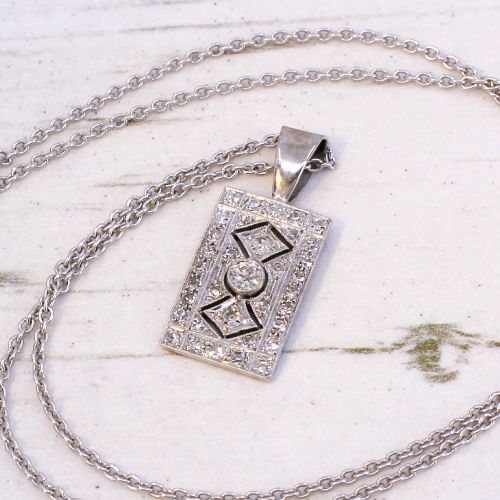
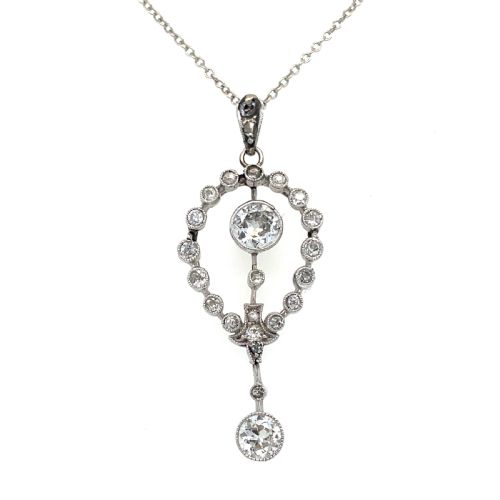
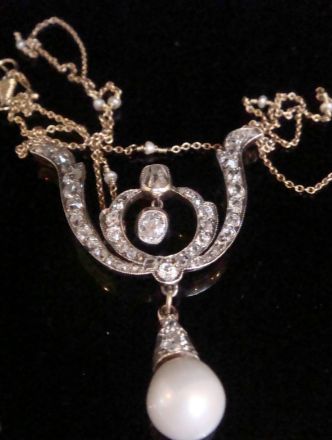
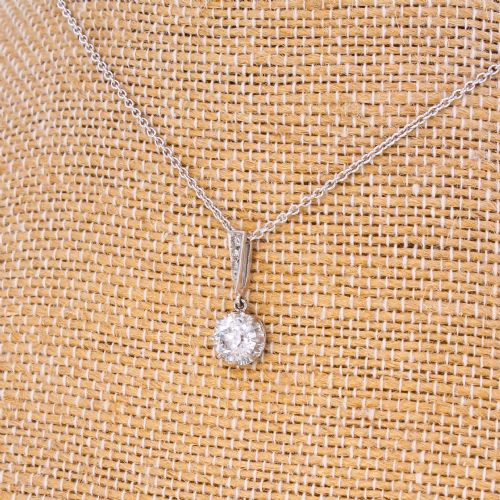
Most examples encountered here pair platinum settings with diamonds, frequently accented by pearls, emeralds, rubies, sapphires, or aquamarines. The form ranges from simple solitaire pendants to elaborate lavalieres, negligee necklaces, and geometric fringe designs.
Makers often integrated gold alongside platinum, particularly in earlier Edwardian configurations, to support complex stone arrangements. The resulting necklaces vary from minimalist platinum drops to substantial multi-stone compositions set with significant carat weights.
How they were made
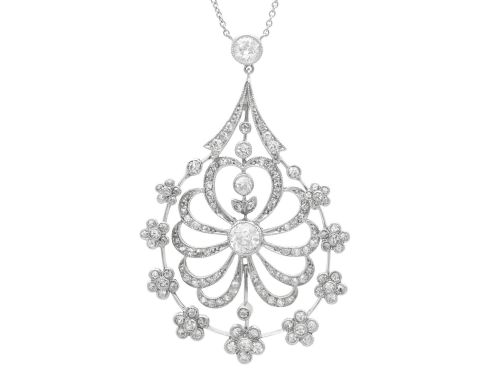
Goldsmiths utilised platinum for its exceptional strength, allowing them to forge remarkably thin wirework, delicate galleries, and precise millegrain edges that securely hold small pavé-set diamonds without heavy metal bulk.
Stones are typically set in open-backed platinum mounts designed to maximise light passage through old-cut diamonds, sapphires, emeralds, or rubies. Artisans combined hand-pierced platinum plaques with articulated joints to ensure the pendant moves fluidly against the wearer.
Combinations of platinum and yellow gold appear in transitional pieces, where the platinum faces front to provide a bright white background for diamonds while the underlying structure relies on gold for durability.
Platinum Drop Necklace Retail Price Guide 2026
Typical asking prices for platinum drop necklace among the pieces listed under this phrase on Sellingantiques today, from the lower quarter to the upper quarter. They describe what is for sale here now, not the wider market.
Listings feature platinum drop necklaces spanning Edwardian, Victorian, Art Deco, and Mid-Century periods, incorporating diamonds, pearls, rubies, emeralds, sapphires, and aquamarines.
What varies in quality
The sophistication of the piercing and the crispness of the millegrain decoration distinguish standard work from master craftsmanship in platinum drop necklace designs. Superior items display uniform, tiny bead-work bordering the edges of the metal and perfectly balanced symmetrical geometry.
Stone selection heavily dictates the upper echelon of these necklaces, where matched natural pearls, untreated emeralds, or clean old-cut diamonds elevate the piece. The harmony between the central suspended drop and the supporting chain structure demonstrates intentional design rather than assembled components.
EDUARD FOEHR
The Platinum Drop Necklace Glossary
- Platinum
- A dense, strong, silvery-white precious metal prized in jewellery for its ability to hold delicate gemstone settings securely. It became the dominant metal for fine necklaces during the Edwardian and Art Deco periods.
- Millegrain
- A decorative technique featuring a row of tiny raised metal beads along the edges of a setting. This method softens the metallic edge and adds textural detail to period platinum work.
- Negligee pendant
- A necklace style featuring two unequal drops suspended from a central motif, popular during the Edwardian era. The design creates a delicate asymmetrical flow down the chest.
- Old-cut diamond
- A vintage diamond facet style characterised by a smaller table, higher crown, and deep culet designed to catch candlelight. These stones exhibit soft, warm light refraction distinct from modern brilliant cuts.
- Lavalier
- A pendant necklace featuring a central gemstone or motif hanging loosely below the main chain line, named after the Duchess of Vallière. These pieces often incorporate subsidiary drops for added movement.
Platinum Drop Necklace: Frequently Asked Questions
How do I date a platinum necklace?
Dating relies on the stylistic clues of the metalwork and the cuts of the gemstones, moving from ornate Edwardian garlands to geometric Art Deco motifs.
Edwardian pieces often use platinum-topped gold with softer floral motifs, whereas 1920s and 1930s examples favour strict symmetry, calibrated stones, and all-platinum settings.
What stones are set in these necklaces?
Diamonds form the primary brilliance in these necklaces, frequently paired with natural pearls, aquamarines, emeralds, rubies, and sapphires.
Makers selected these gems to contrast against the icy white platinum background, often incorporating seed pearls or onyx for additional tonal depth.
How should I care for an antique platinum necklace?
Store your necklace flat in a lined jewellery box to prevent the delicate platinum chain from kinking or tangling with other pieces.
Clean the metal and stones gently with warm soapy water and a soft brush, avoiding harsh chemical dips that can damage natural pearls or emeralds.