


Platinum Diamond Target Ring
A platinum diamond target ring brings together concentric geometric rows of gemstones in a design defined by the Art Deco period.
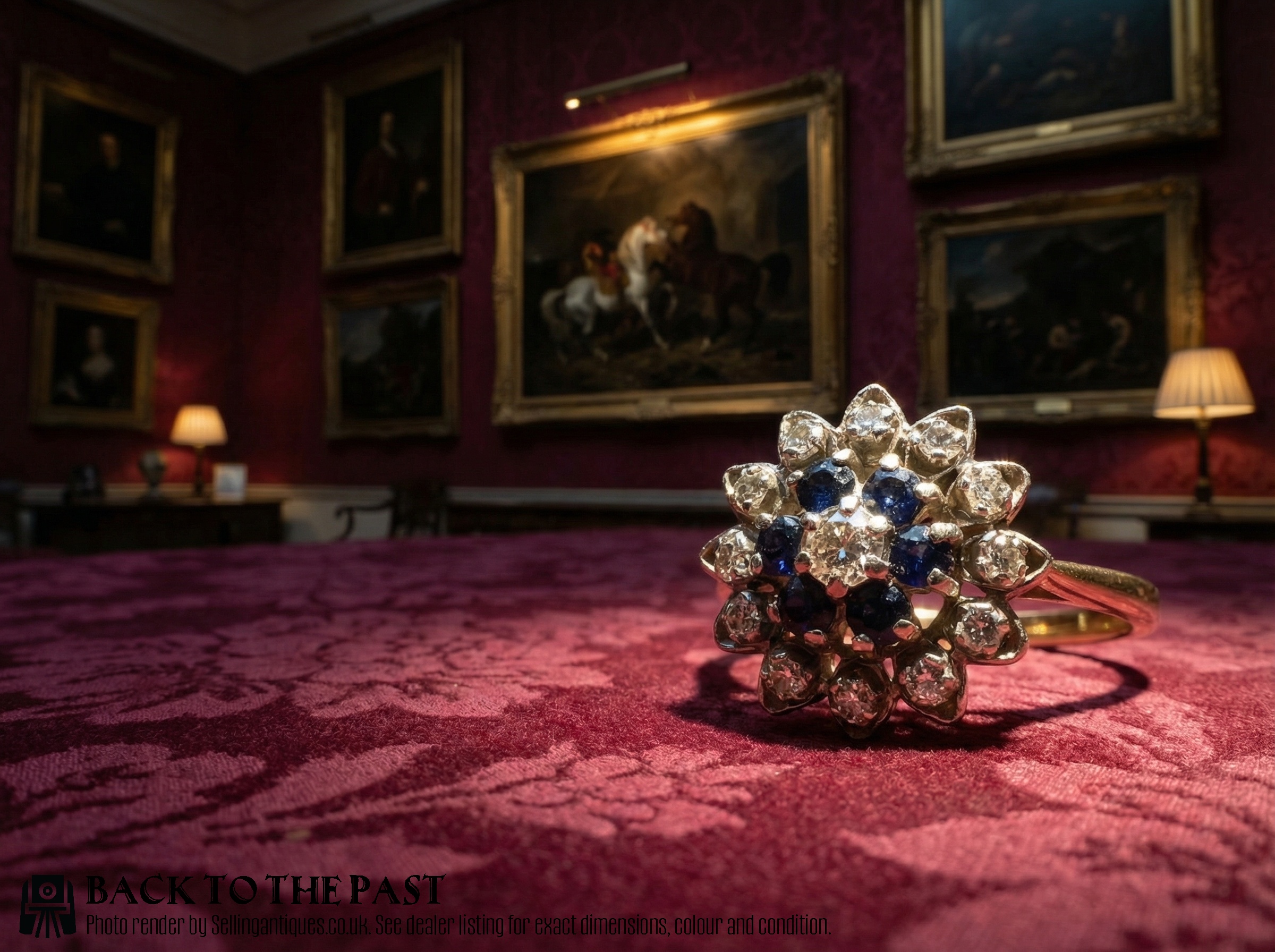
Platinum Diamond Target Ring
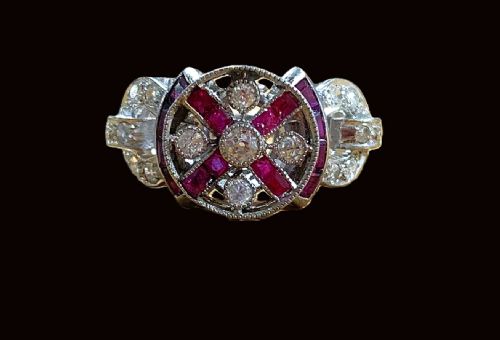
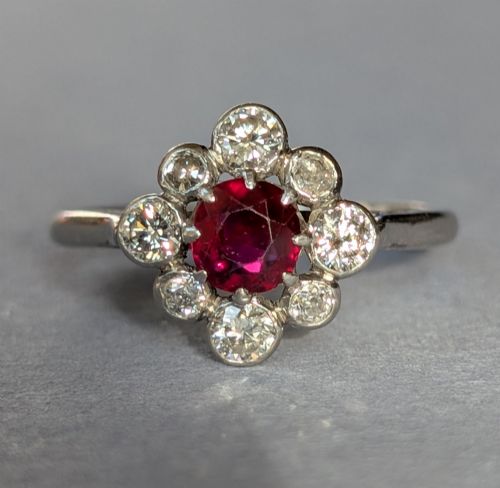
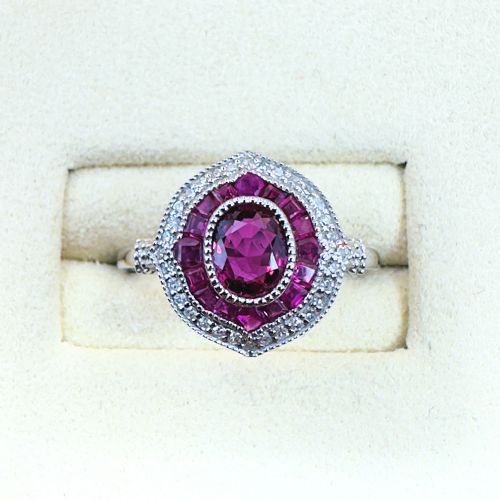
A platinum diamond target ring is a specific style of dress or cluster ring featuring a central stone encircled by one or more contrasting bands of gems, creating a bullseye visual effect. The vast majority of examples encountered here belong to the Art Deco era of the 1920s and 1930s, alongside Edwardian and mid-century interpretations.
The format typically integrates diamonds with coloured stones such as sapphires, rubies, and emeralds, often mounted in geometric plaque or halo configurations. These pieces function primarily as cocktail or dress rings, prioritising bold geometric symmetry over standard solitaire arrangements.
How they were made
The primary metal framework relies heavily on platinum, chosen for its strength and ability to hold intricate millegrain edges and delicate piercing without bulk. 18ct white gold and yellow gold also appear, frequently combining with platinum settings to support the upper stone layout.
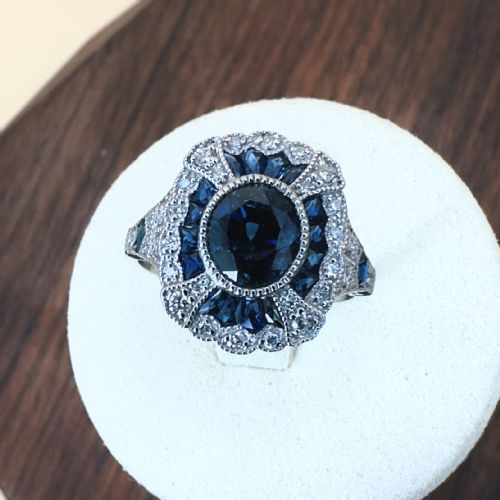
Gemstones are shaped into old cuts, brilliant cuts, or calibrated cuts to fit precisely within the concentric circular or square tiers of the target motif. Natural pearls, emeralds, rubies, and sapphires are set alongside diamonds using grain and bezel techniques typical of the period.
Some target rings deploy calibrated sapphires so precisely cut they form a continuous, unbroken wall of blue around the central diamond.
What varies in quality
The precision of the geometric layout dictates the visual success of the target pattern, where uniform stone spacing and sharp symmetry separate standard production from finer work. The choice and saturation of the centre gemstone, whether diamond, emerald, sapphire, or ruby, heavily influence the overall distinction of the piece.
The crispness of hand-worked metal details, such as millegrain beading and openwork gallery piercing, reflects the level of craftsmanship invested in the construction. Preservation of the original mount without excessive re-tipping or metal fatigue maintains the integrity of the design.
The Platinum Diamond Target Ring Glossary
- Target ring
- A ring design featuring a central gemstone surrounded by one or more concentric rings of contrasting stones, resembling a bullseye. This motif gained immense popularity during the Art Deco era.
- Calibré cut
- Small gemstones, typically rubies, sapphires, or emeralds, cut into specific uniform shapes such as squares or rectangles to fit tightly alongside one another in a continuous channel or border.
- Old cut
- A diamond facet style hand-cut before modern brilliant proportions were standardised, typically featuring a smaller table, higher crown, and open culet that catch candlelight distinctively.
- Millegrain
- A decorative technique consisting of a row of tiny raised metal beads along the edge of a setting, adding a fine textured border typical of Edwardian and Art Deco jewellery.
- Plaque ring
- A flat, often geometric or disc-shaped ring top covered in pavé or cluster-set gemstones that sits low against the finger.
Platinum Diamond Target Ring: Frequently Asked Questions
What is a target ring?
A target ring is a clustered ring design where a central gemstone is encircled by concentric rings of contrasting smaller stones. This creates a distinct bullseye pattern that was a hallmark of 1920s and 1930s design.
Most examples combine diamonds with sapphires, rubies, or emeralds mounted in platinum settings. The geometric arrangement gives the face of the ring a flat, prominent presence on the hand.
How do I date a target ring?
Dating relies on stylistic markers, cut of the stones, and metal choices. Pieces from the 1920s and 1930s typically feature platinum settings with old cut diamonds and calibrated coloured stones in strict geometric shapes.
Earlier Edwardian versions often incorporate yellow gold alongside platinum with softer floral or daisy motifs and natural pearls. Mid-century examples from the 1940s and 1950s tend to use heavier platinum mountings with modern brilliant cut stones.
Are these rings suitable for daily wear?
These rings function well for daily wear provided the settings are secure and checked regularly by a professional jeweller. Platinum provides a durable base that withstands everyday use better than softer metals.
Care should be taken with softer centre stones like pearls or emeralds, which require more gentle handling than diamonds or sapphires. Removing the ring during manual labour or heavy activity protects the intricate millegrain and gallery work.
What is the difference between an Edwardian and Art Deco target ring?
Edwardian rings lean towards softer, organic motifs like floral daisy patterns, often pairing yellow gold with platinum-topped shoulders. They emphasise delicate scrollwork and natural pearls alongside diamonds and sapphires.
Art Deco rings embrace rigid symmetry, sharp geometric lines, and strong colour contrasts using calibrated rubies, emeralds, or sapphires. Platinum is utilised extensively on its own to create crisp, flat plaque surfaces and precise target borders.