
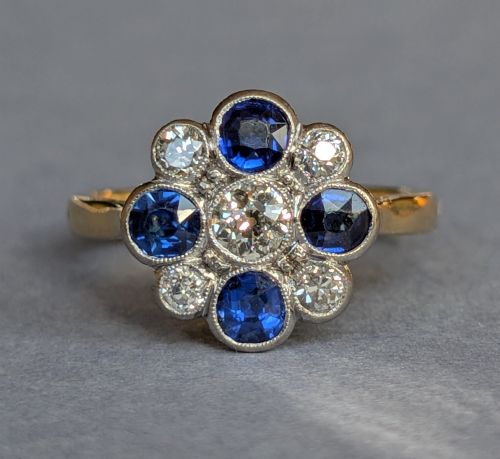
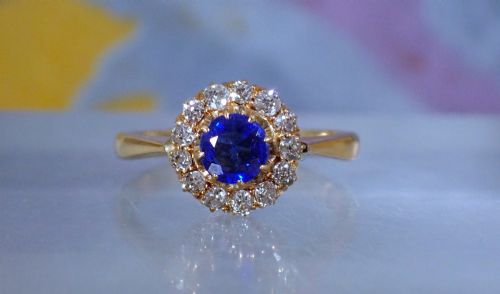
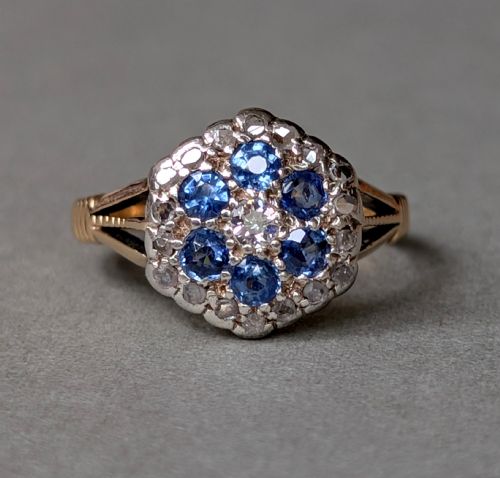


Daisy Cluster Sapphire Ring
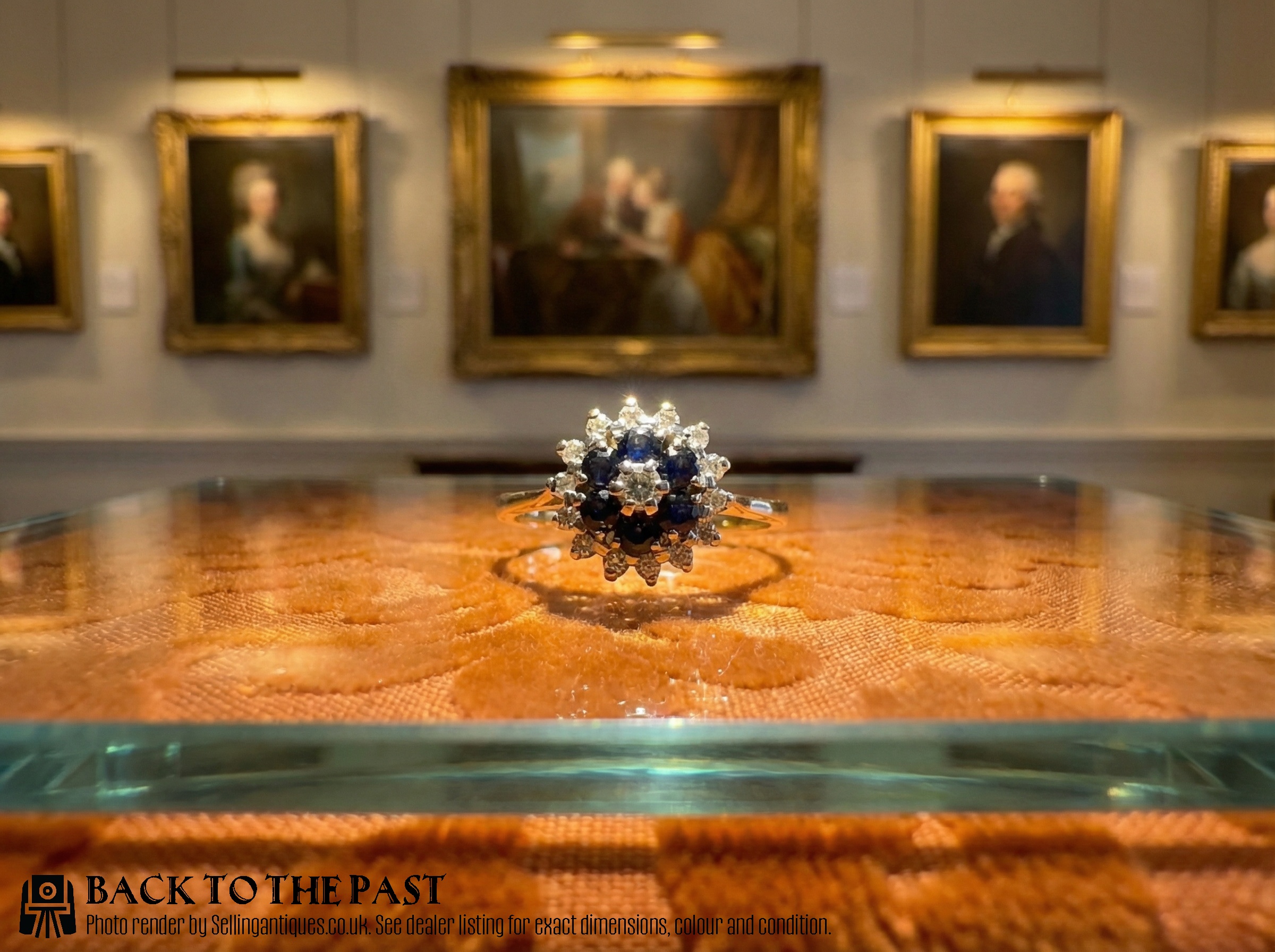
A daisy cluster sapphire ring brings together a bright central stone and a border of brilliant diamonds, a floral form found across Edwardian, Art Deco and mid-century periods.
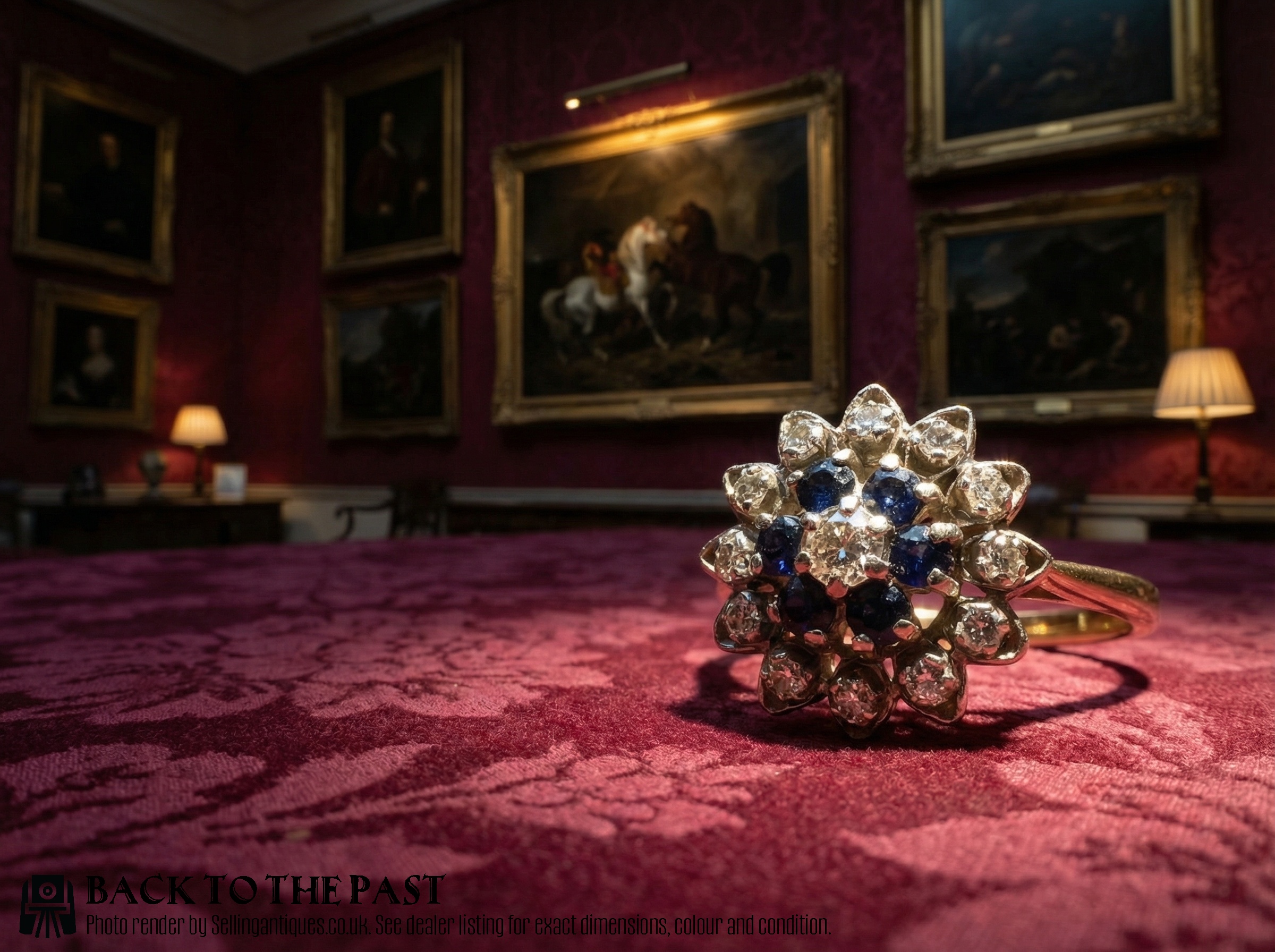
Daisy Cluster Sapphire Ring
A daisy cluster sapphire ring centres on a vivid blue sapphire surrounded by a fringe of smaller diamonds, creating a floral silhouette that sits flat upon the hand. These pieces emerge in various forms from the late nineteenth century through to the middle of the twentieth century, with Edwardian and Art Deco examples appearing most frequently.
Makers construct these rings using 18ct gold bands, often pairing yellow gold shanks with platinum settings to enhance the whiteness of the diamonds. The central sapphire provides a deep contrast to the surrounding stones, varying from bright transparent blue to rich cabochon cuts.
Stylistic shifts trace a path from delicate Edwardian filigree and floral motifs to the geometric precision of the 1920s and 1930s Art Deco period. Later vintage and retro pieces from the 1940s, 1950s and 1960s maintain the core floral layout while adapting the proportions and metalwork to suit changing tastes.
Materials and construction
Goldsmiths set the central sapphires and surrounding diamonds using a mix of 18ct yellow gold and platinum. Platinum claw or bezel settings appeared frequently from the Edwardian era onward because the white metal held small stones securely without adding visual bulk to the flower head.
The construction relies on hand-pierced galleries and tightly clustered stone placement to mimic the petals of a flower. Jewellers worked the 18ct gold shanks with substantial weight to support the breadth of the cluster head above.
Listings feature periods spanning from the late Victorian era through the 1960s, constructed in 18ct gold and platinum.
Judging quality in cluster rings
Quality rests in the match and proportion of the stones, where a well-chosen central sapphire balances the brilliance and cut of the surrounding diamonds. The symmetry of the petal arrangement dictates how cleanly the floral silhouette reads from above.
Execution shows in the delicacy of the metalwork beneath the stones and the security of the settings. A superior piece maintains tight tolerances between the cluster elements without exposing excess solder or heavy claws.
The Daisy Cluster Sapphire Ring Glossary
- Daisy ring
- A cluster ring featuring a central gemstone encircled by a ring of smaller stones, resembling a flower. This form remains central to Edwardian and Art Deco jewellery design.
- Target ring
- A concentric cluster ring where bands of contrasting coloured gemstones or diamonds encircle a central stone. This style shares structural similarities with the daisy cluster.
- Cabochon
- A gemstone cut with a smooth, rounded, convex upper surface rather than faceted planes. This finish appears on select antique sapphires.
Daisy Cluster Sapphire Ring: Frequently Asked Questions
How do I date a daisy cluster ring?
Dating relies on metal combinations, stone cuts, and stylistic details such as platinum top-settings typical of the Edwardian period or geometric mounts from the Art Deco era. Subtle shifts in shank weight and gallery design separate nineteenth-century examples from mid-century ones.
Examining the construction under magnification reveals hand-finished details that distinguish genuine period pieces from later revivals.
Are these rings suitable for everyday wear?
Sapphires rank high on the hardness scale, making them durable enough for regular daily use when mounted securely in gold or platinum settings. The low profile of a cluster design prevents the head from catching easily on clothing.
Routine checks by a jeweller ensure the claws holding the diamond petals remain tight and secure.
What is the difference between Edwardian and Art Deco clusters?
Edwardian daisy rings often use yellow gold paired with platinum tops, featuring organic floral motifs and delicate milgrain borders. Art Deco examples lean towards geometric arrangements with sharp lines and crisp contrasts.
Both styles utilise the central sapphire and diamond border layout but express it through the distinct aesthetic of each decade.
How do I clean an antique cluster ring?
Warm water, mild soap, and a soft brush clear away oils and everyday debris that gather beneath the cluster setting. Avoid harsh chemical dips, particularly with antique pieces containing closed-back settings or vulnerable metal alloys.
Professional ultrasonic cleaning is best reserved for solid platinum and gold mountings without fragile foils.