
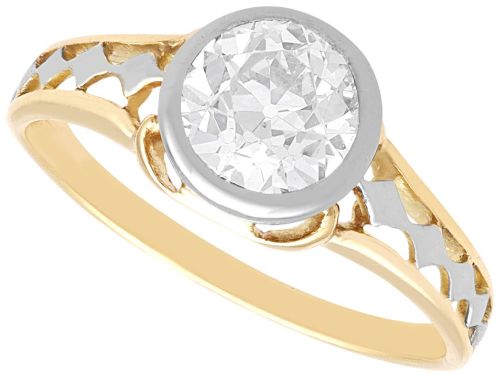

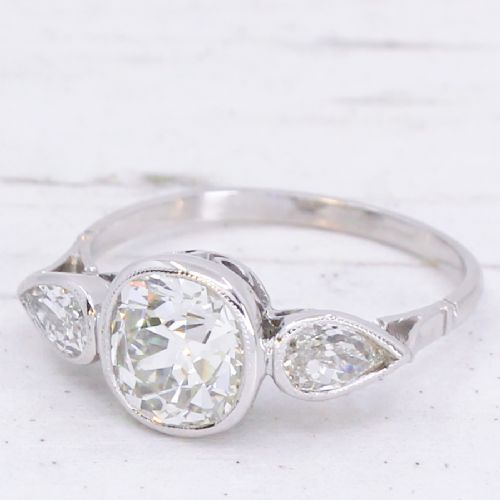
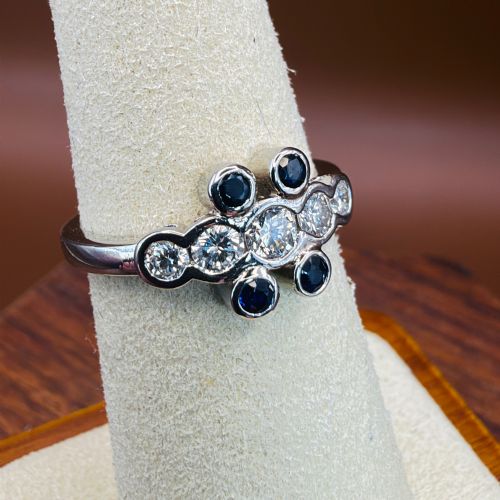
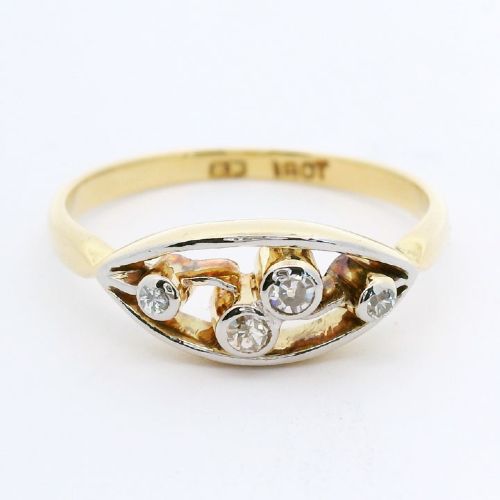
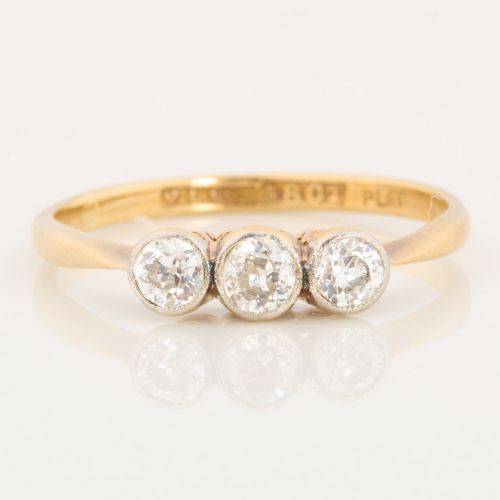


Platinum Bezel Diamond Ring
A platinum bezel diamond ring offers clean, secure lines that hold stones flush while defining the metalwork around the gems.
Platinum Bezel Diamond Ring
A platinum bezel diamond ring is a finger ornament featuring a gemstone secured within a metal collar rather than held by prongs. The pieces gathered here span the Edwardian period through to the mid-century decades, encompassing Art Deco designs and retro styles.
The most common examples on this page are Art Deco rings featuring old cut diamonds set alongside platinum settings, often combined with 18ct yellow gold shanks. Solitaires, clusters, and multi-stone configurations appear frequently across the inventory.
Originating from periods like the nineteen-twenties and nineteen-thirtyies, these items showcase period craftsmanship with geometric motifs, floral daisy themes, and target ring layouts. Alongside diamonds, sapphire, emerald, onyx, and ruby stones frequently accent the central gems.
What varies in quality
The precision of the metalwork defines the upper tier of these pieces, particularly how evenly the bezel wall wraps the perimeter of the diamond without obscuring the stone's girdle. Hand-finished millegrain and symmetrical gallery wirework distinguish master craftsmanship from standard production.
Stone selection introduces further distinction, where older diamond cuts display distinct facet patterns and depth that alter light return compared to later stones. The integration between the platinum head and the gold shank must demonstrate seamless soldering and structural integrity.
Some floral daisy motifs tucked into Edwardian clusters prove that past artisans loved sneaking a garden onto a finger.
The Platinum Bezel Diamond Ring Glossary
- Bezel
- A method of stone setting where a thin strip of metal is wrapped around the girdle of a gemstone to hold it securely in place. This technique creates a smooth outline and protects the edges of the stone from impact.
- Rubover
- Another term for a bezel setting where the metal collar is rubbed over the top edge of the diamond. It provides a snag-free surface and a clean profile.
- Millegrain
- A decorative technique featuring a row of tiny raised metal beads along the edges of the setting. It was especially popular during the Edwardian and Art Deco eras to soften hard metal lines.
- Old cut
- A diamond cut characteristic of the nineteenth and early twentieth centuries featuring a smaller table, higher crown, and larger culet. These stones catch candlelight differently than modern brilliant cuts.
- Triglogy
- A ring design featuring three principal stones, often interpreted to represent the past, present, and future. They frequently appear in Edwardian and Art Deco groupings.
Platinum Bezel Diamond Ring: Frequently Asked Questions
What is a platinum bezel setting?
A platinum bezel setting uses a continuous band of platinum metal soldered around the perimeter of a diamond to hold it firmly in place. This method protects the stone's girdle while offering a streamlined, modern silhouette.
Unlike traditional prong settings, a bezel wraps the gem tightly, reducing the risk of catching on clothing during daily wear.
How do I care for an antique diamond ring?
Clean your ring regularly using warm water, mild soap, and a soft brush to remove oils that accumulate beneath the bezel. Avoid harsh chemical cleaners that might affect older gold alloys or delicate accent gems.
Store the piece separately in a fabric-lined box to prevent the diamonds from scratching other jewellery items in your collection.
Are these rings suitable for daily wear?
Platinum is an exceptionally durable and dense metal that resists wear well, making it ideal for everyday use on a finger. The bezel style adds extra security for the stone compared to exposed prongs.
However, antique items benefit from gentle treatment and periodic checks by a specialist to ensure the metal collar remains tight around the diamond.
How do I identify an Art Deco ring?
Art Deco rings feature geometric symmetry, strong lines, and a combination of platinum settings with contrasting yellow gold bands. Look for stepped shoulders, target motifs, and calibrated accent stones like onyx or sapphires.
Maker marks, platinum stamps, and characteristic old cut diamond facets further help distinguish pieces from the nineteen-twenties and nineteen-thirties.