





Plate Rack Shelf
A plate rack shelf holds pottery upright in domestic spaces, combining practical kitchen storage with the display of regional woodwork.
Plate Rack Shelf
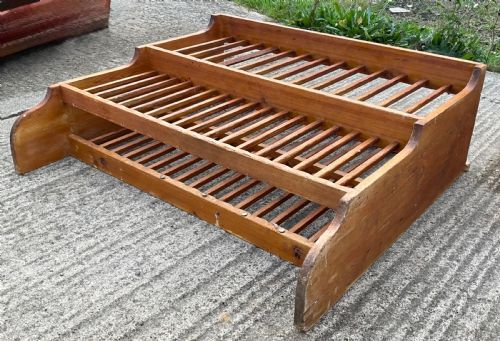
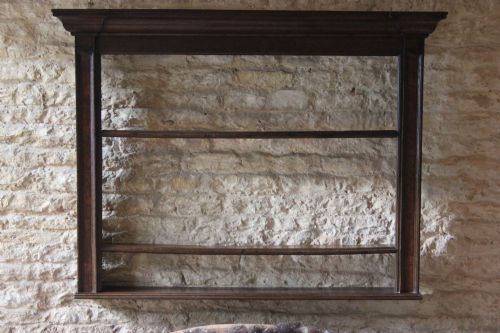
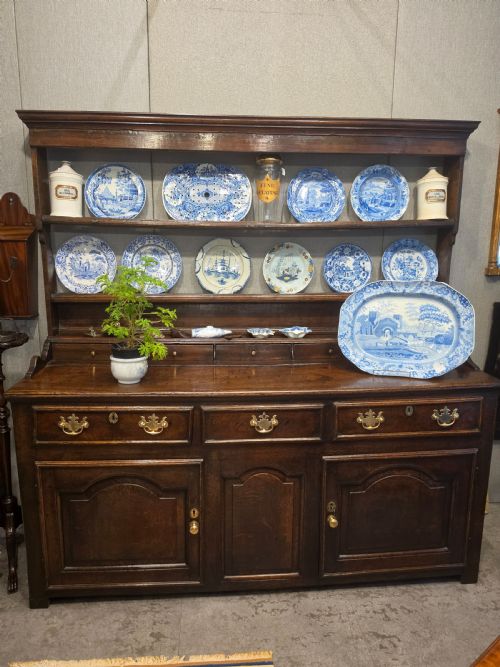
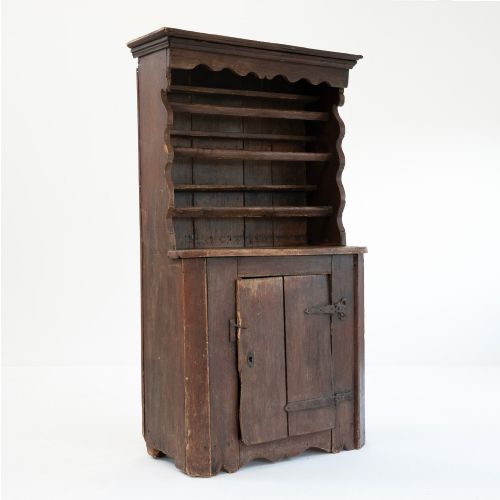
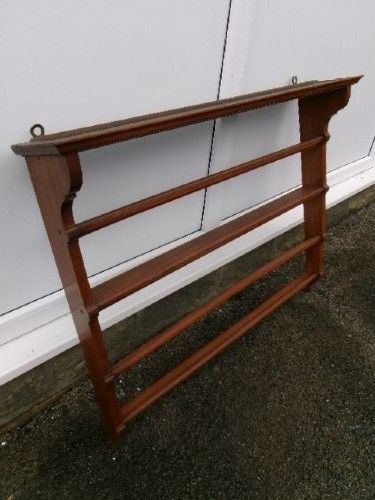
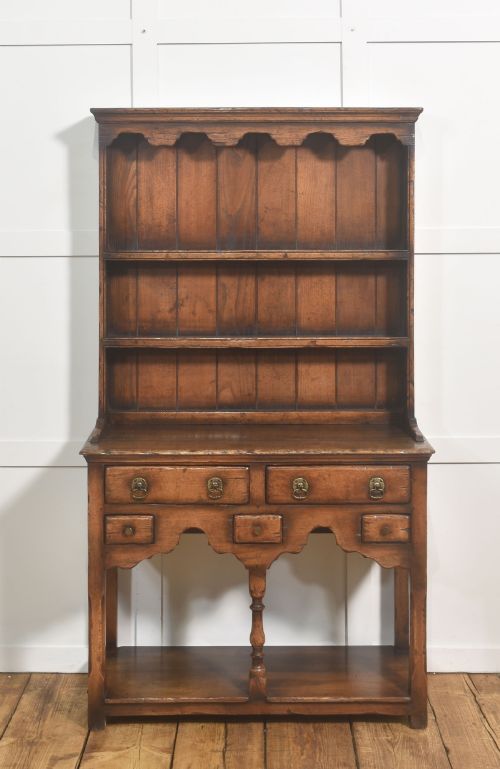
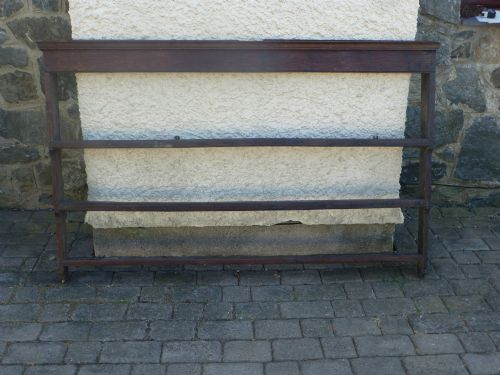
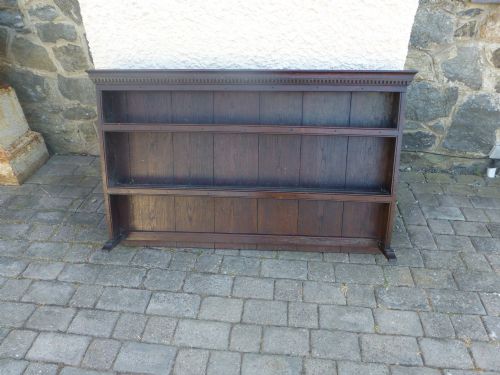
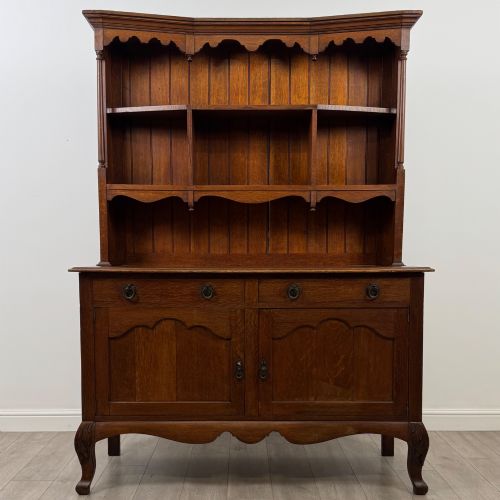
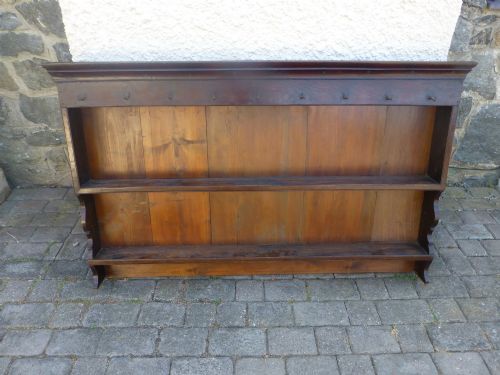
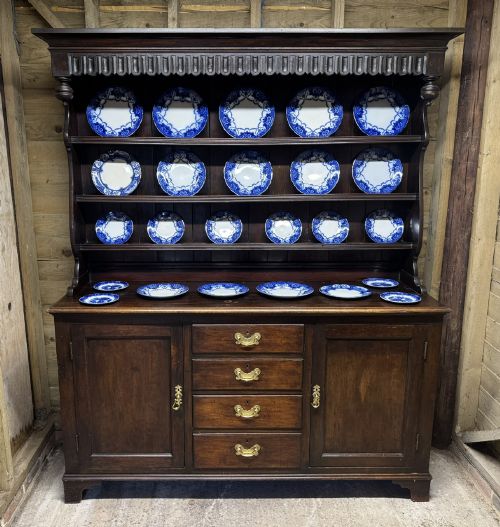
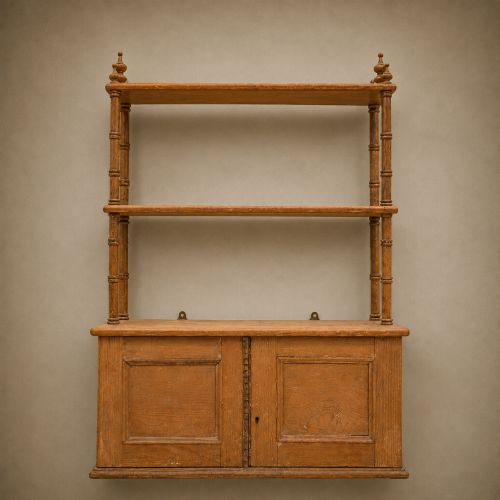
A plate rack shelf is designed to hold plates and dishes upright for drying or display, appearing either as a wall-hanging unit or as the upper section of a larger dresser. When searching for a plate rack shelf, buyers encounter formats ranging from simple pine wall shelves to grand eighteenth-century oak structures.
The material traditions span regional workshops, with oak and pine dominating country furniture alongside later mahogany and painted pieces. These wall racks and dresser tops reflect domestic kitchens and dining rooms across centuries of British and Irish rural life.
How they were made
Makers utilised solid timbers such as oak, pine, and mahogany, often combining structural hardwoods with softer woods for internal components. Joinery relied on pegged mortise and tenon construction for stability, supporting the weight of heavy ceramic plates.
Surfaces were finished with applied paint, natural wax, or polish, while decorative elements included carved details, Corinthian columns, and marquetry inlays. Wall hanging versions incorporated sturdy backboards and fixed brackets to secure the rack safely to domestic plaster or masonry.
Plate Rack Shelf Retail Price Guide 2026
Typical asking prices for plate rack shelf among the pieces listed under this phrase on Sellingantiques today, from the lower quarter to the upper quarter. They describe what is for sale here now, not the wider market.
A few antique racks survived centuries of kitchen steam by wearing coats of Pompeian Ash paint.
What varies in quality
The quality of a plate rack shelf rests on the integrity of its timber selection and the retention of its original surface finish, whether aged oak or early paint. Pieces retaining their original plate restraining bars, backboards, and mounting points command greater interest among collectors.
Proportion and decorative restraint differentiate standard utility pieces from finer examples. Subtle details such as moulded cornices, crisper carving, and well-figured grain distinguish regional variations from simpler vernacular items.
The Plate Rack Shelf Glossary
- Delft rack
- An open wall shelf specifically slotted or grooved to hold tin-glazed earthenware plates upright. These racks protected fragile tableware while keeping everyday ceramics accessible in the kitchen.
- Potboard dresser
- A large kitchen base unit featuring a lower slatted shelf for storing pots and pans, usually paired with an upper plate rack shelf. This form represents a staple of eighteenth-century country furniture.
- Marquetry
- The art of applying small pieces of veneer to a structure to form decorative patterns. This technique appears on select nineteenth-century display shelves and cabinets.
- Corinthian columns
- Classical architectural uprights featuring ornate capitals decorated with acanthus leaves. They occasionally frame the sides of eighteenth-century country oak and pine delft racks.
Plate Rack Shelf: Frequently Asked Questions
What is a plate rack shelf used for?
A plate rack shelf holds plates, platters, and dishes upright against a wall or atop a dresser base. This arrangement allows wet crockery to drain or decorative ceramics to remain visible in daily domestic use.
Historically, these racks kept heavy earthenware secure and within reach in kitchens and dining parlours. Today, they serve both storage and display functions in traditional and contemporary interiors.
How do I hang a wall plate rack?
Hanging a wall plate rack safely requires securing the unit directly into structural wall studs or using heavy-duty masonry fixings. Because loaded ceramic plates add substantial weight, the fixing points must bear the load securely.
Many antique racks feature original hanging brackets or reinforced back rails designed for this purpose. Checking the structural condition of the backboard ensures the piece supports wall mounting safely.
How do I date an antique plate rack?
Dating a plate rack involves examining the timber species, tool marks, construction methods, and overall regional style. Eighteenth-century examples frequently employ dense oak with hand-cut peg joints and vernacular mouldings.
Later nineteenth-century and Edwardian pieces often incorporate pine, mahogany, or applied decorative details like painted finishes. Comparing the construction against known period styles helps narrow the date of manufacture.
Are these racks part of dressers?
Plate racks exist both as standalone wall-hanging shelves and as the upper components of two-part Welsh dressers. Many survive separated from their original base cabinets due to changing domestic layouts over the centuries.
When found independently, they are termed wall racks, delft racks, or hanging shelves. When integrated, the upper rack rests securely upon a potboard or cupboard base.