

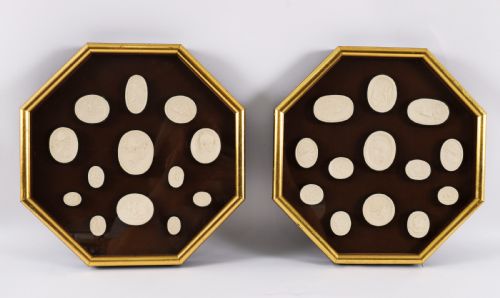
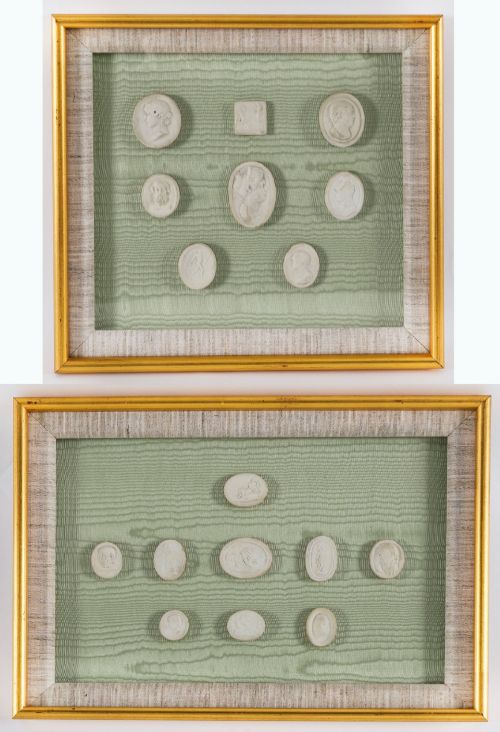
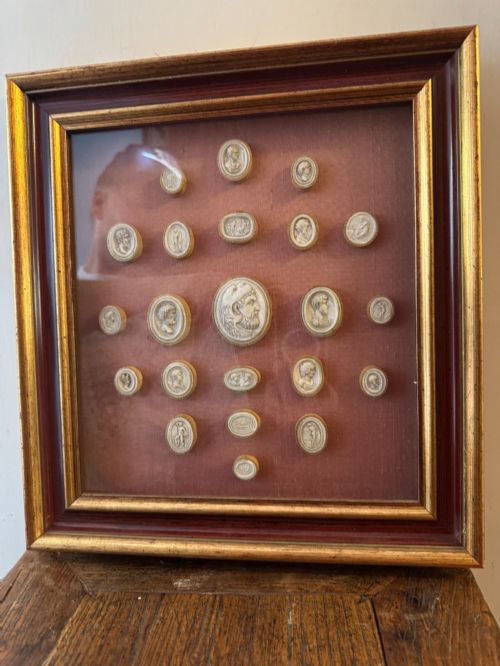
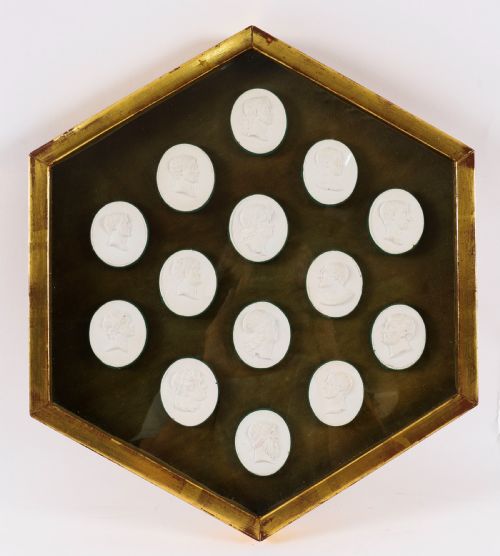

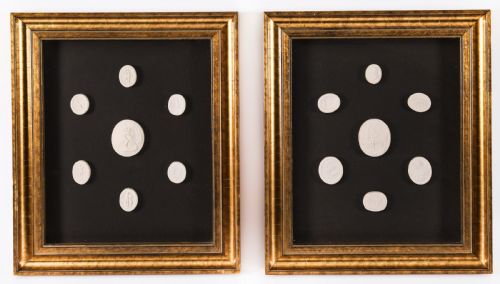


Plaster Cameo Frame
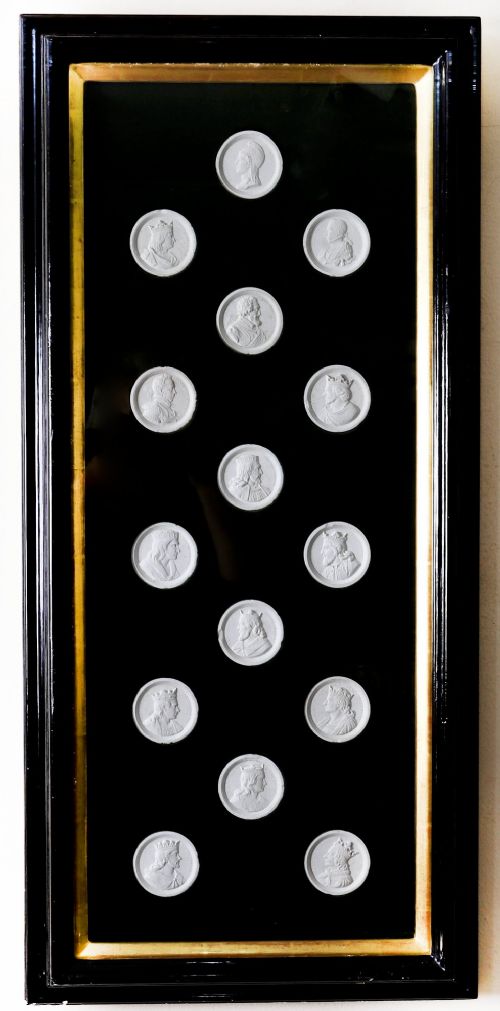
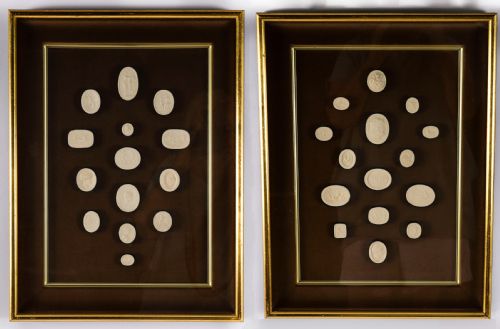
These plaster cameo frame pieces are classical intaglios and relief medallions set for display, offering miniature sculptural detail from the Grand Tour era.
Plaster Cameo Frame
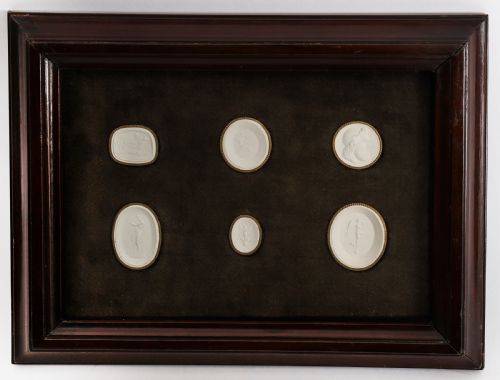
A plaster cameo frame groups classical intaglios, cameo panels and relief medallions inside glazed wall displays. These decorative objects originate primarily from nineteenth-century Grand Tour travels across Italy.
Buyers frequently encounter framed collections containing multiple plaster casts arranged together on velvet or fabric backgrounds. Common configurations range from single portrait reliefs to extensive sets of classical intaglios.
The aesthetic is distinctly neoclassical, reflecting European enthusiasm for ancient Greek and Roman sculpture. Makers house these delicate gypsum casts within gilt wood, giltwood or simple wooden frames.
Materials and construction
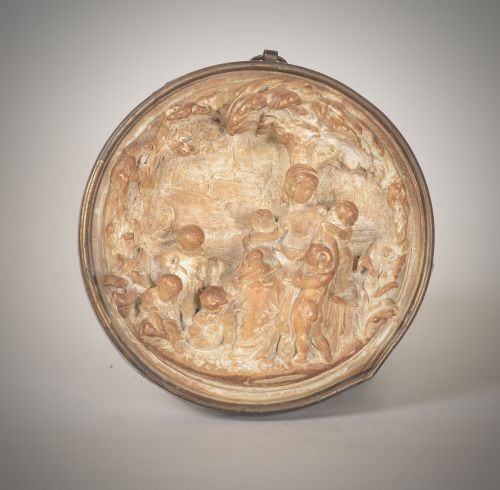
Craftsmen cast these detailed intaglios and medallions using fine plaster or gypsum, occasionally applying a bronzed finish to the portrait reliefs. These white or tinted reliefs provide sharp contrast against backing materials.
Makers mount the plaster casts onto velvet, fabric or wooden grounds to secure each piece within the display. Glazed wooden and giltwood frames protect the fragile reliefs from dust and handling.
Plaster Cameo Frame Retail Price Guide 2026
Typical asking prices for plaster cameo frame among the pieces listed under this phrase on Sellingantiques today, from the lower quarter to the upper quarter. They describe what is for sale here now, not the wider market.
Nineteenth-century travellers meticulously carried home dozens of fragile plaster casts just to prove they visited Rome.
Distinctions in quality
Quality depends upon the crispness of the plaster casting and the precision of the arrangement within the frame. Finer examples display sharp classical detailing across every individual intaglio and medallion.
The enclosure itself elevates the piece, distinguishing standard boxes from ornate giltwood or octagonal frames with preserved backing fabrics. Complete sets with maker attribution also demonstrate superior historical interest.
Giovanni Liberotti
The Plaster Cameo Frame Glossary
- Intaglio
- A gem or impression carved in incuse so that the design sinks below the surface. These plaster casts replicate classical carved stones.
- Grand Tour
- A traditional trip through Europe, notably Italy, undertaken by upper-class young men in the eighteenth and nineteenth centuries. Travellers collected plaster casts and intaglios as souvenirs of classical art.
- Medallion
- A circular or oval plaque bearing a sculpted portrait or relief. These form the central subjects within many framed wall art displays.
- Giltwood
- Wood carved and covered with a thin layer of gold leaf or gilt. This material frames many nineteenth-century wall plaques.
Plaster Cameo Frame: Frequently Asked Questions
What is a plaster cameo frame?
It is a glazed wall display housing classical plaster intaglios, cameo panels or relief medallions. These pieces showcase miniature sculptural reproductions of ancient art.
Most examples date from the nineteenth century and reflect the neoclassical taste of the Grand Tour period. They provide historical decoration suited for study walls and drawing rooms.
How were these intaglios used?
Travellers collected plaster casts of classical gems and sculptures as records of their European journeys. Arranging them in frames allowed owners to display their collections on walls.
Sets were mounted on velvet or fabric backgrounds to protect and highlight the white plaster reliefs. They served both educational purposes and decorative display.
How do I care for framed plaster?
Keep the glazed frames away from direct sunlight and damp environments to protect the internal fabric and delicate plaster casts. The glass front shields the fragile gypsum reliefs from airborne dust.
Avoid opening the frame unless restoration is strictly necessary, as the interior arrangements of small intaglios are easily disturbed. Clean only the exterior wood and glass surfaces gently.
How are different periods identified?
Nineteenth-century pieces often display specific mounting styles, such as octagonal wooden surrounds or giltwood frames enclosing paper-backed collections. The style of the classical motifs and the handwritten labels on the backing offer further clues.
Edwardian arrangements tend to feature deliberate, artistic groupings of plaster cast medallions. Examining the framing materials and the type of backing fabric helps determine the era of assembly.