





Pink Velvet Victorian Armchairs
Pink velvet Victorian armchairs combine buttoned upholstery with rich timber frames to create comfortable seating with distinct period presence.
Pink Velvet Victorian Armchairs
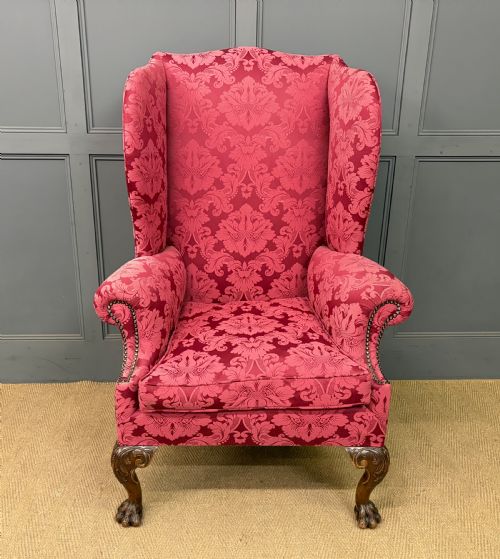
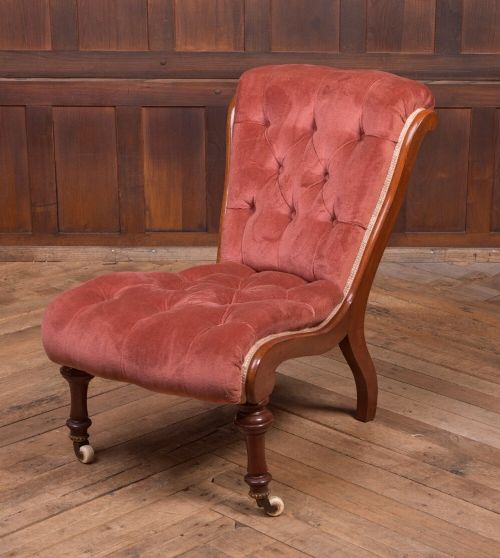
Pink velvet Victorian armchairs encompass various seating forms produced during the nineteenth century, including nursing chairs, spoonback fireside chairs, and walnut-framed open armchairs. These pieces often feature low seats designed for nineteenth-century domestic spaces, paired with deep buttoning and shaped timber frames.
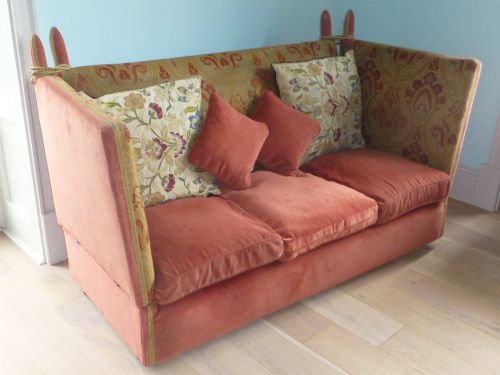
The selection on this page relies heavily on walnut and mahogany show frames combined with velvet upholstery. Buyers encounter pieces ranging from compact bedroom chairs to substantial wing armchairs and carved ladies chairs.
Most examples date across the nineteenth century, showing stylistic shifts from mid-century carved walnut to late-century upholstered bedroom seating. These chairs function as focal points in drawing rooms, bedrooms, and studies.
Materials and construction
Makers built the structural frames of these armchairs using hardwoods such as walnut and mahogany, often employing carved show frames to display the timber around the upholstered sections. Turned or cabriole legs frequently terminate in castors to allow mobility.
Upholstery techniques involved coil springs, stuffing, and deep buttoning secured through the velvet covering. Show wood frames were joined using traditional cabinet-making methods before the application of fabric and brass details.
Listings demonstrate a strong preference for walnut timber frames across nineteenth-century Victorian armchair production.
Distinctions in craftsmanship
Quality in these armchairs rests upon the crispness of the timber carving and the architectural balance of the show frame. Finer examples display deeply moulded walnut or mahogany structures with harmonious proportions rather than plain, utilitarian framing.
The integrity of the frame construction and the subtlety of the upholstery shaping separate standard production pieces from higher-tier workshop output. Maker attribution through stamps or notable firm associations further distinguishes exceptional pieces.
Gillows·Holland and Sons·CVS
The Pink Velvet Victorian Armchairs Glossary
- Spoonback
- An upholstered chair back shaped to resemble the bowl of a spoon, providing ergonomic support for the spine. This form is common in mid-Victorian parlor seating.
- Button back
- An upholstery method where depressions are created across the fabric surface using buttons pulled tight to the internal stuffing. This technique secures the padding and creates a textured pattern.
- Show frame
- A wooden structural surround left visible around the upholstered elements of a chair. It highlights the grain and carved details of walnut or mahogany.
- Nursing chair
- A low-seated Victorian chair originally designed for nurseries or dressing rooms, allowing comfortable tending to infants or dressing seated.
- Balloon back
- A rounded chair back profile forming an enclosed loop resembling a balloon. This design appears frequently on Victorian side and bedroom chairs.
Pink Velvet Victorian Armchairs: Frequently Asked Questions
What rooms suit pink velvet Victorian armchairs?
These armchairs fit well in bedrooms, dressing rooms, and drawing rooms where their decorative timber frames and soft upholstery add warmth.
Their compact scale, particularly in nursing and boudoir chair variants, allows them to sit comfortably in reading corners without dominating the floor space.
How do I identify a Victorian armchair?
Look for characteristic nineteenth-century timber choices like walnut and mahogany, alongside traditional construction methods such as hand-carved show frames and buttoned upholstery.
Details like ceramic castors, spoonback profiles, and specific revival styles help date the piece to the nineteenth century.
Were these chairs originally upholstered in pink?
Victorian upholstery schemes included various rich colours and fabrics, though pink velvet aligns with historical preferences for tactile, luxurious textiles in private rooms.
Many antique pieces receive fresh velvet upholstery to preserve the textile integrity while matching contemporary interior palettes.
How do nursing chairs differ from standard armchairs?
Nursing chairs feature lower seats designed specifically for comfort during domestic tasks in nineteenth-century bedrooms and nurseries.
They often omit heavy wooden arms to accommodate voluminous period skirts and dresses.