

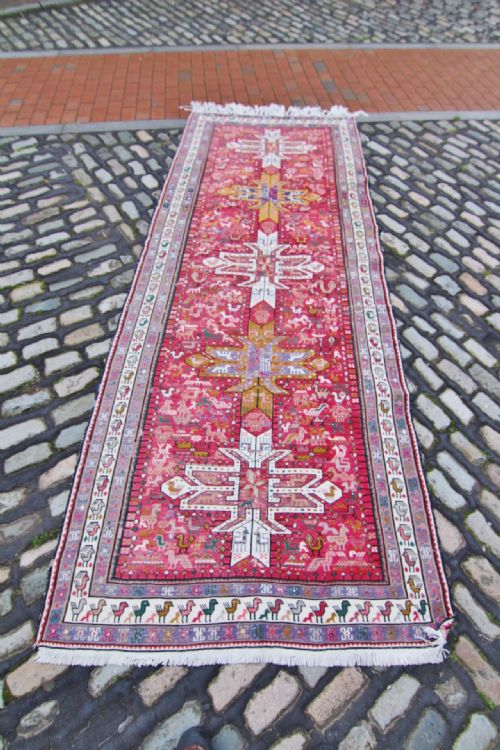
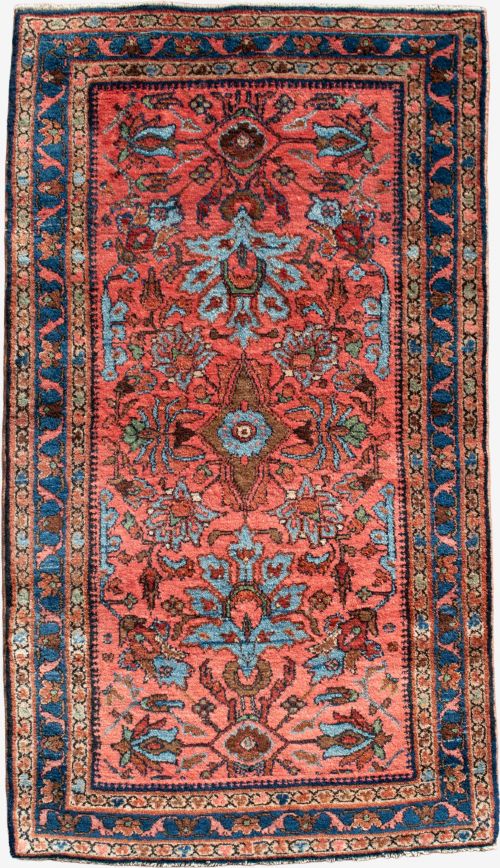
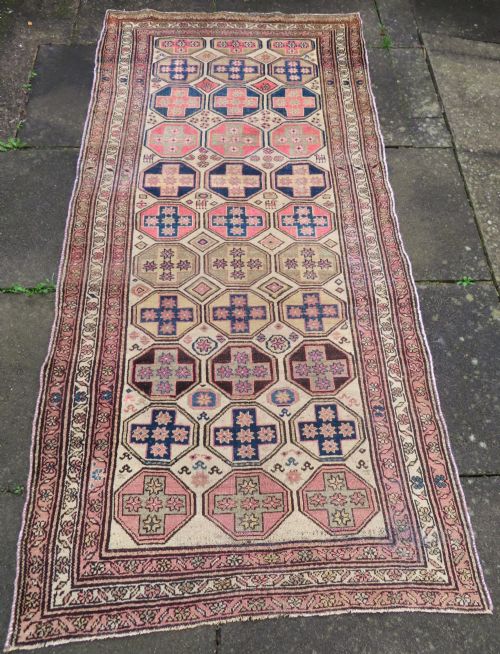
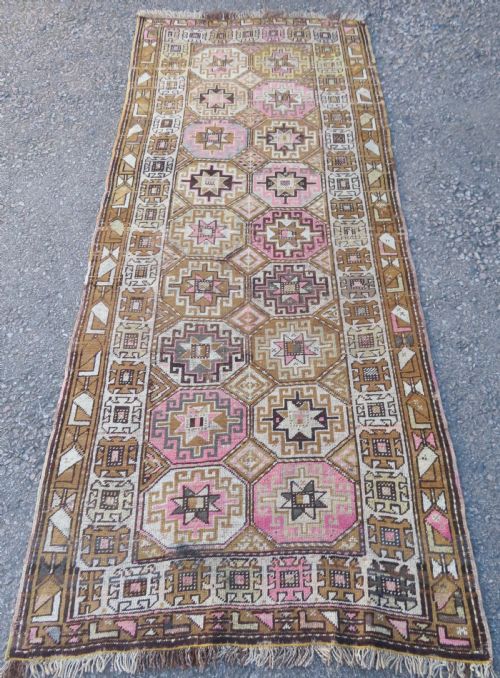
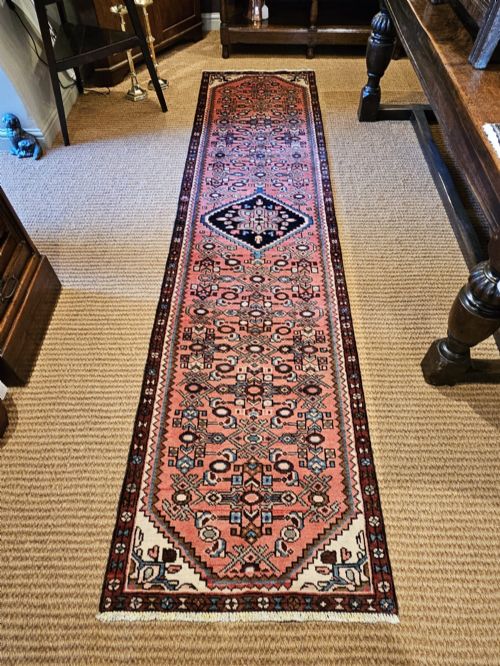
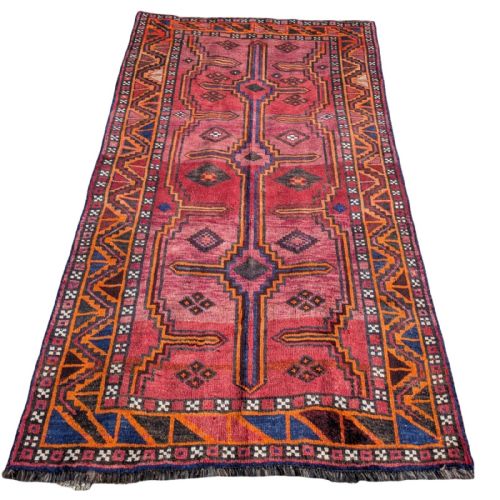


Pink Persian Runner
A pink persian runner brings warmth and pattern to a hallway, drawing the eye with soft floral fields and geometric borders.
Pink Persian Runner
A pink persian runner is a long, narrow floor covering originating from various regions of Persia and woven in tribal or traditional styles. These pieces often feature elongated formats suited for corridors, staircases, and narrow spaces.
The selections available here span the early twentieth century, including pieces dated across the 1900s, 1910s, 1920s, and 1930s. Alongside runners, the listings encompass related forms such as long rugs, area rugs, and village carpets.
Originating from workshops and tribal groups such as Kurdish, Hamadan, Malayer, Sarouk, Luri, and Kirman weavers, these textiles display distinct regional aesthetics. Buyers encounter everything from coarse tribal weaves to finer decorative workshop compositions.
Materials and construction
These floor coverings are constructed using traditional hand-weaving techniques, utilising natural textile materials that provide durability for high-traffic areas. Wool forms the primary pile surface, offering resilience underfoot.
Foundation structures typically rely on cotton for warp and weft threads, creating a stable grid that supports the knotted or woven pile. Hand-weaving methods ensure each textile possesses individual characteristics derived from village and nomadic traditions.
Pink Persian Runner Retail Price Guide 2026
Typical asking prices for pink persian runner among the pieces listed under this phrase on Sellingantiques today, from the lower quarter to the upper quarter. They describe what is for sale here now, not the wider market.
The listings span four decades from the 1900s through the 1930s, constructed entirely from wool and cotton.
Assessing quality
Quality in these textiles depends on the fineness of the weave and the precision of the design execution. Tighter knotting and more intricate pattern work distinguish workshop pieces from coarser village or nomadic productions.
The condition of the wool pile and the structural integrity of the cotton foundation determine the longevity of each runner. Uniformity in proportions and clarity of colour saturation further separate standard village examples from finer regional outputs.
The Pink Persian Runner Glossary
- Runner
- A long, narrow carpet format specifically designed for corridors, hallways, and staircases. Their proportions dictate use in spaces where standard rectangular rugs do not fit.
- Pile
- The upright yarn surface of a rug, formed by knotted or woven threads. In these pieces, the pile is predominantly rendered in wool.
- Warp
- The vertical foundation threads stretched lengthwise on a loom before weaving begins. Cotton is frequently utilised for this structural component.
- Weft
- The horizontal threads passed alternately over and under the warp threads to bind the knots in place. This contributes to the overall stability of the textile.
Pink Persian Runner: Frequently Asked Questions
Where should I place a long runner?
These narrow floor coverings suit hallways, corridors, and narrow passageways where linear dimensions matter.
They also function effectively beside beds or in galley kitchens to introduce texture and warmth to wooden or stone floors.
How do I care for an antique wool rug?
Regular gentle vacuuming without a rotating brush roll helps remove surface dust and debris without damaging the fibres.
Professional specialist cleaning is recommended when deeper maintenance is required to preserve the natural wool pile.
How are different tribal styles identified?
Regional attributions are determined by specific motifs, border arrangements, and structural characteristics unique to particular weaving groups.
Kurdish, Hamadan, and Malayer pieces each exhibit distinct structural traits and colour palettes that distinguish their origin.