
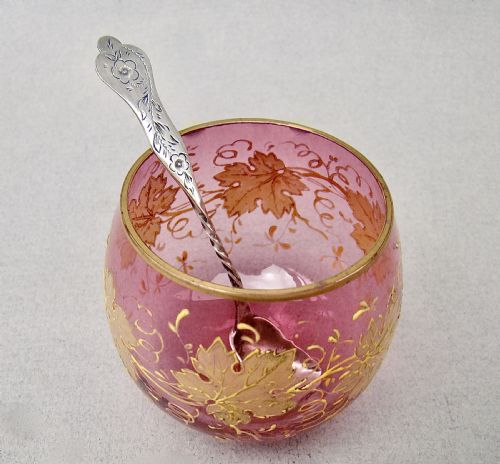


Pink Glass Dish
These pink glass dish options range from Victorian cranberry preserve dishes to Edwardian stands, bringing rich colour and historic table craft into modern rooms.
How they were made
The production of these objects relies on glass manipulation, often utilising cranberry glass formulations where gold is added to the molten batch to achieve the characteristic pink hue. Artisans shaped these vessels while hot, frequently adding frilled rims and delicate handling before cooling.
Metalwork played a vital structural role, pairing the glass inserts with silver plated stands, pierced spoons, and silver gilt baskets. Techniques like plique-a-jour and enamel work further adorned specific dressing table accessories and decorative elements.
What varies in quality
Quality in these pieces is dictated by the depth and consistency of the glass colour, alongside the crispness of any frilled or moulded detail. Finer examples display a rich, even cranberry tone paired with substantial metal mounts rather than thin plating.
The integration between the glass dish and its metal stand defines the overall standard of the object. Superior items feature bespoke silver plated or silver gilt frames that hold the glass securely while enhancing the visual weight of the piece.
Periods represented span from the nineteenth century and Victorian era through to Edwardian and Art Deco years.
Moser·Daum France
The Pink Glass Dish Glossary
- Cranberry Glass
- A type of transparent red-pink glass created by adding gold chloride to the molten batch. It became exceptionally popular during the Victorian period for tableware and decorative items.
- Plique-a-jour
- An enamelling technique where enamel is applied within a network of metal cells without a backing, allowing light to shine through the translucent material like stained glass.
- Preserve Dish
- A small bowl specifically intended for serving jams or preserves at the table. These often accompanied silver plated stands and specialised spoons.
- Salt Cellar
- A small open vessel used to hold salt at the dining table before the invention of free-flowing table salt. They frequently appeared in pairs alongside tiny spoons.
Pink Glass Dish: Frequently Asked Questions
What is a pink glass dish used for?
These pieces served practical functions on the dining table and dressing table, holding preserves, jams, salts, or small cosmetic items.
Today, they adapt easily to modern interiors as decorative accents, small catchalls, or serving vessels for intimate gatherings.
How do I care for my dish?
Wash the glass gently in warm soapy water using a soft cloth, avoiding abrasive pads that might scratch the surface.
Polish silver plated stands separately with a dedicated cloth to preserve the finish without transferring harsh chemicals onto the glass.
How do I date a pink glass dish?
Examine the manufacturing style, mounting techniques, and hallmarks on any silver components to narrow down the era.
Victorian pieces often feature deep cranberry hues with frilled rims, while later twentieth-century items show distinct art glass characteristics.
Are stands original to the dishes?
Many preserve dishes and bowls were manufactured alongside their silver plated or silver gilt stands as unified table sets.
Fit and proportion offer the best clues to originality, as period metal mounts were custom-sized to cradle specific glass forms.