

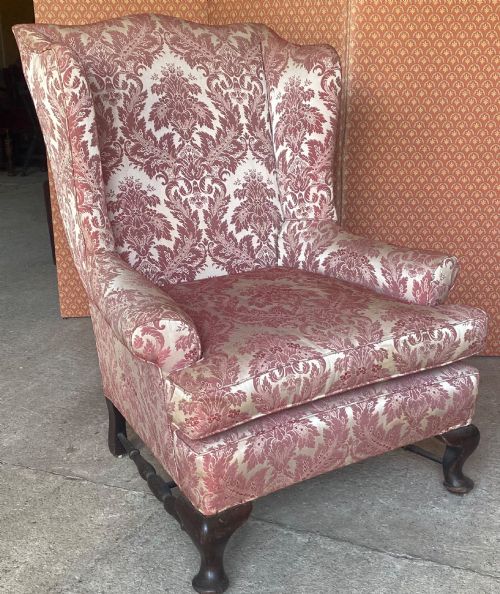
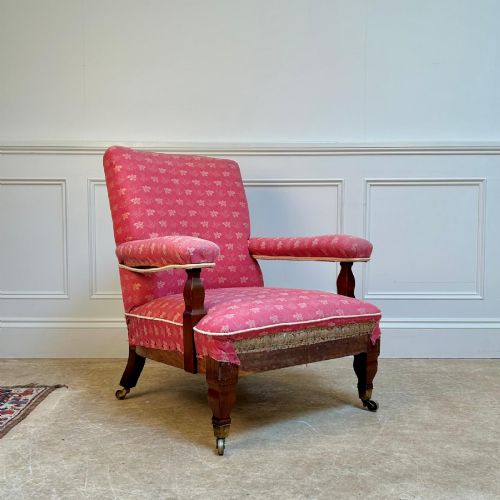
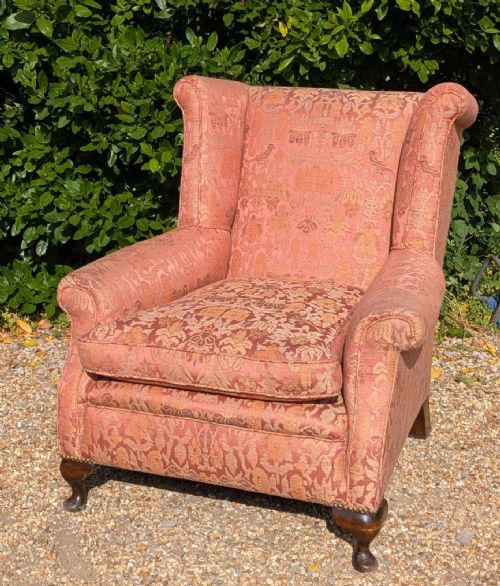
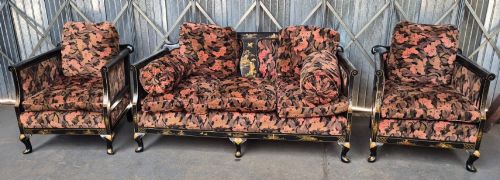
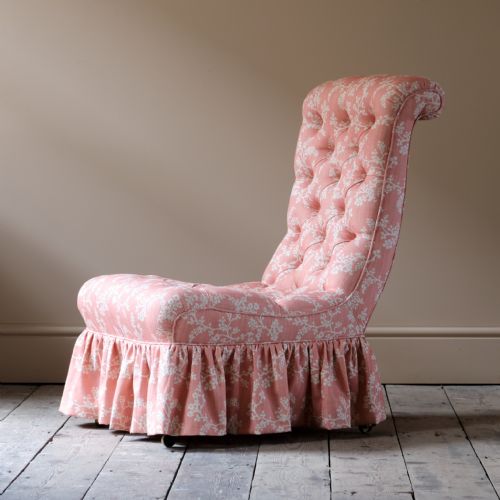


Pink Floral Chair
A pink floral chair brings pattern and warmth into a room, spanning forms from Victorian ladies chairs to Edwardian armchairs.
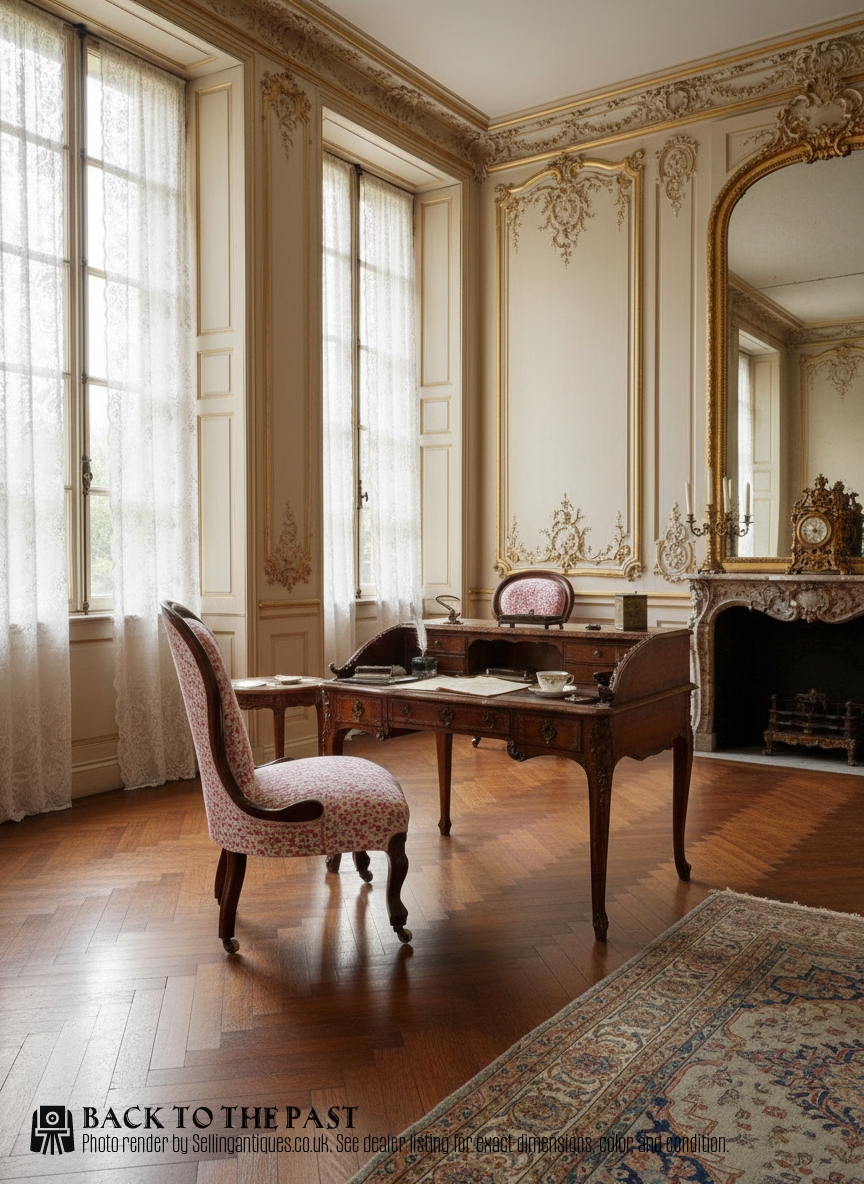
Pink Floral Chair
When you search for a pink floral chair, you encounter seating designed for comfort and reception across the nineteenth and early twentieth centuries. The selection on this page centres on armchairs, slipper chairs, nursing chairs, and three-piece suites.
You meet pieces originating from the Victorian era through the Edwardian period, alongside English Country House interpretations. The styles range from Rococo Revival and Queen Anne to Arts and Crafts and Chinoiserie frames.
The forms vary from low bedroom and boudoir seating to high-back wing armchairs and salon seating. Walnut, mahogany, and diverse wood frames support upholstered textile coverings.
How they were made
The structural frames rely on solid hardwoods including mahogany and walnut, shaped through turning, carving, and marquetry inlay. Joinery techniques secure the uprights and rails before springing and padding are applied.
Upholstery work incorporates traditional textile coverings such as damask, velvet, and patterned fabric. Details like feather filling, brass castors, and hand-painted decoration finish the pieces.
Listings span the nineteenth and early twentieth centuries, featuring wood frames of mahogany and walnut paired with velvet, damask, and fabric.
What varies in quality
Quality reveals itself in the integrity of the timber frame and the precision of the cabinetwork, from plain mahogany to elaborate marquetry inlay. Maker attribution also distinguishes standard production from notable London workshops.
The standard of upholstery and the choice of textile, whether simple fabric or rich damask and velvet, dictate the finish. Surviving original decorative elements like hand-painted motifs add distinction to the piece.
George Jack For Morris & Co·Gillows·Hindley & Sons·Maple & Co
The Pink Floral Chair Glossary
- Wingback armchair
- A comfortable seat featuring protective side panels designed to shield the sitter from draughts. These pieces often stand on mahogany or walnut frames.
- Slipper chair
- A low-seated chair historically used in bedrooms for dressing or putting on footwear. They frequently appear in Victorian and Edwardian forms.
- Nursing chair
- A low chair with an upholstered seat designed to allow a mother to nurse an infant in comfort. They often feature carved wooden frames without arms.
- Marquetry
- Decorative inlay work using various coloured wood veneers to create geometric or floral patterns. This technique appears on Edwardian salon seating.
- Damask
- A reversible figured fabric woven on a jacquard loom, frequently utilised for historic upholstery. It provides texture and subtle pattern to period chairs.
Pink Floral Chair: Frequently Asked Questions
How do I date a pink floral chair?
Dating relies on identifying stylistic markers, timber types, and structural construction methods. Victorian pieces often display heavier mahogany frames, whereas Edwardian examples introduce lighter inlaid mahogany or Chinoiserie decoration.
Examining the upholstery webbing and interior stuffing gives further clues to the period of manufacture. Makers' stamps or paper labels, when present, provide definitive dates.
Are these chairs comfortable for daily use?
Many period armchairs are surprisingly comfortable, particularly those featuring feather filling and deep springing. Slipper and salon chairs tend to offer a firmer, more upright sit suited to occasional use.
Sitting posture changed over the decades, so nineteenth-century chairs generally sit lower and more upright than modern equivalents. Trying the seat helps determine how it suits your routine.
Where should I place a boudoir chair?
These compact seats suit bedrooms, dressing rooms, or quiet corners of a drawing room. Their smaller scale allows them to fit spaces where a large armchair would overwhelm the floor plan.
They function well as accent pieces next to a fireplace or dressing table. Positioning them away from direct sunlight protects the pink textile from fading.