

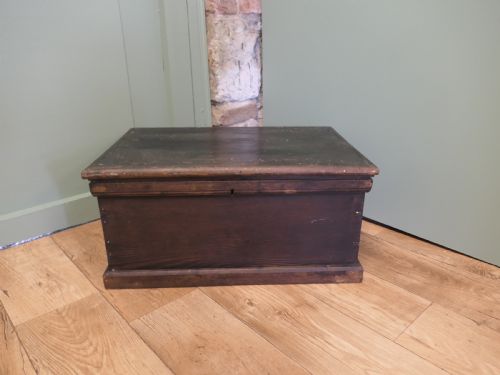
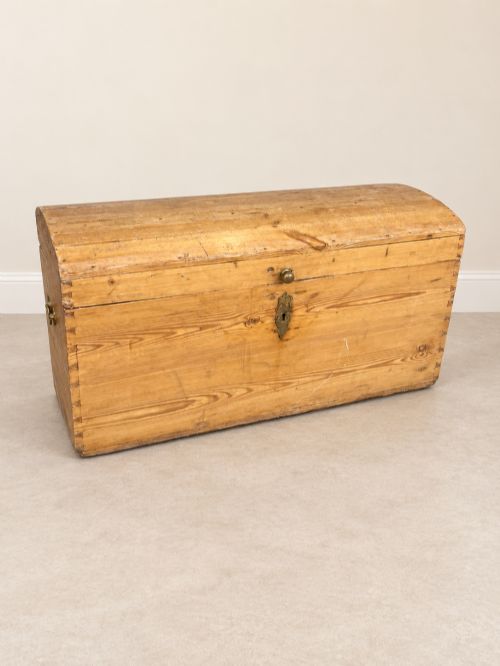
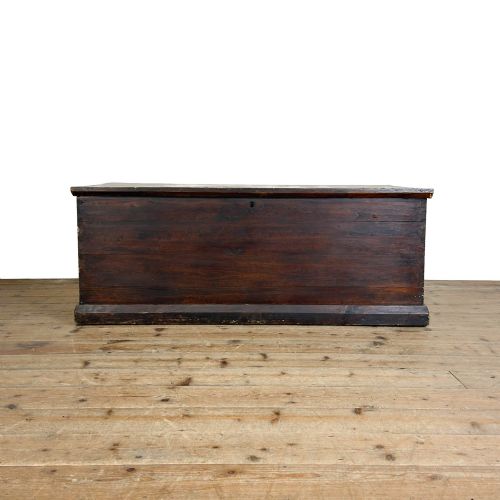
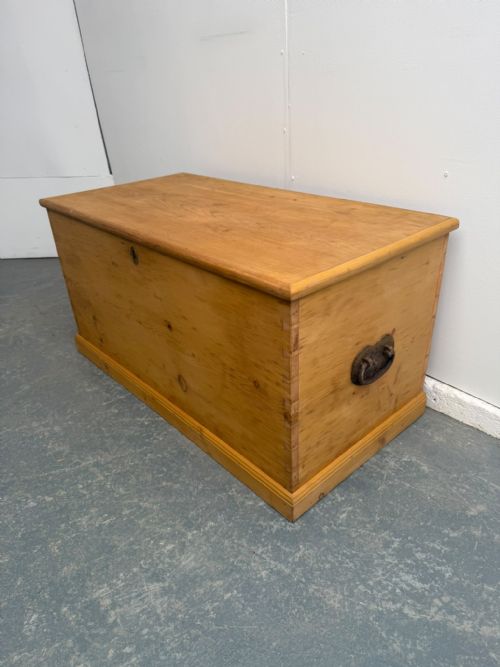


Pine Wood Coffer
A pine wood coffer offers enduring storage utility, bringing straightforward country character and robust timber construction into a room.
Pine Wood Coffer
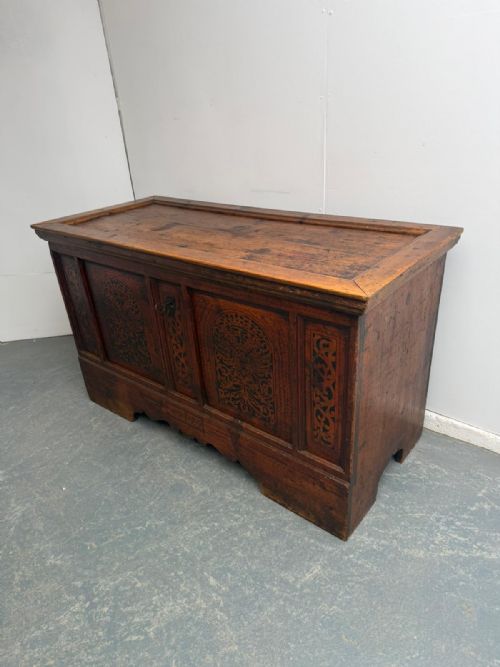
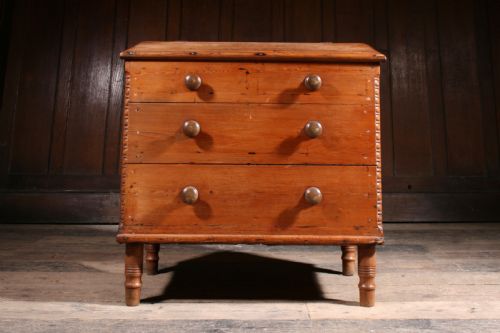
A pine wood coffer serves as a traditional storage chest, blanket box, or trunk, designed for domestic utility. These pieces range from simple carpenter-made boxes to heavily decorated Scandinavian folk art examples and Georgian mule chests.
The versions most commonly met on this page date from the eighteenth and nineteenth centuries, including Victorian country pieces and continental painted strong boxes. They frequently double as blanket boxes, log bins, or travelling trunks.
Origins stretch across British, French, and Scandinavian workshops, displaying regional preferences for stained surfaces, scumbled paintwork, or iron banding.
How they were made
Makers utilised solid pine timbers joined to create rigid box structures meant to withstand heavy domestic or military use. Iron bands, brass bindings, and wrought iron hardware reinforced corners and lids against the strains of travel.
Surfaces received various treatments depending on origin and period, ranging from plain waxed finishes to elaborate hand-painted folk art motifs. Scumbled paint finishes and dark stains added decorative depth to otherwise utilitarian storage bins.
Pine Wood Coffer Retail Price Guide 2026
Typical asking prices for pine wood coffer among the pieces listed under this phrase on Sellingantiques today, from the lower quarter to the upper quarter. They describe what is for sale here now, not the wider market.
Listings feature pieces spanning the eighteenth century through to the early twentieth century, incorporating British, French, and Scandinavian origins.
What varies in quality
Distinction across the range lies in the integrity of construction, the sophistication of surface decoration, and the survival of original hardware. Simple ammunition cases and plain storage boxes sit at one end, while elaborate eighteenth-century Swedish marriage boxes with labyrinth decoration represent another.
The presence of untouched original paintwork, authentic iron banding, and period brass details elevates a piece from a basic carpenter's box to a significant example of regional folk art.
The Pine Wood Coffer Glossary
- Cofer
- A large wooden chest used for storing valuables, linen, or personal possessions. They often feature hinged lids and sturdy iron mounts.
- Mule chest
- A storage chest featuring one or more drawers beneath the main compartment. This form bridges the gap between the traditional coffer and the chest of drawers.
- Scumbled paint
- A decorative technique involving the layering of translucent or opaque glazes over a base coat to simulate grain or texture. It was frequently applied to Victorian storage boxes.
- Log bin
- A heavy container designed to hold firewood by the hearth. These often incorporate iron bands for added structural strength.
- Folk art
- Artistic work created within a traditional culture by self-taught makers. In these listings, it refers to hand-painted Scandinavian marriage boxes and decorated storage chests.
Pine Wood Coffer: Frequently Asked Questions
What is a pine wood coffer used for?
These pieces functioned historically as secure storage for blankets, linen, provisions, or valuables. In a modern setting, they provide practical concealed storage while serving as coffee tables or blanket boxes at the foot of a bed.
Their sturdy timber construction allows them to double as occasional seating or robust log bins beside a fireplace.
How do I tell an eighteenth-century coffer from a Victorian one?
Early pieces from the eighteenth century often display regional European characteristics, such as Swedish folk art decoration, hand-cut dovetails, and unique marriage box motifs. Victorian examples tend to show simpler construction methods, standard hardware, or scumbled painted finishes.
Examining the type of nails, hinges, and interior timber tool marks helps establish the likely period of manufacture.
Are painted pine chests original?
Many Scandinavian and continental pieces retain their original hand-painted surfaces, which often include decorative motifs, dates, or labyrinth patterns. British country pieces more frequently display waxed pine or later stained finishes.
Closer inspection of the paint layers reveals whether the colour is contemporary with the timber's construction or a later application.
How do I care for an antique pine coffer?
Maintain the timber by keeping the piece away from direct heat sources and severe humidity fluctuations, which can cause the pine to split. Occasional application of a suitable natural wax preserves the finish without sealing the wood.
Avoid harsh chemical cleaners, particularly on pieces with original painted surfaces or delicate ironwork.