

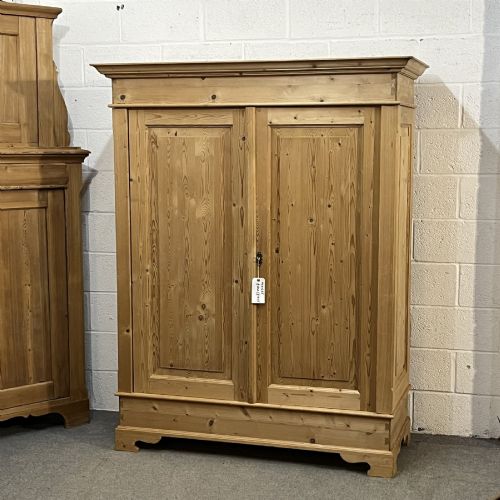
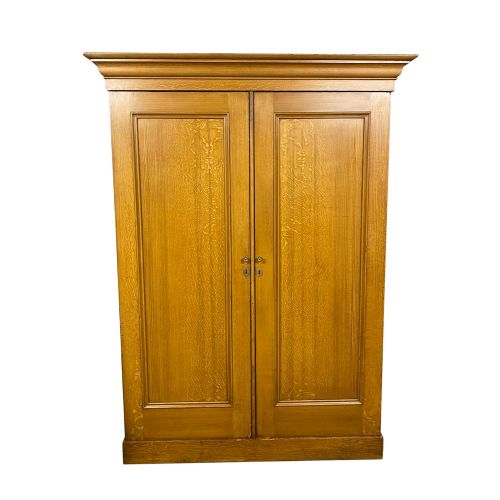
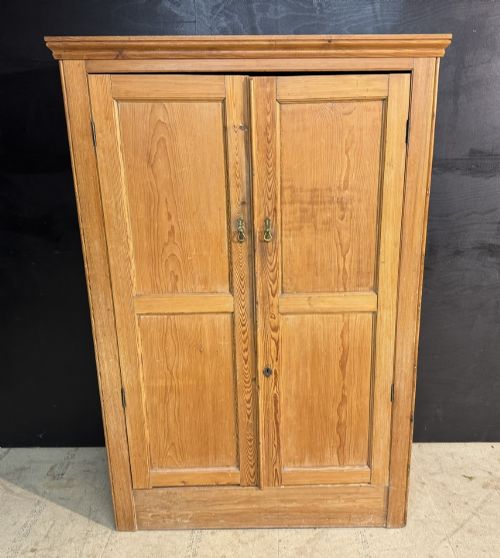
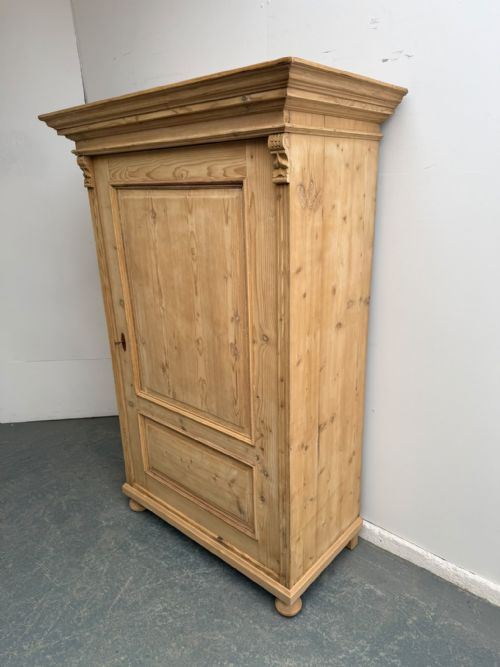
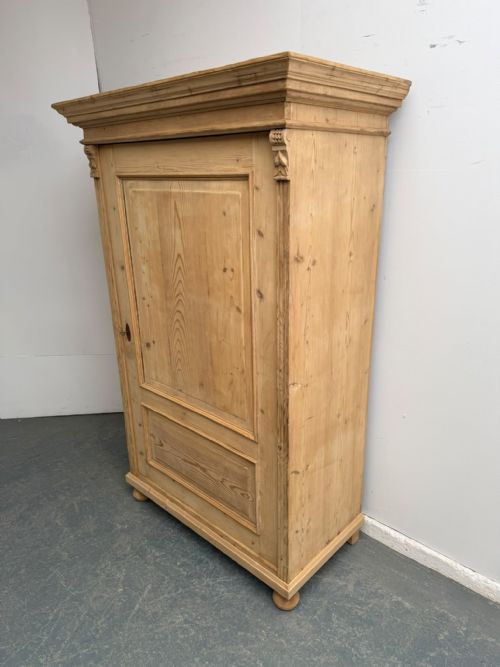


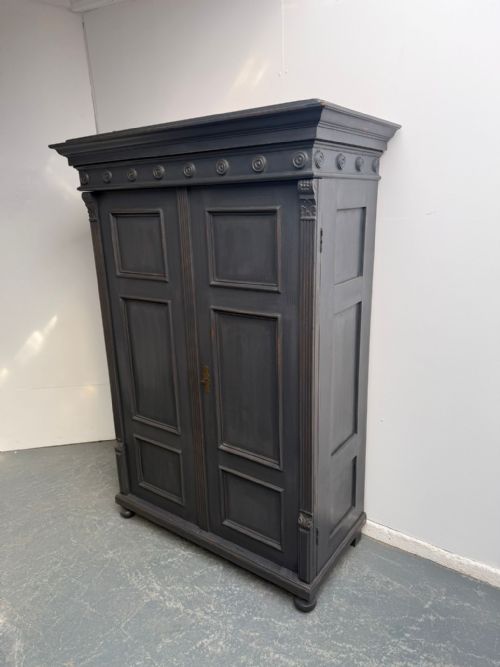


Pine Panelled Door Armoire
These pine panelled door armoire pieces are large timber storage cupboards offering substantial interior volume for modern homes.
Pine Panelled Door Armoire
When searching for a pine panelled door armoire, buyers encounter robust storage furniture originating from the Georgian, Victorian, and 18th Century periods. These pieces serve primarily as wardrobes, linen presses, and large cupboards, designed to handle domestic storage with straightforward utility.
The most common versions on this page are sturdy 19th Century and Victorian wardrobes, alongside earlier Georgian and 18th Century country cupboards. Many examples feature knock-down construction or single and double panelled doors suited to traditional interiors.
How they were made
Construction relies heavily on solid pine, shaped with fielded panels and supported by iron and brass hardware. Cabinetmakers utilised traditional joinery methods to build large carcasses that often dismantled into sections for transport.
Surfaces frequently show original finishes including scumble paint, faux oak graining, or bare wood prepared for waxing and painting. Metal hinges and escutcheons complete the structural assembly.
Pine Panelled Door Armoire Retail Price Guide 2026
Typical asking prices for pine panelled door armoire among the pieces listed under this phrase on Sellingantiques today, from the lower quarter to the upper quarter. They describe what is for sale here now, not the wider market.
Some school cupboards retain original interior shelf labels written in faded Victorian copperplate ink.
What varies in quality
Quality differences depend on the crispness of the fielded panels and the integrity of the original surface finishes, such as scumble paint or early painted schemes. Pieces retaining their original hardware and intact dismantling mechanisms rank higher.
Proportion and scale distinguish finer examples, particularly where classical Georgian lines or substantial French mountain cupboard proportions meet careful timber selection. The weight of the timber and the tightness of the joinery set standard country pieces apart from finer architectural specimens.
The Pine Panelled Door Armoire Glossary
- Fielded panel
- A central wood panel with thinned edges designed to fit into a grooved frame, allowing the wood to expand and contract safely. This technique adds depth and shadow lines to cupboard doors.
- Scumble paint
- A decorative glazing technique used to imitate finer timbers like oak over a pine base. Artisans manipulated translucent paint layers with combs or brushes to create grain patterns.
- Knockdown wardrobe
- A large piece of furniture engineered to dismantle into modular sections for ease of transport and installation. These pieces use wedge pins or bolts rather than permanent glue.
- Linen press
- A tall cupboard featuring upper sliding trays or shelves for textiles and lower drawer storage. This form kept household linens flat and protected from dust.
- Compactum wardrobe
- A multi-compartment wardrobe combining hanging space, shelves, and drawers within a single carcass. It provides varied internal organisation for clothing.
Pine Panelled Door Armoire: Frequently Asked Questions
How do I dismantle a knockdown wardrobe?
These wardrobes use internal wooden pins, bolts, or tongue-and-groove joints that slide apart when tapped gently with a mallet. Keeping track of individual panel positions ensures straightforward reassembly in a new room.
Marking the hidden edges with chalk helps maintain the correct order of the component parts during the process.
Can I paint a waxed pine cupboard?
Waxed surfaces prevent modern emulsion or acrylic paint from adhering properly until the old wax is thoroughly removed. Thorough cleaning with a suitable solvent prepares the timber for a new coat of primer.
Applying a dedicated knotting solution also stops resin bleed from showing through light-coloured paint finishes.
What is the difference between an armoire and a linen press?
An armoire primarily provides deep hanging space behind large doors for garments, whereas a linen press houses internal sliding shelves or trays specifically for folded textiles. Many regional variants blend these internal layouts.
Looking inside the main compartment reveals whether the interior was built for coat hangers or stacks of fabric.
How do I date an antique pine cupboard?
Dating relies on construction clues such as handmade iron nails, saw marks left by frame saws, and the style of the fielded panels. Georgian and 18th Century pieces often display hand-planed surfaces and pegged joints.
Victorian examples tend to feature more standardised machine-sawn timber components and brass fittings.