
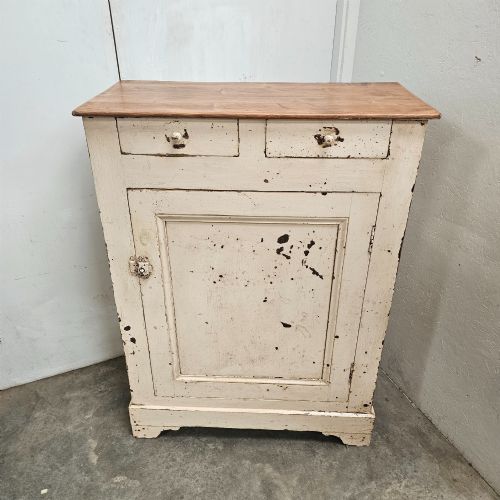
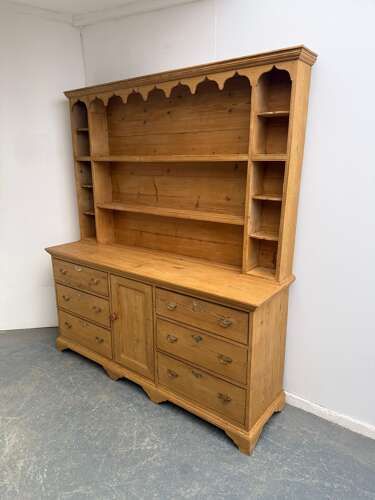

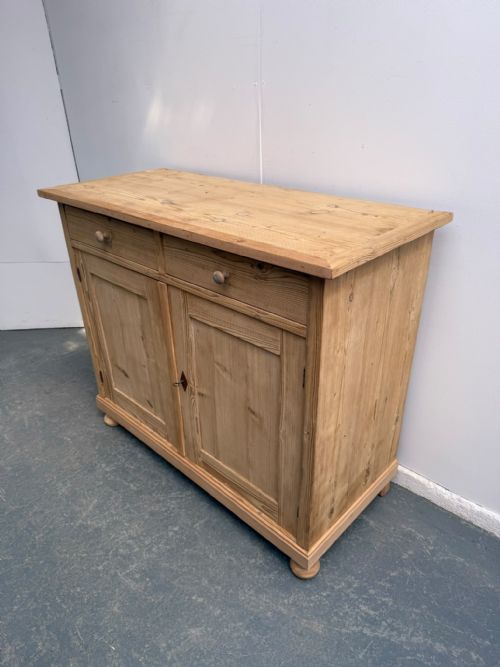
Pine Kitchen Sideboard Cabinet
A pine kitchen sideboard cabinet brings honest utility and warmth to a room, offering sturdy storage shaped by generations of practical use.
Pine Kitchen Sideboard Cabinet
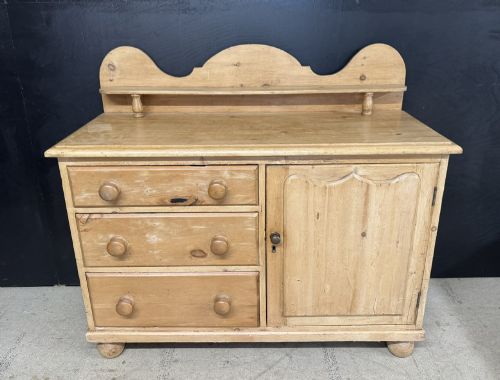
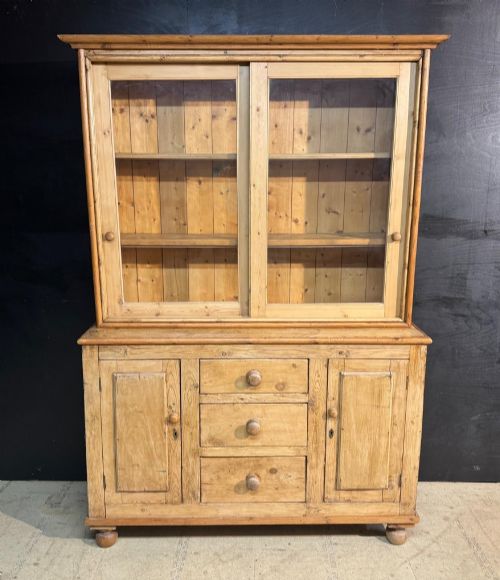
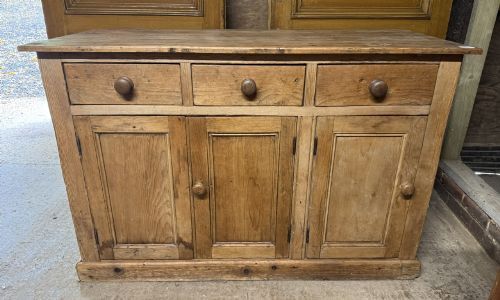
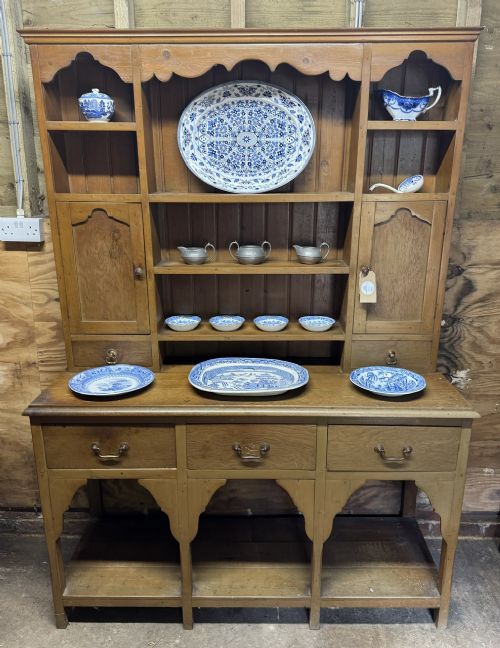
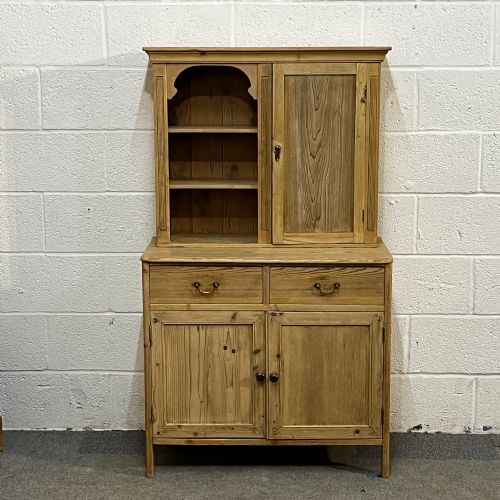
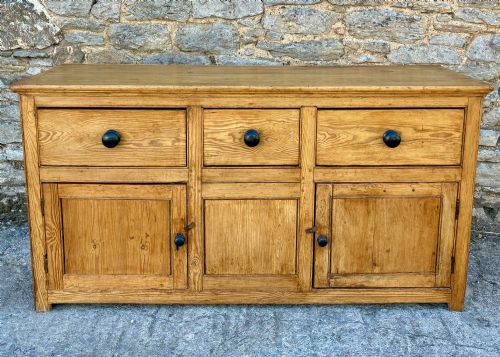
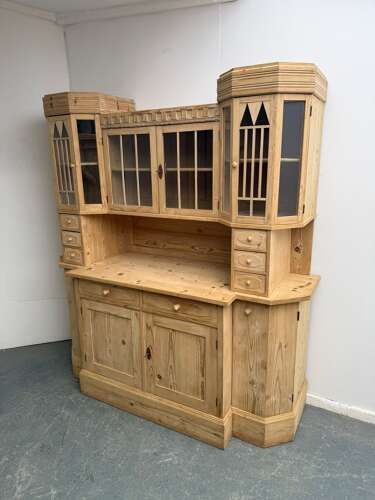
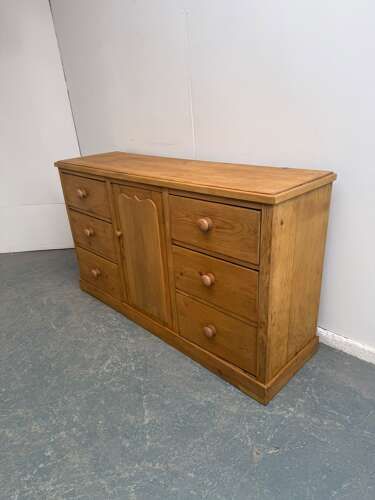
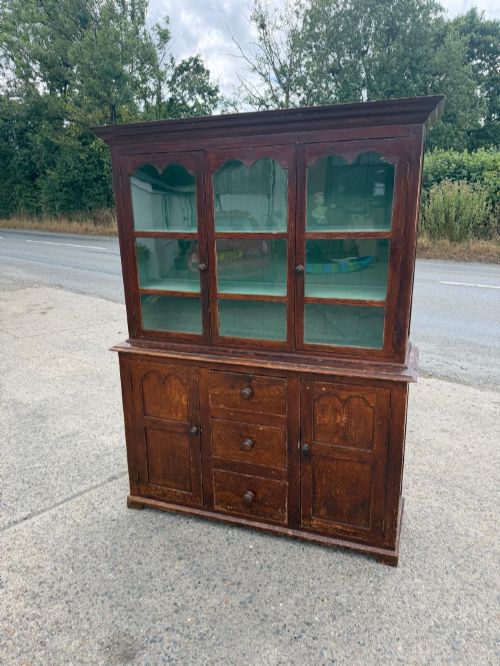
A pine kitchen sideboard cabinet encompasses versatile pieces designed for storage and food preparation in domestic spaces. When searching for a pine kitchen sideboard cabinet, buyers encounter forms ranging from low dresser bases and cupboards to tall kitchen dressers with display shelving.
The selection reflects origins spanning English, Welsh, Scottish, French, Scandinavian, and Hungarian traditions. Pieces appear from the Georgian, Victorian, and early twentieth-century periods, showing regional variations in proportion and hardware.
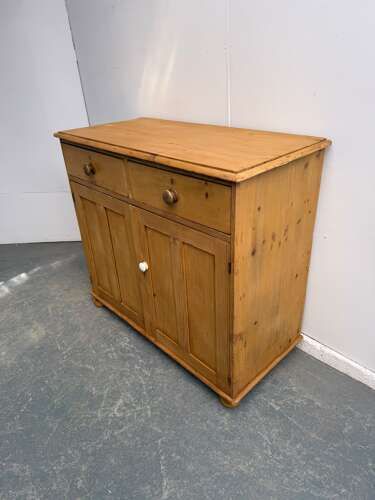
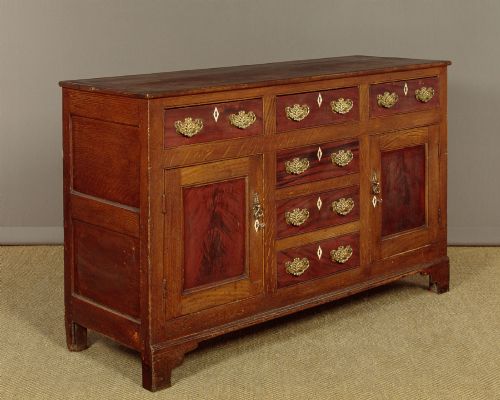
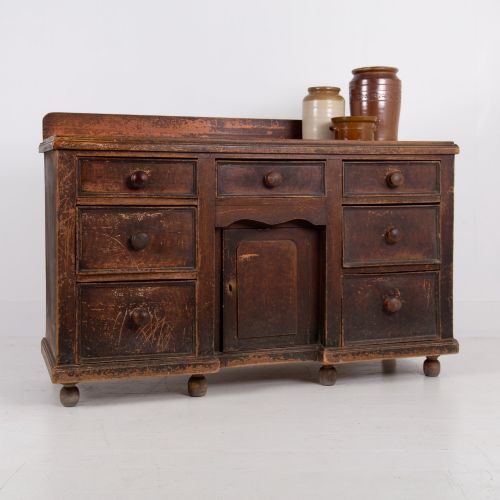
The most common formats on this page are dresser bases, sideboard cabinets, and larder cupboards built for everyday service in country kitchens.
How they were made
Makers built these items primarily using solid pine, supplemented by brass, iron, and ceramic fittings. Surfaces received either a wax finish to highlight the grain or coats of paint that often weathered over decades of use.
Construction methods relied on traditional joinery techniques suitable for hardworking furniture, incorporating panelled doors, dovetailed drawers, and occasionally glazed upper sections or tiled panels.
Listings feature pine, brass, paint, glass, iron, wood, ceramic, and metal across Georgian, Victorian, and early twentieth-century periods.
What varies in quality
Quality rests upon the integrity of the original construction and the preservation of authentic surfaces. Pieces retaining their early paint finishes or deep, warm patinas achieved through decades of waxing stand apart from later alterations.
Proportion and regional character also dictate distinction, with well-balanced drawer arrangements, original brass or iron hardware, and undisturbed timber structures representing the finest examples of domestic cabinet-making.
The Pine Kitchen Sideboard Cabinet Glossary
- Dresser base
- A low cabinet featuring drawers and cupboards beneath a flat top surface, originally used for food preparation and serving.
- Patina
- The surface sheen and mellow tone developed on timber over years of handling, polishing, and natural ageing.
- Bread slide
- A pull-out wooden shelf integrated into a cabinet base, historically used for cooling freshly baked bread.
- Confiturier
- A small French cupboard traditionally designed for storing pots of confit and preserves.
- Breakfront
- A piece of furniture where the central section projects forward from the flanking outer sections.
Pine Kitchen Sideboard Cabinet: Frequently Asked Questions
How do I care for a waxed pine cabinet?
Maintain a waxed pine surface by applying a quality natural beeswax periodically and buffing it with a soft cloth to preserve the sheen. Avoid placing the cabinet near direct heat sources or in damp areas to prevent the timber from warping.
Clean the wood gently using a dry or barely damp cloth, steering clear of harsh chemical sprays that strip the traditional wax finish.
Were these cabinets originally painted or waxed?
Many utility cupboards and dresser bases started their working lives with protective coats of paint, while others received simple wax treatments to nourish the softwood. Original paint finishes often survived years of domestic use and now provide significant character.
Stripping was also common in later decades when tastes shifted towards exposed timber, meaning both painted and waxed surfaces reflect genuine historical periods.
How can I tell a Victorian piece from an earlier one?
Victorian pieces often display heavier proportions, machine-sawn timber elements, and standardised iron or brass hardware compared to Georgian items. Construction details like drawer dovetails also offer clues, with finer, hand-cut joints typically pointing to earlier craftsmanship.
Regional styles and recorded dates within the evidence further help distinguish the mid-nineteenth-century items from their eighteenth-century predecessors.
Where were these kitchen cabinets made?
These items originate from workshops across the British Isles, including Welsh, English, and Scottish regions, as well as continental countries such as France, Sweden, and Hungary. Local cabinet-makers utilised readily available softwood to build robust furniture tailored to domestic needs.
Distinct regional traits emerge in the proportions, cornice designs, and foot styles found across different European country workshops.