


Pine Hall Stand
These pine hall stand pieces offer practical country house organisation, pairing sturdy softwood construction with useful hooks, rails and umbrella wells for daily hallway utility.
Pine Hall Stand
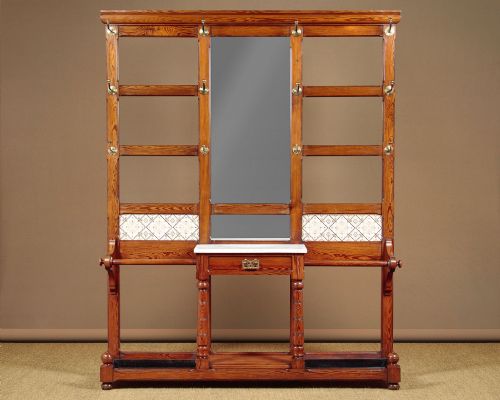
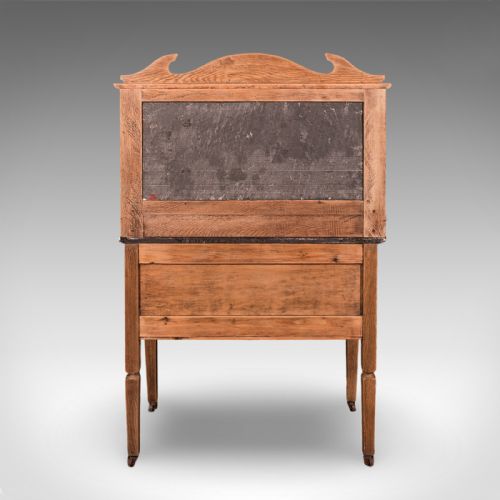
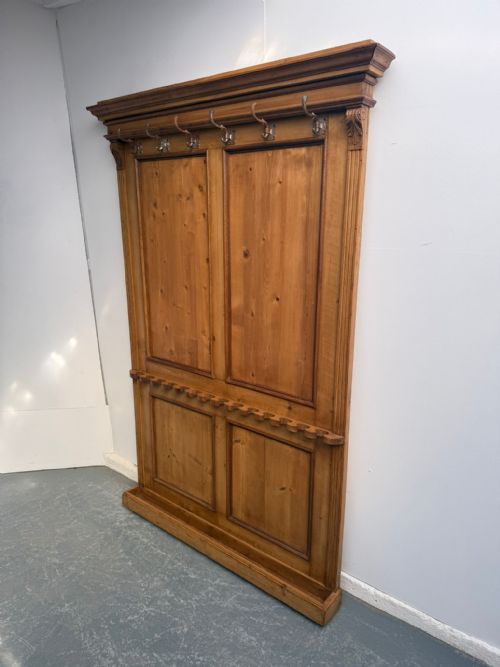
A pine hall stand provides hallway storage for coats, hats and sticks, appearing in forms from large Victorian country house examples to more compact Edwardian pieces. These items combine vertical framework with pegs, mirror glass and drip trays designed to keep entryways orderly.
The pieces seen on this page span the Victorian and Edwardian eras, with notable representation from the nineteenth century alongside rustic country styles. Buyers most frequently encounter variations built from plain or pitch pine, occasionally incorporating painted finishes or ceramic elements.
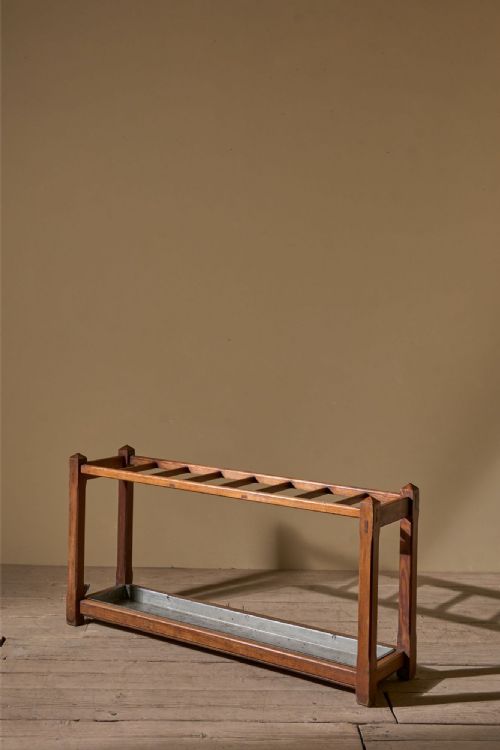
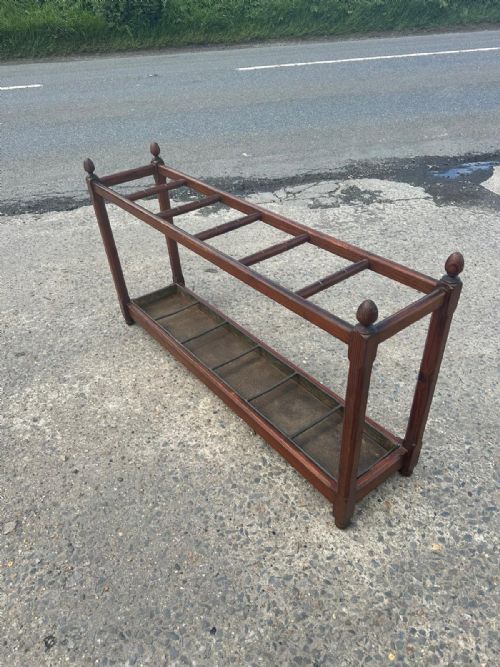
Related forms such as stick stands, umbrella stands and coat racks appear alongside combined furniture incorporating benches, settlers and cupboards. Each variation serves the fundamental domestic requirement of managing outdoor wear near the entrance of a home.
Materials and construction methods
Makers utilised pine and denser pitch pine for the primary framework, selected for resilience and grain character in domestic furniture. Metal components such as brass and iron provide structural stability and form the coat hooks and umbrella wells.
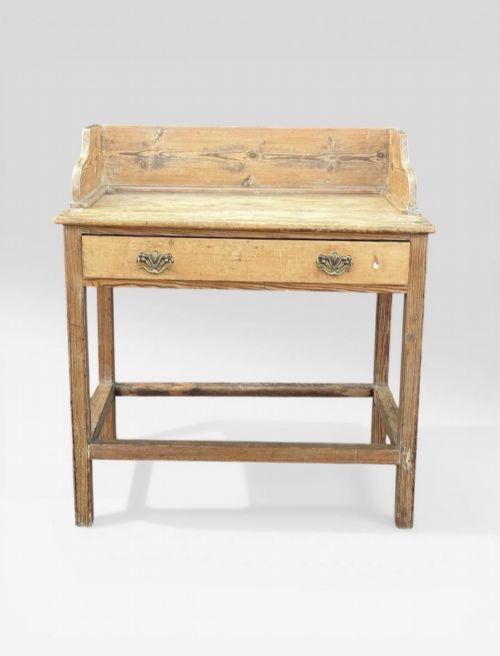
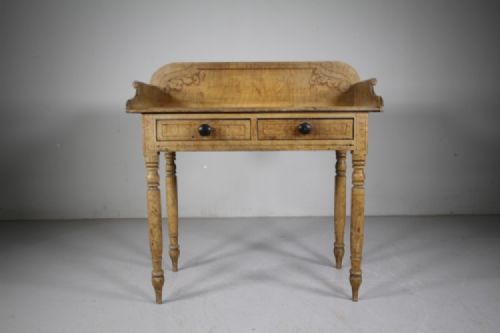
Surface treatments range from natural waxed grain finishes to painted applications, including faux marble effects on related washstands. Ceramic inserts appear as tile gallery backs or drip trays, while mirror glass is integrated into the upper wooden frames.
Some hall stands hid their wet umbrella drips inside lift-up lids, keeping muddy floors safe from guests.
Assessing quality in construction and finish
The distinction between standard examples and superior items rests upon timber selection, particularly the use of dense pitch pine versus ordinary softwood. Scale also dictates quality, with larger country house editions offering more architectural presence and complex joinery.
Originality of surface finish remains paramount, as factory-applied graining, early paint or untouched patination elevate a piece above later stripped versions. The retention of original brass or iron hardware and intact mirror glass further distinguishes the better examples.
The Pine Hall Stand Glossary
- Pitch pine
- A resinous North American and European pine species valued for its durability and prominent grain pattern. It appears frequently in robust nineteenth-century hallway furniture.
- Stick stand
- A piece of furniture designed to hold walking sticks and umbrellas, often incorporating metal or ceramic drip pans at the base. These form a primary component of combined entryway furnishings.
- Gallery back
- A raised wooden or tiled upstand along the rear edge of a furniture top designed to protect walls. In this category, they frequently incorporate decorative tiles.
- Demi-lune
- A half-moon shape used for tables and stands designed to sit flush against an entryway wall. This format saves floor space in narrow hallways.
- Settle
- A wooden bench with a high back and solid arms, sometimes incorporating storage drawers beneath the seat. Examples in pine are found within country furniture traditions.
Pine Hall Stand: Frequently Asked Questions
What is a pine hall stand?
A pine hall stand is a piece of entryway furniture designed to hold coats, hats and umbrellas in domestic hallways. It typically combines vertical wooden panels, pegs, a mirror and umbrella receptacles.
Constructed primarily from softwood, these items served as practical storage solutions in Victorian and Edwardian country houses and town residences.
How do I date a pine hall stand?
Dating relies on stylistic markers, construction techniques and materials such as pitch pine or brass hardware. Victorian examples often display heavier proportions and decorative carved details.
Edwardian pieces tend to show lighter construction, while specific dates like eighteen eighty or nineteen twenty are indicated by documented design shifts and original registration details.
Where were these pieces used?
These items stood in the entrance halls and corridors of domestic houses to receive outdoor garments upon arrival. They provided an organised station for hats, coats, and walking sticks.
Their placement near the front door made them essential for daily household management in the nineteenth and early twentieth centuries.
What is the difference between pine and pitch pine?
Pitch pine contains a higher resin content, which gives the timber greater weight, durability and a distinctively prominent grain. It was chosen for heavy-use hallway furniture.
Standard pine offers a lighter appearance and softer texture, responding differently to historical finishes and surface patination over time.
Are these pieces painted or natural wood?
Examples survive in both natural waxed pine and historical painted finishes, including original paint and faux marble effects. Surface treatments vary according to the period and regional workshop traditions.
Some pieces retain early grain finishes applied to imitate costlier hardwoods during the Victorian era.