




Brown Timber Coat Stand
A brown timber coat stand answers the hallway's need for order, offering solid wood construction and practical hooks for hats and garments.
Brown Timber Coat Stand
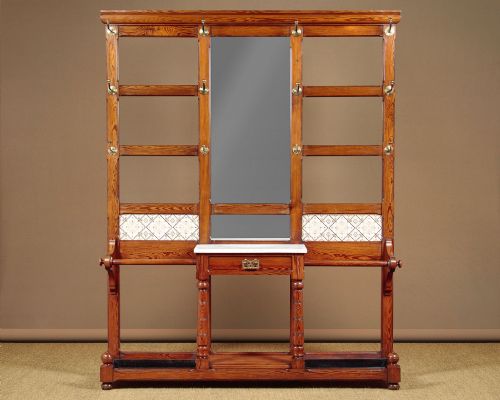
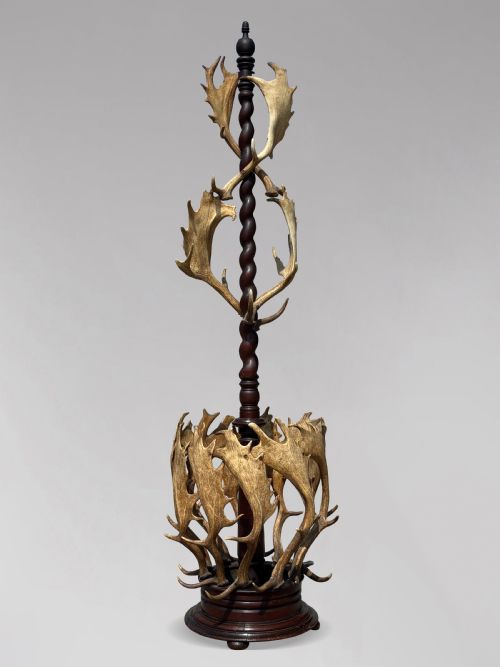
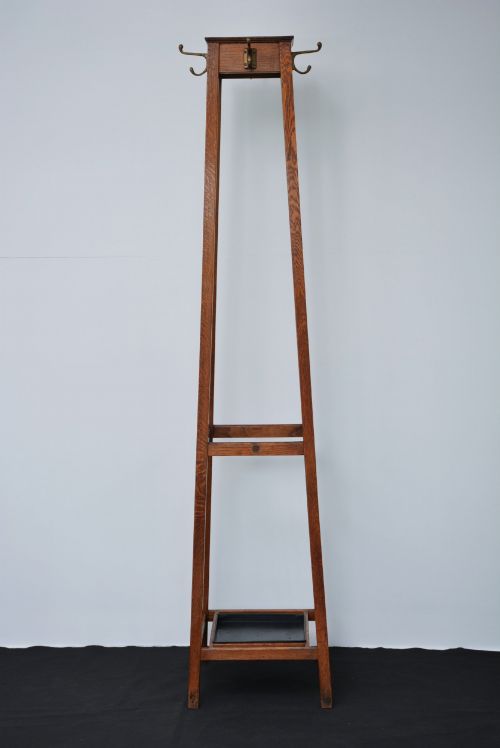
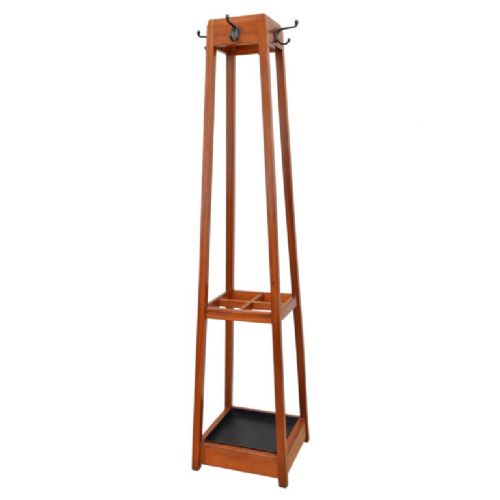
When you search for a brown timber coat stand, you encounter hall stands, revolving hatstands, valet stands, and wall racks designed for domestic entryways. These pieces combine upright structural timber with metal or brass hooks for everyday garments and accessories.
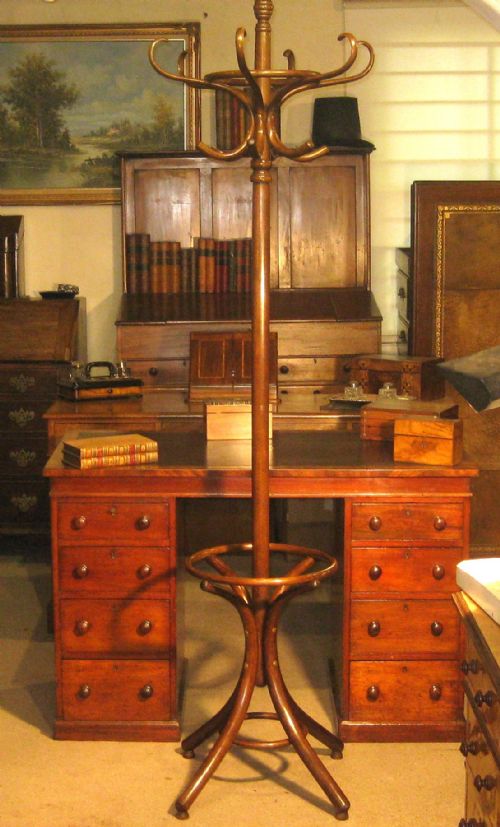
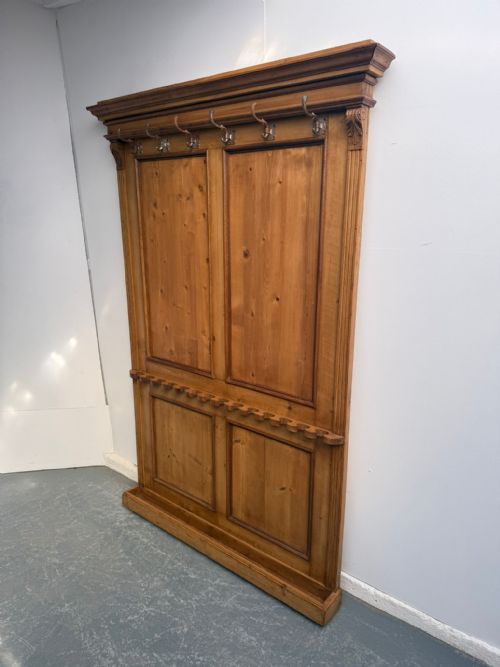
The versions most commonly met on this page span the Victorian and Edwardian periods up to the 1930s. They range from robust pine and mahogany hall stands to bentwood designs and carved Black Forest animal motifs.
Makers utilised various woods including pine, beech, linden wood, oak, and mahogany. Some examples incorporate mirror glass panels and marble trays or boot racks at the base.
Materials and construction methods
Construction relies on solid hardwoods and softwoods such as mahogany, oak, beech, and pine shaped through traditional joinery and turning. Steam bending created the curved components seen in bentwood hatstands.
Listings feature items from the 19th century through to the 1930s, including Edwardian and Victorian examples.
Assessing quality and craftsmanship
Quality rests upon the selection of timber and the depth of hand-carved detail across the structure. Heavy solid mahogany or intricately carved linden wood represents superior execution compared to simpler utility pieces.
The integrity of the original hooks, the stability of the central column, and the retention of original mirror glass or marble inserts distinguish finer examples. Structural balance matters greatly in taller revolving hatstands and heavy hall stands.
J. Parker of Woodstock·Astrola
The Brown Timber Coat Stand Glossary
- Bentwood
- Wood softened by steam and bent into curved shapes. This technique produced lightweight yet resilient hatstands popular in the early twentieth century.
- Hallstand
- A piece of hallway furniture combining a coat rack, mirror, and often an umbrella stand or boot tray. These large items dominated Victorian and Edwardian entrances.
- Valet stand
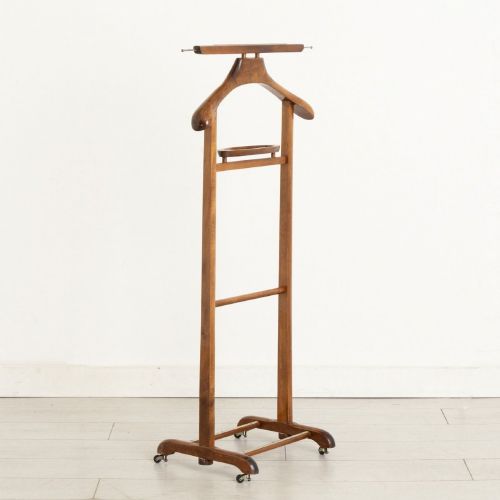
- A freestanding piece designed to hold a single suit, trousers, and accessories. It served bedrooms and dressing rooms rather than entrance halls.
- Black Forest
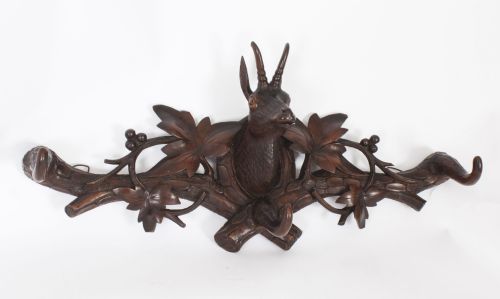
- A style of ornate wood carving originating from the mountainous region of central Europe. Pieces often feature realistic animal heads and foliage carved from linden wood.
Brown Timber Coat Stand: Frequently Asked Questions
What is a hall stand?
A hall stand is a substantial piece of hallway furniture combining upright timber panels, coat hooks, a mirror, and umbrella holders.
Victorian and Edwardian households relied on them to keep outdoor garments and walking gear organised near the front door.
How do bentwood hatstands work?
Bentwood hatstands utilise steam-bent timber components joined around a central upright column to provide lightweight hanging space.
Their curved arms held hats and coats securely without adding excessive bulk to smaller hallways.
Where were valet stands used?
Valet stands stood in bedrooms rather than hallways to organise a gentleman's suit, tie, and shoes for the following day.
They provided a dedicated framework to keep garments pressed and accessories close at hand overnight.
How do I identify Black Forest stands?
Black Forest stands feature intricate hand carvings of animals, such as bears or goats, executed in linden wood.
These nineteenth-century pieces showcase deep relief work and naturalistic forms reflecting European carving traditions.