
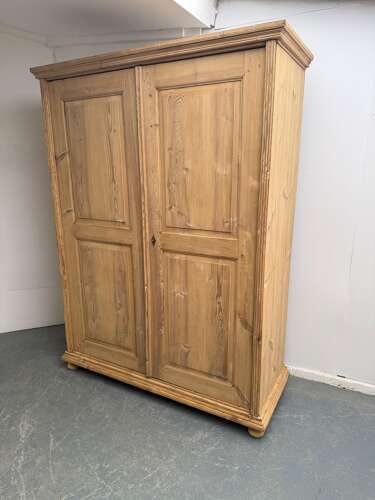
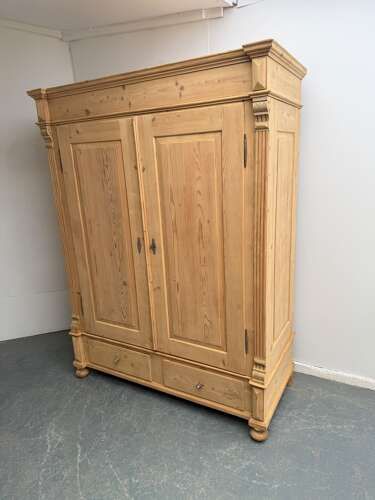
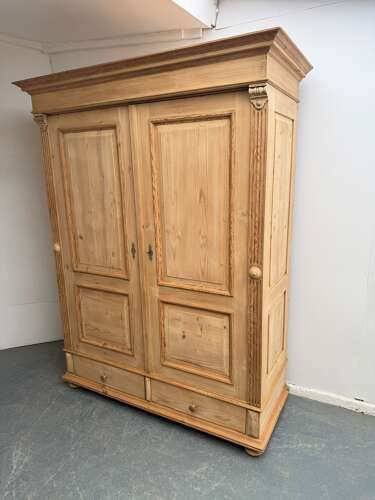
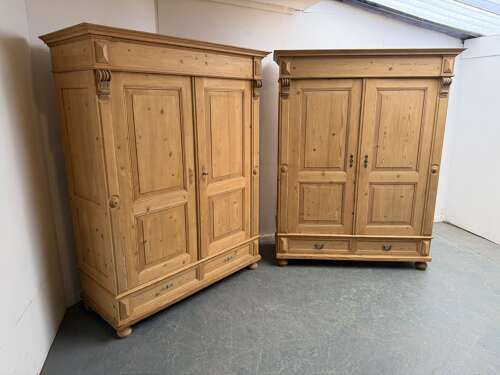




Pine Flat Pack Wardrobe
These pine flat pack wardrobe examples offer practical storage built with clever disassembly in mind long before modern flat-pack furniture existed.
Pine Flat Pack Wardrobe
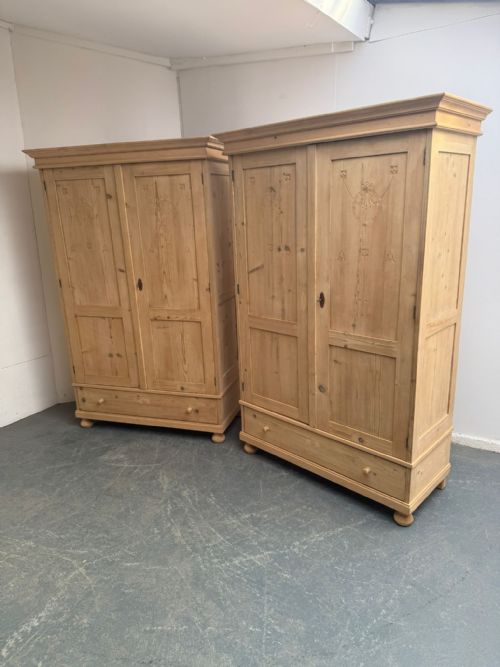
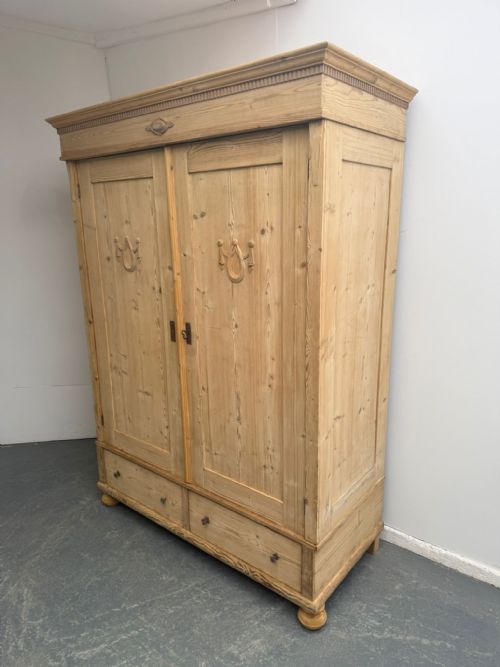
A pine flat pack wardrobe brings historical disassembly to large bedroom furniture, appearing primarily in Victorian, Georgian, and 1910 Arts and Crafts periods. These pieces are designed to be taken apart for easy transport and narrow staircases, utilising modular knock-down construction.
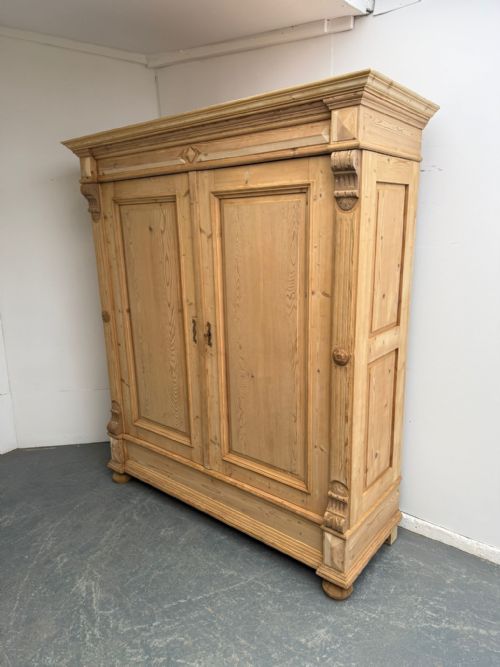
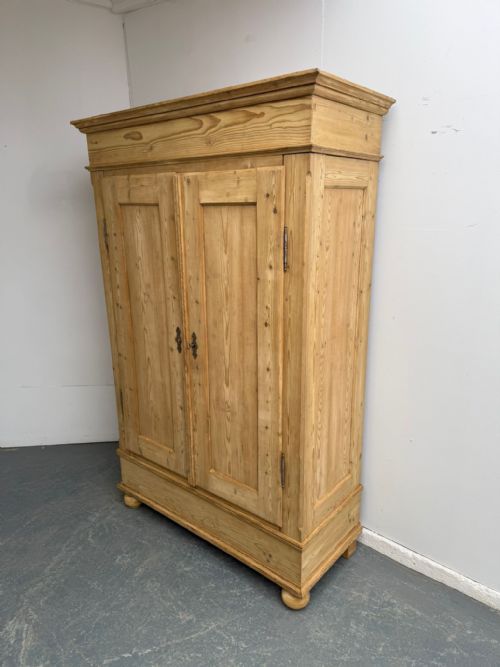
The versions most common on this page are two-door, double, and triple wardrobes, alongside specialised configurations like shelved linen cupboards and combination pieces. Buyers encounter both low cottage styles and massive columned structures finished for waxing or painting.
How they were made
Construction relies heavily on solid pine assembled with mechanical joints, pegging, and structural iron or metal hardware to allow repeated dismantling without losing stability. These materials provide the necessary strength to support large hanging spaces and internal shelving.
Makers shaped the timber into arched panels, columned frames, and simple rectilinear carcasses depending on whether the piece followed Georgian country traditions, Victorian mass, or Arts and Crafts restraint.
Listings span Victorian, Georgian, and 1910 periods, utilising solid pine with iron and metal hardware for modular assembly.
What varies in quality
The standard of a knockdown wardrobe depends on the integrity of its original dismantling system, such as how securely iron bolts and wooden pins align the panels after assembly. Pieces retaining their original structural hardware hold their shape far better over time.
Proportion and detailing also separate standard examples from finer ones, distinguishing simple low cottage iterations from architectural columned designs or arched Victorian statements.
The Pine Flat Pack Wardrobe Glossary
- Knockdown wardrobe
- A large piece of furniture engineered to be disassembled into panels, cornices, and bases for transport. This historic design predates modern commercial flat-pack manufacturing.
- Combination wardrobe
- A multi-functional storage unit that pairs hanging space with internal drawers or shelved linen compartments. These pieces maximise bedroom utility within a single carcass.
- Arts and Crafts
- A design movement spanning the late nineteenth and early twentieth centuries that prioritised honest materials, solid construction, and simplified form over heavy ornamentation.
- Linen wardrobe
- A specialised storage variation featuring internal shelving specifically designed for folded textiles and bedding alongside general garment storage.
Pine Flat Pack Wardrobe: Frequently Asked Questions
How do these knockdown wardrobes assemble?
These historical wardrobes rely on integrated wooden pegs, bolts, and slot-together panels designed to separate easily. This clever engineering allowed large bedroom furniture to travel up narrow staircases.
Once positioned in a room, the cornices, sides, and base lock together securely to support the weight of the timber doors.
Are these wardrobes difficult to transport?
The primary purpose of a knockdown design is to make moving bulky furniture manageable. By breaking down into flat components, the pieces fit into smaller vehicles.
Reassembly requires patience to align the original joints properly, ensuring the doors hang squarely in their frames.
What is the difference between double and triple wardrobes?
Double wardrobes feature two primary doors opening to a single large interior cavity used for hanging garments or shelving. They represent the standard size for most bedrooms.
Triple wardrobes expand the capacity by adding a third door, often incorporating central mirrored panels or internal linen drawers flanked by additional hanging space.
Can I paint or wax these pine pieces?
Most antique pine wardrobes arrive ready for a fresh finish of wax or paint depending on interior preferences. Historical pine takes both treatments well, allowing buyers to match existing decor.
Waxing highlights the natural grain and knots of the timber, while painting offers a clean finish suited to cottage or period interiors.