
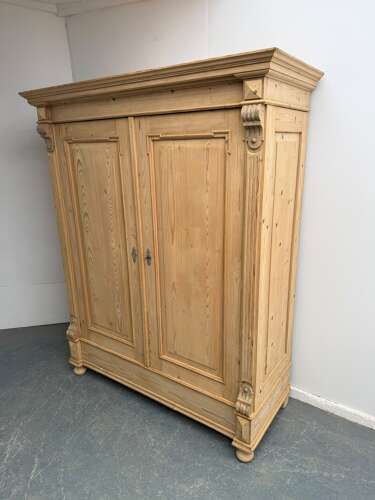
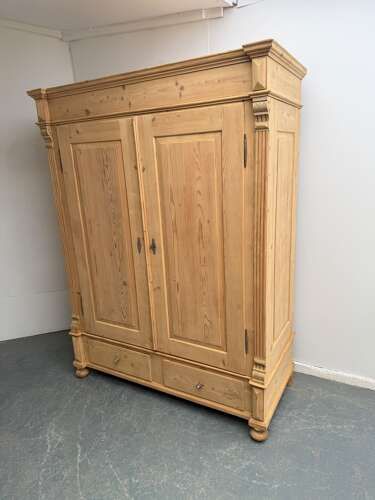
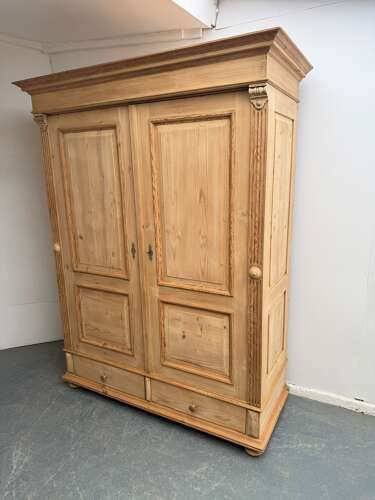
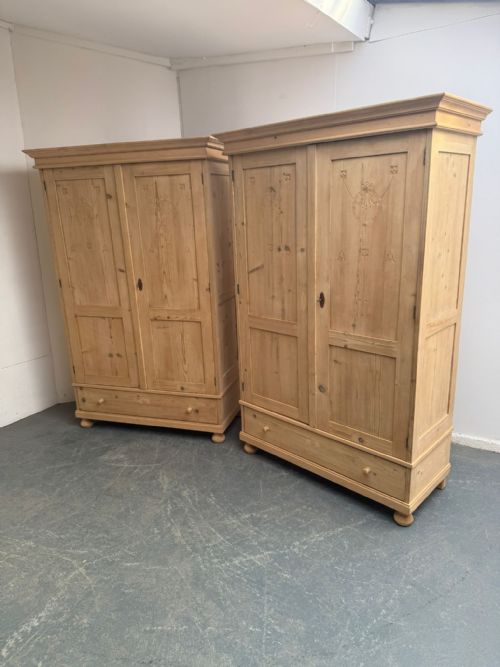

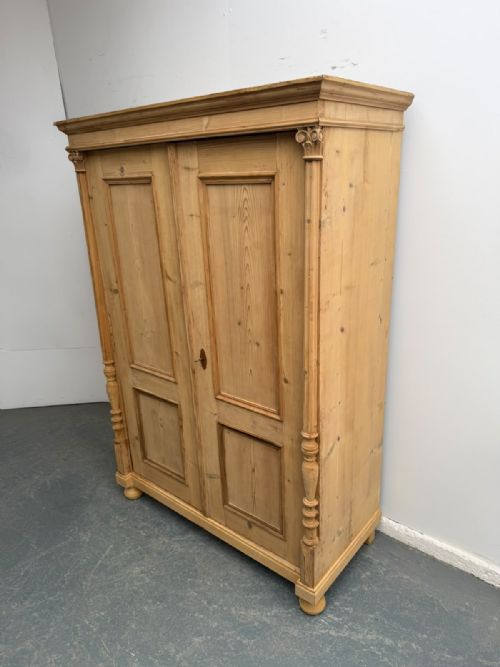
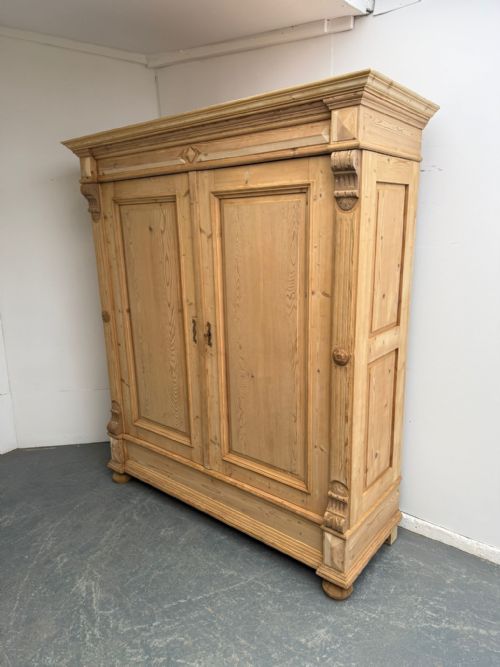

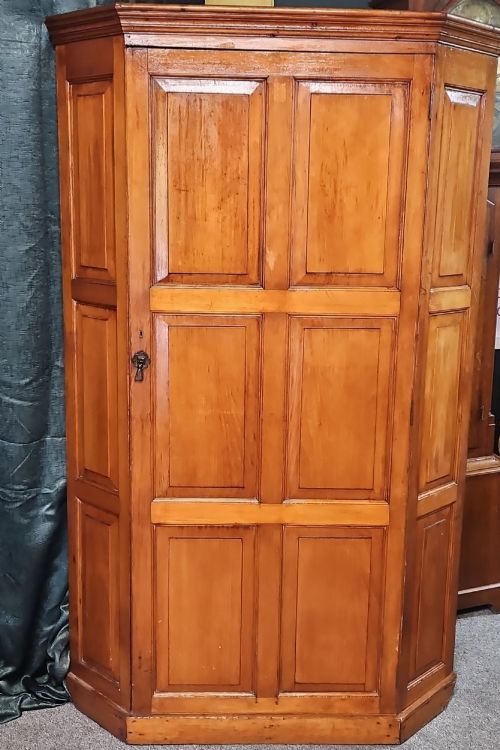


Large Victorian Pine Wardrobe
A large victorian pine wardrobe offers generous proportions and honest domestic utility, bringing practical bedroom storage with warmth and character.
Large Victorian Pine Wardrobe
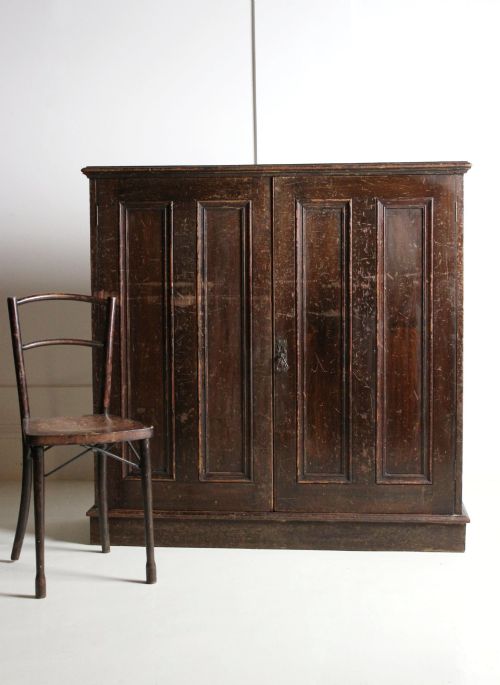
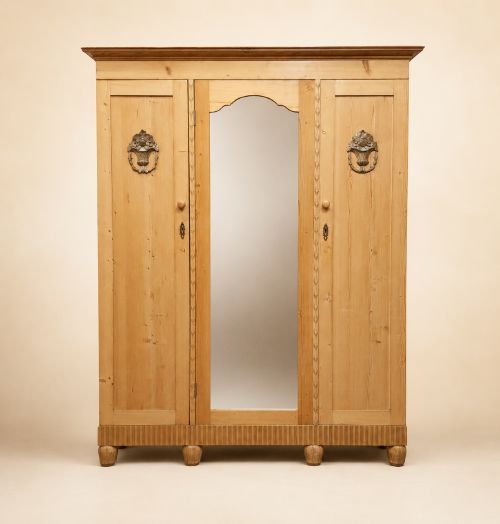
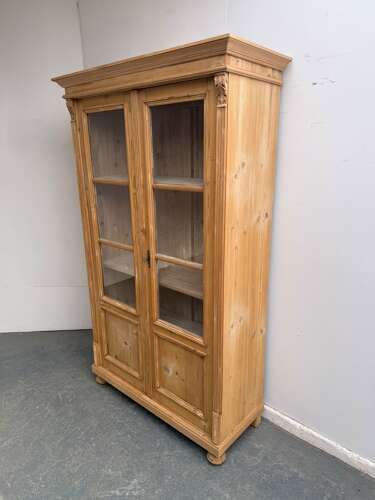
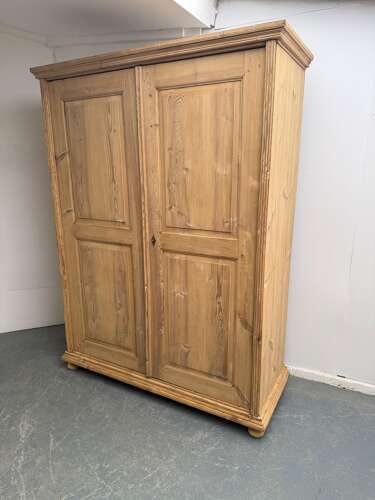
When you search for a large victorian pine wardrobe, you encounter robust domestic furniture built to serve bedroom storage needs across the nineteenth century and into the early twentieth century. These pieces appear predominantly as knockdown or flat-pack designs alongside single and multi-door cupboards, housekeepers cupboards, and compactum wardrobes. Surviving examples reflect the practical requirements of period homes, utilising straightforward forms that range from simple country house furniture to columned and panelled variants.
The materials and finishes documented across these listings demonstrate a clear preference for pine, pitch pine, and painted or stained surfaces, often accompanied by iron, brass, and glass hardware. Styles lean towards Victorian, Victorian Country, Rustic Farmhouse, English Country, and Arts & Crafts, showing how domestic storage adapted to different regional workshops. Whether configured with two doors, three doors, or corner orientations, these wardrobes provide deep internal space suited to contemporary clothing storage.
How they were made
Carpenters constructed these large wardrobes primarily using solid pine and pitch pine timbers, selected for structural stability and availability. Many pieces utilised innovative knockdown or flat-pack designs held together with timber pegs or metal bolts, allowing heavy furniture to move easily between rooms and floors during the nineteenth century.
Surviving surfaces show traces of original paint, waxed finishes, or stained treatments, frequently complemented by brass hinges, iron locks, and glass panels on mirrored doors. Joinery relied on traditional panelled and beaded construction methods, ensuring the large frames remained rigid while supporting internal shelving and hanging space.
Listings feature structural pine and pitch pine alongside iron, brass, and glass hardware, spanning the Victorian era through the early twentieth century.
What varies in quality
The distinction between standard utility pieces and finer examples rests upon the architectural ambition of the timberwork and the integrity of the original construction. Pieces featuring columned pilasters, moulded cornices, and panelled doors demonstrate a higher degree of workshop attention than plain box forms.
Another measure of quality involves the survival of original finishes, such as early painted surfaces or warm waxed patinas, combined with fully functioning knockdown mechanisms and robust brass or iron hardware that has endured a century or more of domestic use.
The Large Victorian Pine Wardrobe Glossary
- Knockdown
- A design construction that allows large furniture to be dismantled into manageable sections for transport and reassembly. This early form of flat-pack engineering was particularly valued for bulky bedroom furniture.
- Compactum
- A multi-compartment wardrobe combining hanging space with linen shelves, drawers, and shoe lockers within a single unified piece. It represents the height of Victorian bedroom organisation.
- Pitch pine
- A durable, resin-rich softwood variety known for its dense grain pattern and reddish-yellow hue. It provided extra strength for large wardrobes subjected to heavy daily use.
- Housekeepers cupboard
- A large storage cabinet traditionally used in country houses for linens, dry goods, and domestic provisions. These pieces often feature deep shelving and panelled doors.
- Beaded
- A decorative moulding detail carved into the edges of panels or door frames to add depth and visual refinement. It breaks up large expanses of flat pine timber.
Large Victorian Pine Wardrobe: Frequently Asked Questions
What is a knockdown wardrobe?
A knockdown wardrobe is a piece of furniture engineered to be easily dismantled into flat sections and assembled without permanent glue or fixed joints. This clever historical design allowed large wardrobes to travel up narrow staircases into nineteenth-century bedrooms.
Today, this same system makes moving and positioning a large piece much simpler in modern homes while maintaining traditional cabinetmaking integrity.
How do I care for a waxed pine wardrobe?
Caring for waxed pine involves applying a natural beeswax polish periodically to nourish the timber and maintain a soft, protective sheen. Avoid placing the wardrobe in direct sunlight or close to heat sources, which can cause the dry pine to split.
Regular dusting with a dry, soft cloth preserves the historic patina without stripping the character built up over generations of use.
Are these wardrobes difficult to assemble?
Most antique knockdown wardrobes use simple slot-in joints, wooden pegs, or internal metal bolts that require basic tools for reassembly. The clever modular engineering means two people can usually rebuild the frame within a short time.
Checking that the wardrobe sits level on the floor ensures the doors hang straight and close smoothly once the structure is secured.
What is the difference between a cupboard and a wardrobe?
A traditional wardrobe is specifically designed with internal hanging space and adequate depth for garments on coat hangers. A cupboard generally contains horizontal shelves or compartments intended for folded linens, books, or general storage.
Many antique pieces sit between these definitions, offering adaptable internal layouts that easily convert to suit modern clothing needs.