



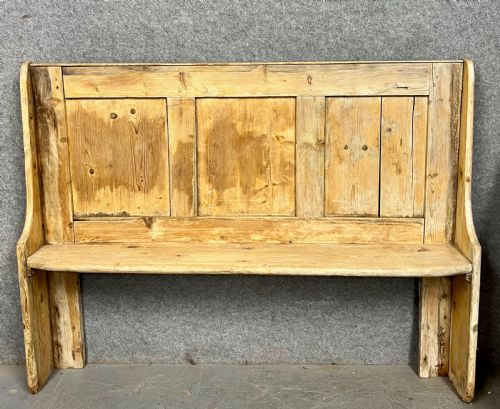


Pine Farmhouse Settle
A pine farmhouse settle is a robust wooden seat with a high back, built to keep out draughts in traditional rural homes.
Pine Farmhouse Settle
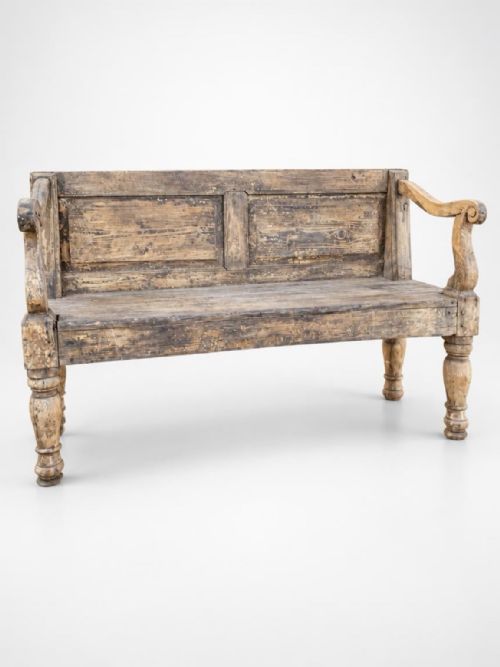
A pine farmhouse settle offers a solid high back and deep seat, designed for placement near the hearth in country kitchens. The listings on this page span regional styles such as Irish, English, French, and Austrian country houses.
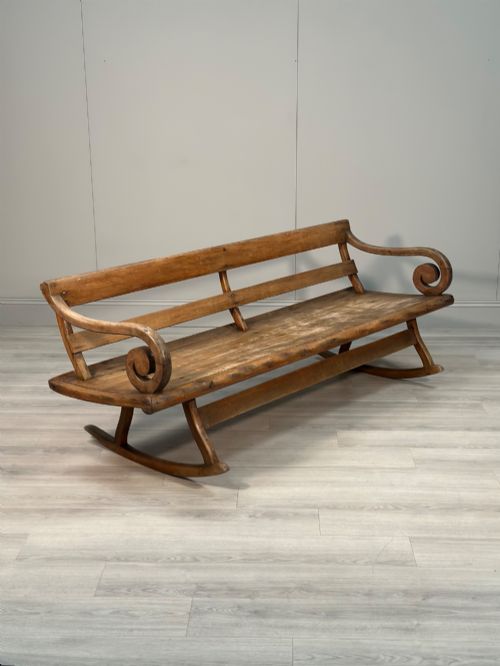
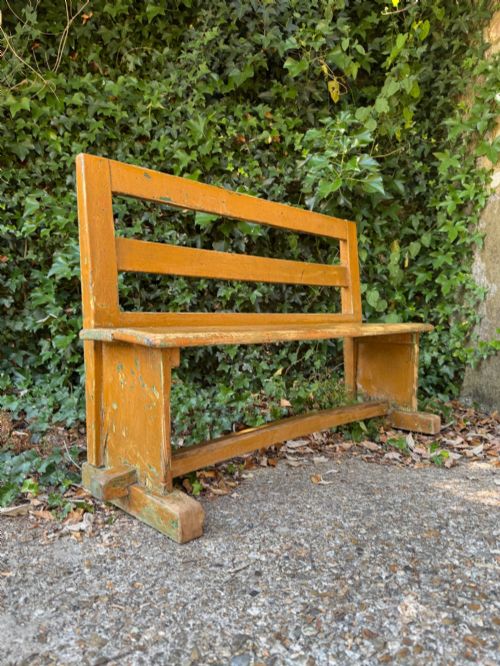
Most examples date from the nineteenth century, including specific years like eighteen-seventy and eighteen-eighty, reflecting a period of sturdy vernacular carpentry. These benches range from simple plank construction to curved forms and rarer rocking variations.
How they were made
Local joiners built these settles using domestic timber such as pine and occasionally oak, selected for practical utility rather than show. Iron fixings and hardware reinforced the joints to withstand heavy daily use in busy farm kitchens.
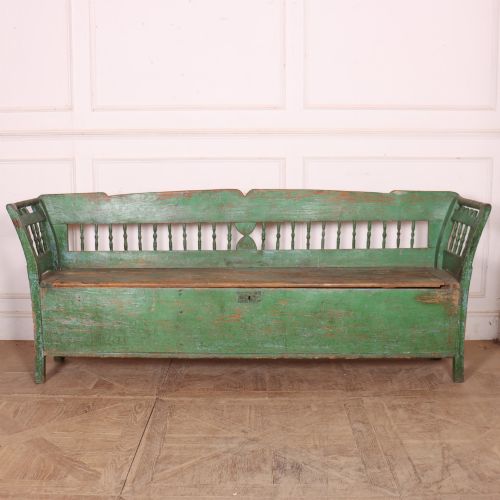
Surface treatments included original paint finishes, particularly seen on Austrian pieces, while others relied on plain wood surfaces that weathered naturally over decades of use.
Pine Farmhouse Settle Retail Price Guide 2026
Typical asking prices for pine farmhouse settle among the pieces listed under this phrase on Sellingantiques today, from the lower quarter to the upper quarter. They describe what is for sale here now, not the wider market.
Materials across the selection are predominantly pine and wood, with occasional use of iron, oak, and applied paint.
What varies in quality
Quality rests upon the integrity of the original construction and the survival of early or original painted surfaces. Settles with sophisticated regional forms, such as curved backs or integrated rocking mechanisms, demonstrate greater ambition from the maker.
Proportion and scale also define the better pieces, with exceptionally long dining benches or high-back protective hall seats showing more considered regional craftsmanship than simple utilitarian utility benches.
The Pine Farmhouse Settle Glossary
- Settle
- A wooden bench featuring a high back and solid arms, designed to shield the sitter from cold draughts. These seats often served multiple purposes in the communal areas of historic houses.
- High Back
- A tall wooden rear panel designed to trap warmth from the fire and block lateral air movement. This feature is characteristic of traditional hall seats and settles.
- Vernacular
- Architecture and furniture built by local craftsmen using traditional regional methods and available materials. These pieces reflect the specific customs and needs of their geographic area.
- Pine
- A softwood commonly used in European country furniture due to its availability and ease of working. It forms the primary structural material for the settles catalogued here.
Pine Farmhouse Settle: Frequently Asked Questions
Where were settles used?
These benches sat beside the hearth in farmhouse kitchens and hallways to block cold draughts. Their high backs and solid sides kept occupants warm before central heating existed.
They also served as communal seating for families and guests sharing meals or gathering together after working the land.
How do I date a settle?
Dating relies on construction methods, timber characteristics, and stylistic traits associated with the nineteenth century. Examining the joinery and any surface paint helps place the piece within regional traditions.
Specific dates or periods recorded in the titles often point to the era of manufacture, such as Victorian work or provincial Austrian craft.
Are painted finishes original?
Some pieces retain original painted surfaces, which are particularly notable on Austrian and continental country furniture. These coatings add significant character and show how the furniture looked in its original interior.
Distinguishing between early paint and later decoration requires close inspection of wear patterns and pigment layering across the wooden panels.
How do I care for pine furniture?
Keep wooden settles away from direct heat sources and sudden humidity changes to prevent the timber from splitting. Regular dusting with a dry cloth maintains the surface without damaging historic finishes.
Avoid harsh chemical polishes that can strip natural patination or soften old painted surfaces over time.