
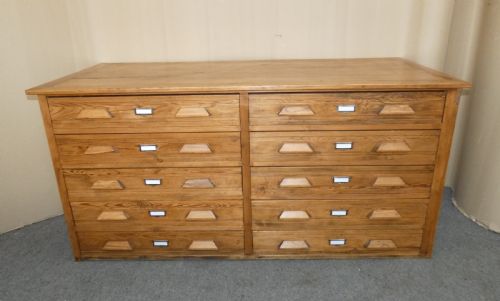


Pine Counter Cabinet
These pine counter cabinet pieces are utilitarian fixtures built for trade, offering robust storage and period character for modern interiors.
Pine Counter Cabinet
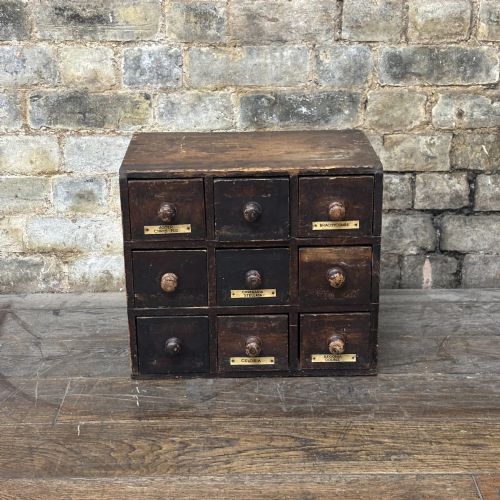
A pine counter cabinet generally takes the form of multi-drawer shop fittings, drapers counters, and apothecary display boxes originating from the nineteenth and early twentieth centuries. These pieces reflect the functional demands of Victorian and Edwardian commerce, designed to organise small goods in retail settings.
The versions most commonly met on this page span the Victorian era, the Edwardian period, and the early twentieth century up to nineteen twenty. They include Hungarian shop fittings with numerous small drawers, French counters with original paint, and English seed chests.
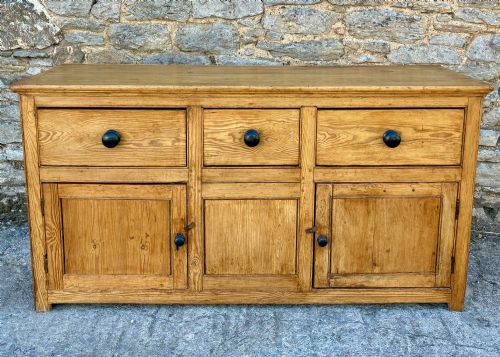
Forms extend beyond standard shop counters to encompass artist chests, dresser bases, and sideboards constructed from timber. Such items combine commercial utility with domestic scale, making them adaptable for contemporary storage.
Materials and construction methods
Carpenters built these shop fittings primarily from solid pine and mixed timber, selecting the wood for its availability and strength under daily commercial use. Metal and brass hardware, including handles and label holders, were fitted to withstand frequent handling by shopkeepers and customers.
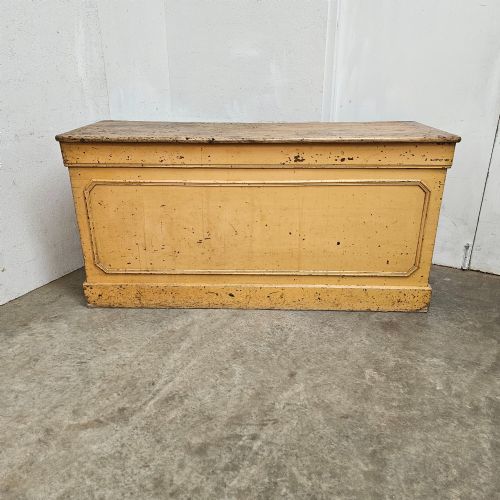
Surface treatments recorded on these items vary from polished wood to original paint in white, cream, and green. Some regional examples feature zinc tops, providing a durable and hygienic surface suited to trade.
Assessing quality in trade fixtures
Quality in a pine counter cabinet rests upon the integrity of its original construction and the preservation of its surface finishes. Pieces retaining their early paint schemes or polished wood patination demonstrate higher desirability among collectors.
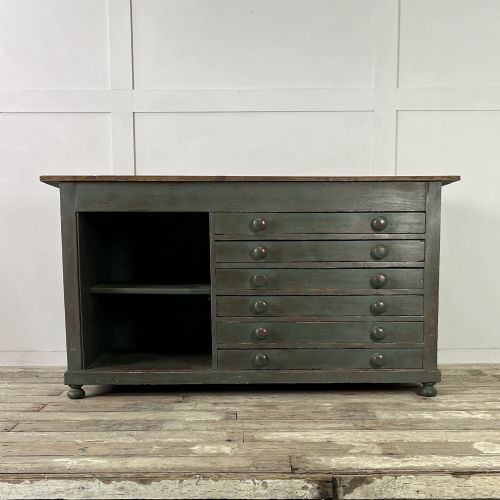
The complexity and scale of the configuration also influence standing, particularly multi-drawer arrangements such as twenty-five or fifty drawer shop fittings. Robust joinery and undamaged internal timber work separate standard utility items from finer examples.
The Pine Counter Cabinet Glossary
- Shop fitting
- A permanent or semi-permanent fixture designed for the display and storage of goods in a retail environment. These pieces are typically built from robust timbers to endure heavy commercial use.
- Drapers counter
- A long table or cabinet used in fabric and textile shops during the nineteenth century. They often incorporate numerous shallow drawers for organising ribbons, lace, and cloth.
- Apothecary chest
- A specialised cabinet featuring many small drawers intended for storing medicines and dried herbs. Their compact compartment layout makes them distinct within trade furniture.
- Patina
- The surface sheen and colour acquired by wood and paint over decades of use and exposure to light. It serves as an indicator of age and historical integrity.
Pine Counter Cabinet: Frequently Asked Questions
What is a pine counter cabinet?
A pine counter cabinet is a functional trade fixture from the nineteenth or early twentieth century, designed for retail display and storage.
These pieces range from multi-drawer shop fittings to drapers counters and seed chests, constructed primarily from pine and mixed timber for durability.
How were these cabinets used originally?
Shopkeepers utilised these cabinets in retail premises to organise, store, and display small merchandise such as seeds, fabrics, and apothecary goods.
The numerous drawers allowed merchants to keep stock sorted and accessible behind the counter while presenting a tidy face to customers.
How do I identify Victorian examples?
Victorian examples often display construction traits typical of the nineteenth century, including hand-cut dovetails and solid timber framing.
Many pieces feature original paint finishes or polished wood surfaces characteristic of nineteenth-century commercial furniture production.
Can I use a shop counter at home?
These cabinets adapt well to domestic interiors, serving as kitchen islands, sideboard storage, or hallway console units.
Their substantial construction and numerous drawers provide practical organisation combined with distinct period character.