
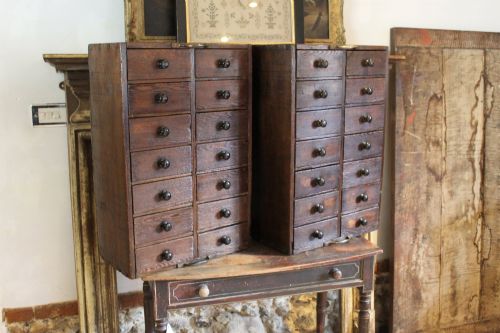


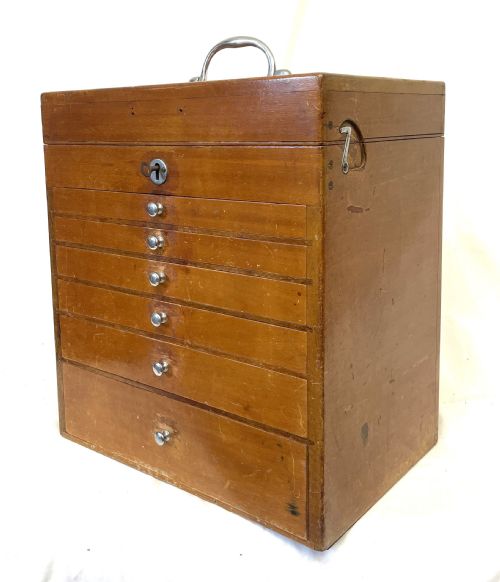
Pine Apothecary Chest
A pine apothecary chest offers multi-drawer utility and rustic charm, bringing historic pharmacy storage straight into a modern interior.
Pine Apothecary Chest
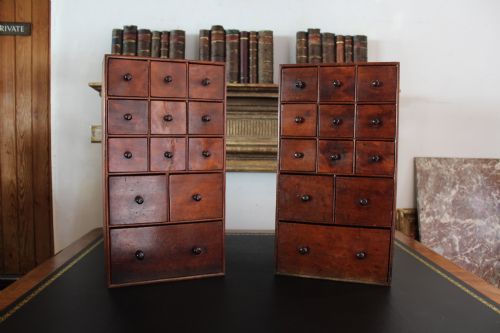
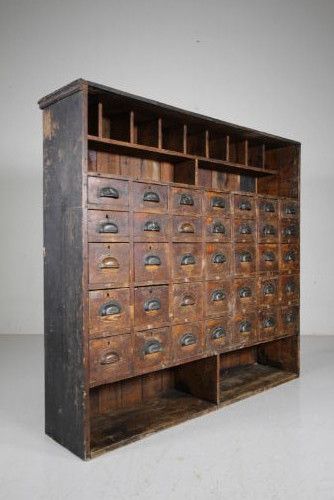
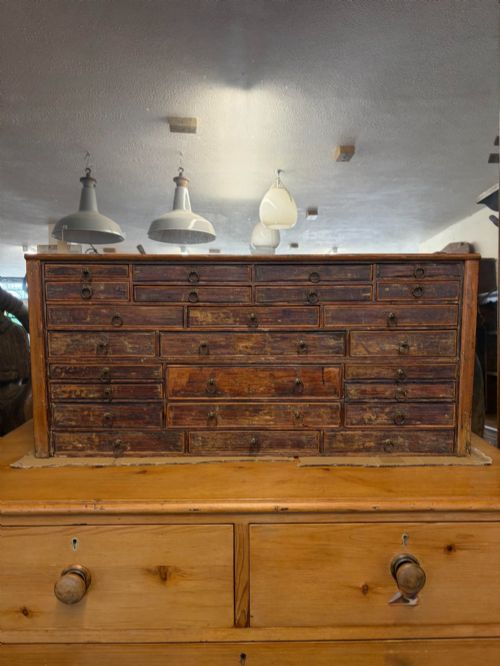
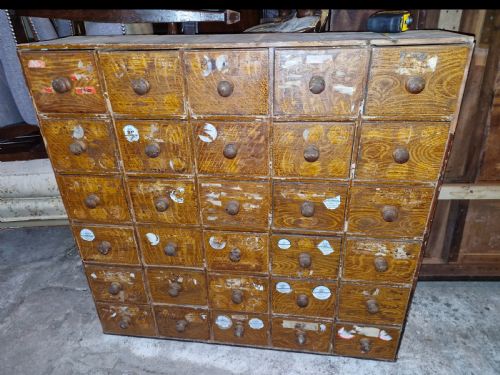
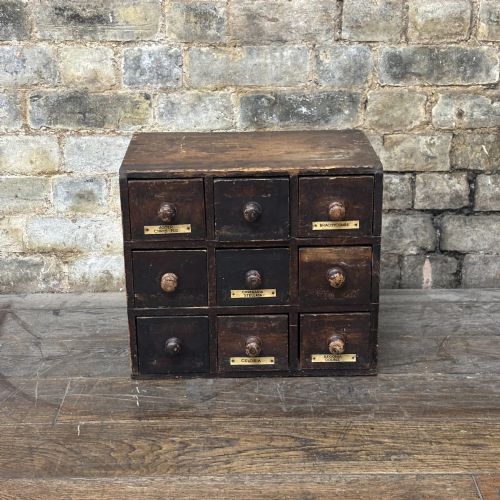
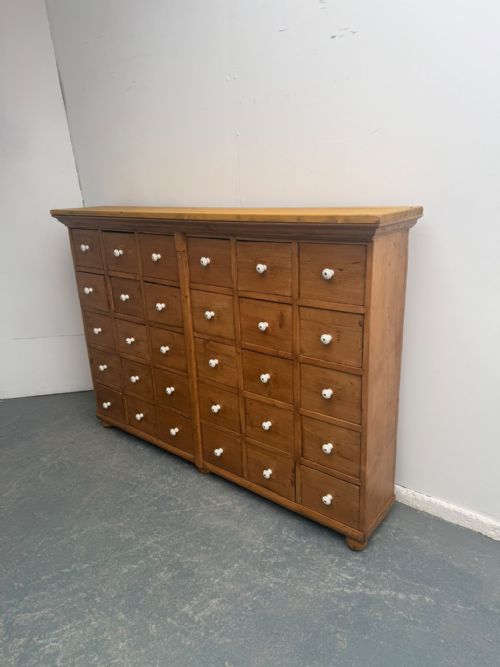
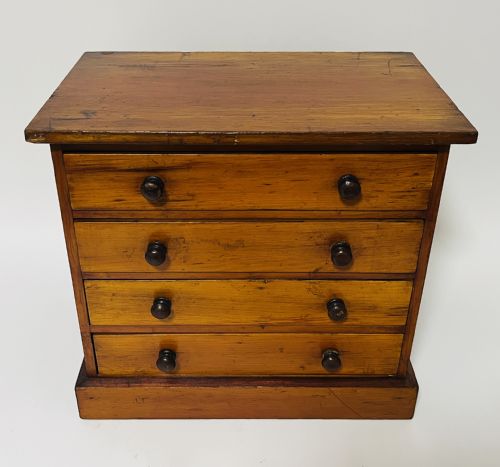
A pine apothecary chest provides a practical multi-drawer format originally utilised for organising medicines, specimens, or shop goods. These pieces range from compact tabletop spice boxes to substantial banks of drawers spanning several dozen compartments.
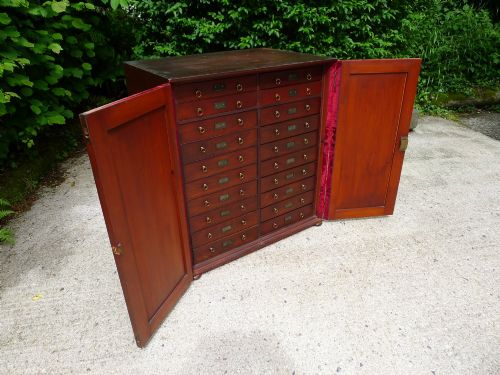
The versions most commonly met on this page belong to the nineteenth century and the Victorian era, often taking the form of banks of drawers, collectors cabinets, or shop fittings. Origin points vary across English, French, Hungarian, and Scandinavian workshops.
Buyers encounter forms constructed for specific utilitarian trades, including dental cabinets, florist seed chests, ironmongers drawers, and watchmakers banks. These storage units combine numerous small drawers with straightforward timber carcasses designed for heavy daily use.
Materials and construction
Construction relies primarily on pine and deal timber, sometimes paired with oak elements, assembled into sturdy multi-drawer carcasses. Many examples retain their original painted surfaces in white, cream, green, or light tones, while others display stained and polished finishes.
Metal hardware such as brass and iron provides functional strength for drawer pulls, handles, and small locking mechanisms. Joinery methods reflect nineteenth-century utility, prioritising durability in pharmacies, shops, and workrooms over ornate decoration.
Some nineteenth-century drawers still carry faint traces of dried apothecary powders and herbal dust tucked deep inside the corners.
Assessing quality in multi-drawer furniture
Quality depends heavily on the integrity of the original multi-drawer configuration and the retention of authentic surface finishes. Pieces retaining their original paint layers or deep polished patination hold greater character than stripped or heavily altered examples.
The scale of the bank and the uniformity of the drawer arrangement dictate the visual impact of the piece. Substantial numbers of small drawers, paired with sound structural timber and working metal pulls, separate standard utilitarian storage from exceptional surviving examples.
The Pine Apothecary Chest Glossary
- Apothecary chest
- A cabinet containing numerous small drawers designed for storing medicinal herbs, dry drugs, and remedies. These pieces typically feature rows of narrow compartments.
- Bank of drawers
- A large multi-drawer storage unit built for commercial, workshop, or institutional use. They often contain dozens of individual pull-out compartments.
- Collectors cabinet
- A specialised piece of furniture intended for housing natural history specimens, coins, or small objects. They share the multi-drawer format common in pharmacy storage.
- Deal
- An old term for fir or pine timber commonly used in nineteenth-century cabinet making. It provides a pale, workable surface that takes paint and stain readily.
- Shop fitting
- Fixtures and furniture built specifically for commercial retail spaces, including counters and multi-drawer drawer units. They reflect sturdy utilitarian design.
Pine Apothecary Chest: Frequently Asked Questions
What were pine apothecary chests originally used for?
These chests stored herbs, dried roots, powders, and compounded medicines in apothecary shops and dispensaries. The numerous small compartments kept different remedies separated and properly organised.
Over time, similar multi-drawer designs were adopted by watchmakers, ironmongers, florists, and general merchants for sorting small inventory.
How do I date a 19th-century pine chest?
Dating relies on construction methods, timber characteristics, and hardware styles found on the piece. Nineteenth-century examples often display hand-cut joints and heavier timber framing.
Records show pieces spanning from the early 1800s through the Edwardian period and into the 1930s, with Victorian variants forming a large portion of surviving stock.
Are these chests always made of pine?
While pine and deal form the primary carcass material, other woods appear across different examples. Listings include combinations of oak and pine, alongside painted wood surfaces.
Metal components like brass and iron are commonly integrated into drawer pulls, hinges, and handles to withstand heavy commercial use.
Where were these multi-drawer cabinets made?
Surviving examples originate from workshops across England, France, Hungary, and Scandinavia. Each region imparted subtle differences in paint colours, proportions, and timber selection.
Some pieces bear direct connections to specific provincial businesses, provincial chemists, or urban shop fittings from the nineteenth century.
How can I integrate an apothecary chest at home?
The numerous small drawers make these chests exceptionally practical for modern desktop organisation, jewellery storage, or kitchen herb sorting. Their rustic appearance suits both traditional and industrial interiors.
Larger banks of drawers function effectively as sideboards, hallway storage units, or statement display cabinets in living spaces.