
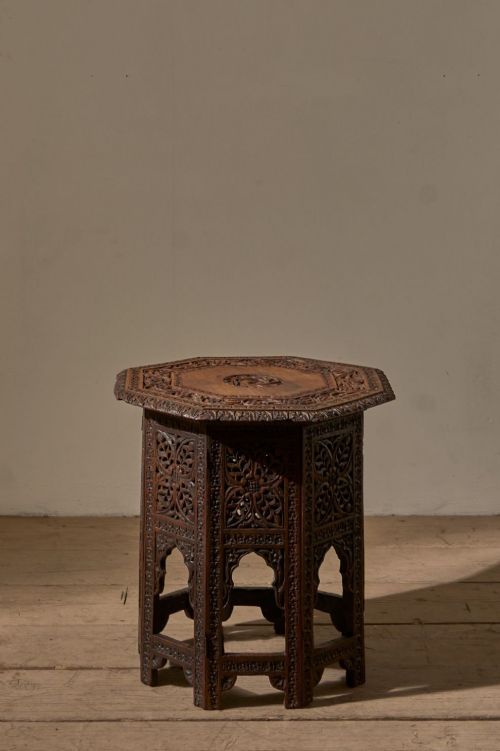
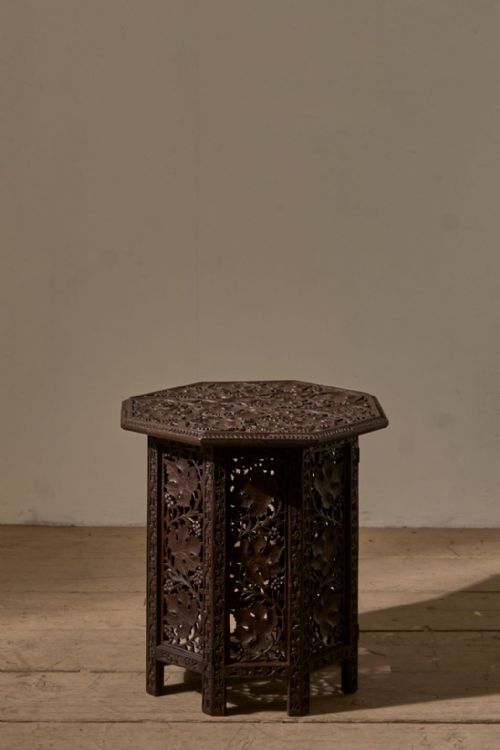
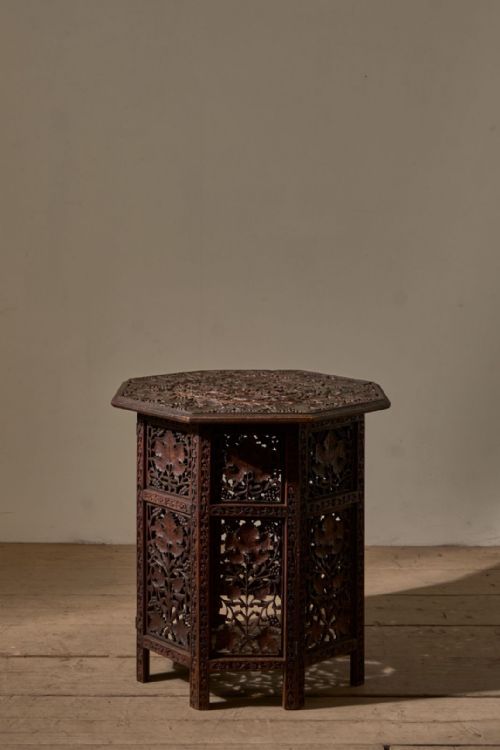


Pierced Wood Occasional Table
A pierced wood occasional table brings intricate relief carving and exotic timbers straight from nineteenth-century colonial workshops into domestic rooms.

Pierced Wood Occasional Table
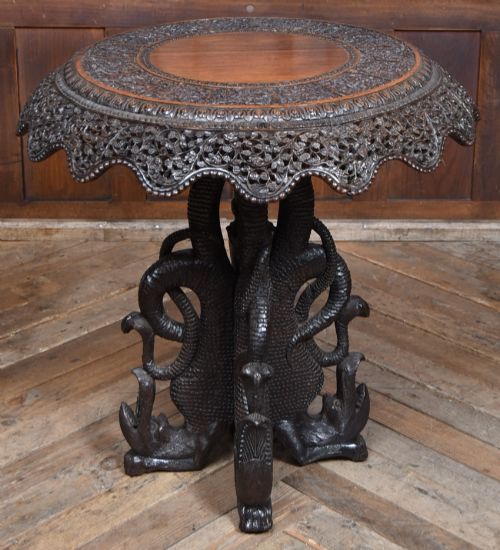
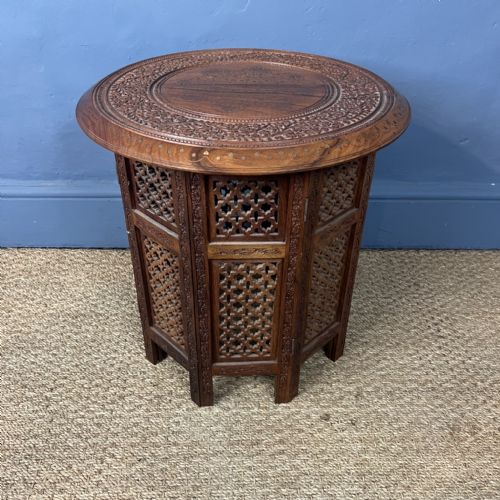
A pierced wood occasional table encompasses hand-carved side tables, folding stands, and tray-top pieces originating primarily from Anglo-Indian and Burmese traditions during the nineteenth and early twentieth centuries. These imported furnishings showcase dense openwork foliage, geometric patterns, and figural motifs designed for portable utility in colonial settings.
Materials and construction
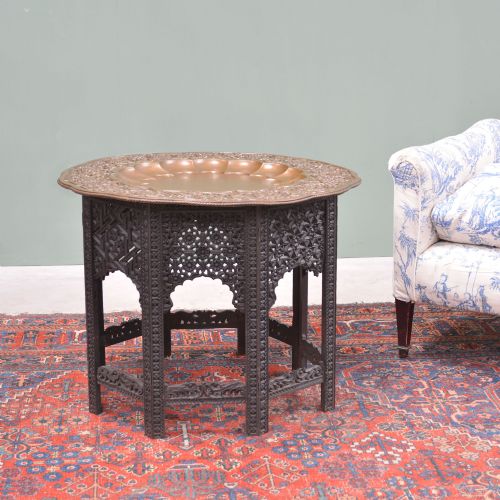
Artisans built these pieces using dense tropical timbers such as teak, padauk wood, and mahogany, frequently enhanced by contrasting boxwood inlay or bone inlay. Metal elements, including brass and copper tops or wire inlays, often complement the carved wooden surfaces.
Woodcarvers utilised deep relief and pierced fretwork techniques to create elaborate folding frames, tip-top mechanisms, and rigid stretcher bases. The joinery combines traditional pegging with collapsible hinges designed for transport.
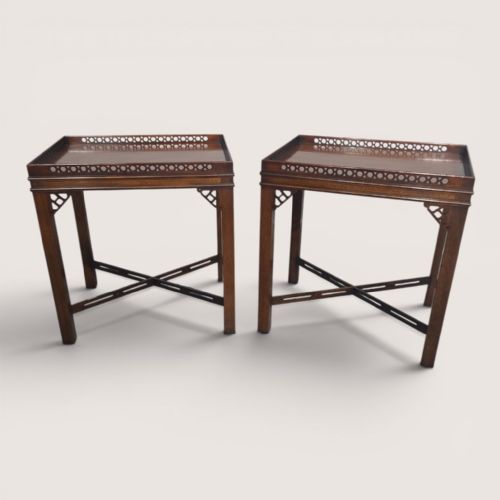
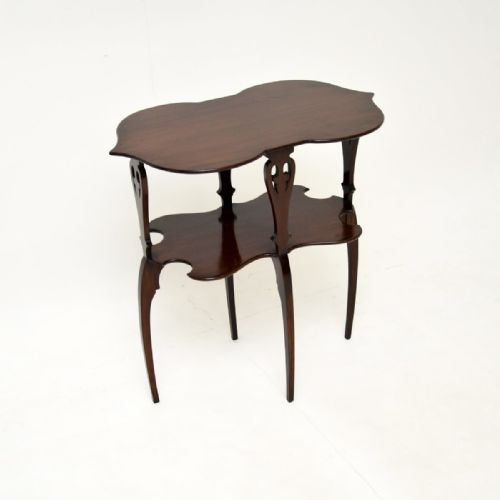
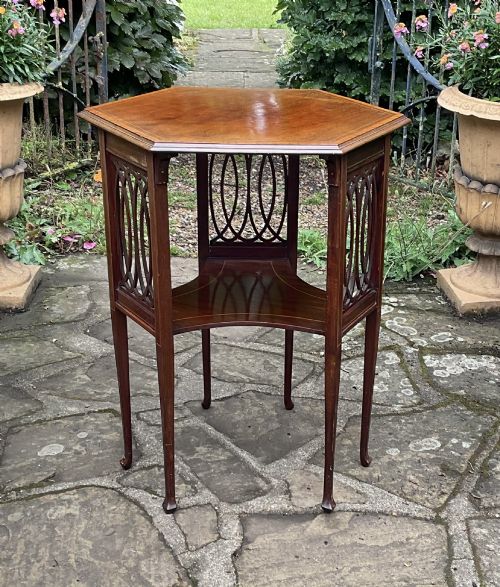
Anglo-Indian, Burmese, Chippendale, and Arts and Crafts styles appear side by side across the occasional table selections.
Understanding quality
The standard of a pierced wood occasional table rests upon the depth, crispness, and symmetry of the hand-carving across the timber. Superior examples exhibit intricate undercutting and steady structural joints, whereas simpler items show shallower incision and repetitive stamped patterns.
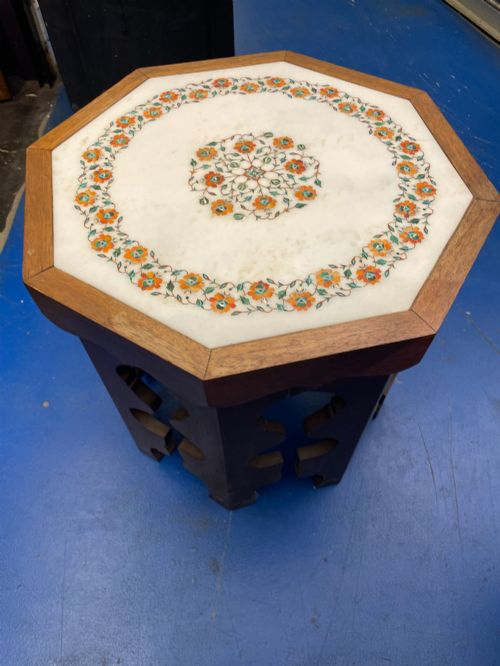
Material selection and inlay integration further differentiate the grade of each piece, with dense padauk and precise bone or brass insertions commanding greater attention than plain softwood carcasses.
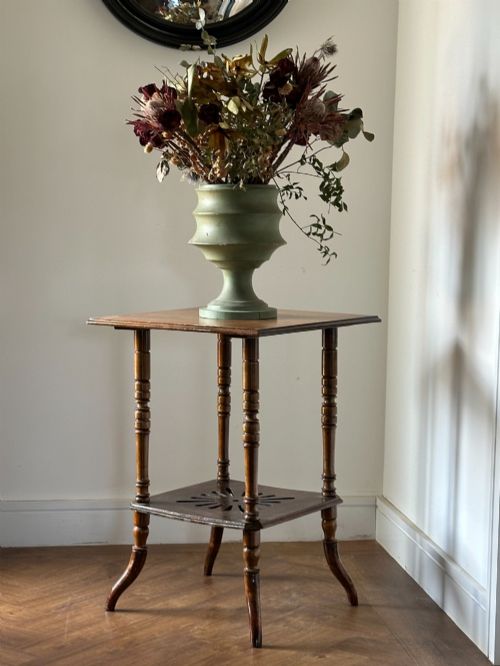
E.W Godwin
The Pierced Wood Occasional Table Glossary
- Pierced wood
- Timber worked through with fretwork or openwork carving to create ornamental patterns. This technique reduces weight and produces lace-like shadow effects.
- Anglo-Indian
- A stylistic classification for nineteenth-century furniture made in India for British colonial residents. It merges traditional Indian motifs with European forms.
- Padauk wood
- A heavy, durable reddish-brown timber utilised in colonial cabinetmaking. It holds fine detail well under carvers' chisels.
- Tip-top table
- A small occasional table featuring a hinged top that pivots to a vertical position. This mechanism allows convenient storage against walls.
- Hoshiarpur
- A North Indian centre renowned for intricate woodwork involving brass, copper, and bone inlay. Pieces from this region display dense geometric and floral panels.
Pierced Wood Occasional Table: Frequently Asked Questions
What is a pierced wood occasional table?
These pieces are portable side tables and folding stands characterised by intricate openwork carving and exotic timber construction. They served practical domestic functions while introducing decorative orientalist aesthetics to British interiors.
Today, buyers use them as lamp tables or display surfaces where compact scale and ornamental detail are required.
How do I identify Anglo-Indian tables?
Anglo-Indian tables typically feature dense floral, dragon, or leaf carving executed in teak or padauk wood. Many incorporate folding frames or contrasting bone and brass inlay work.
Examining the underside and joint construction reveals traditional colonial craftsmanship distinct from standard British domestic cabinetmaking.
Were these tables designed to fold?
Many eastern occasional tables feature collapsible folding bases and removable tray tops intended for easy transport. This portable design originated to suit the nomadic lifestyles of colonial administrators.
Standard British lamp tables from the same eras rely on rigid pillar, pedestal, or four-leg stretcher constructions.
How do I care for carved wood furniture?
Maintain these tables by dusting intricate relief carvings with a soft brush and applying occasional natural wax to nourish the dry timber. Avoid placing them near direct heat sources to prevent wood shrinkage and split joints.
Keep brass and bone inlays clean by avoiding harsh liquid cleaners that might seep into the surrounding wood.