



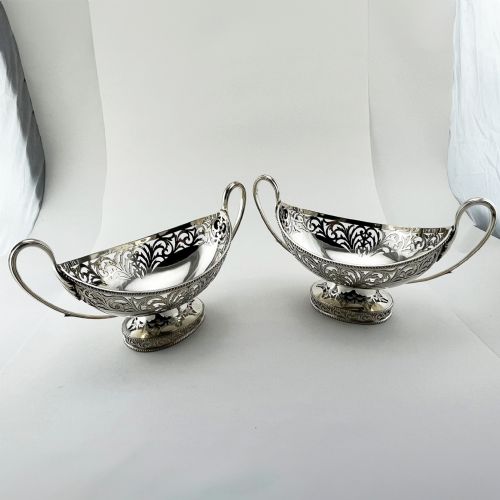


Pierced Silver Plated Bowl
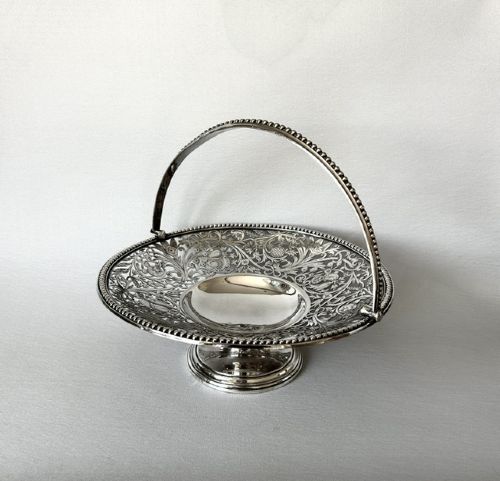
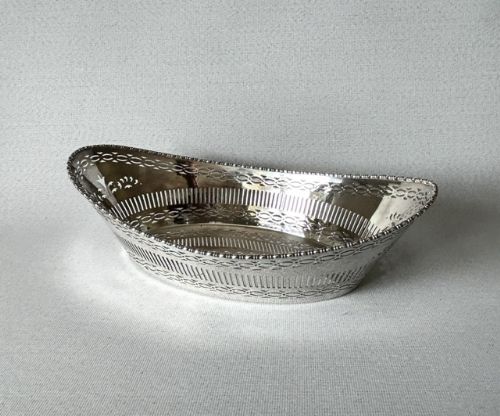
A pierced silver plated bowl brings openwork metalwork and colourful glass liners to the table, offering a decorative centrepiece for fruit, sugar or bread.
Pierced Silver Plated Bowl
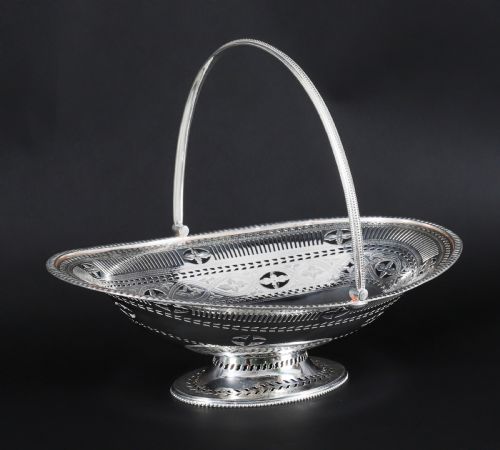
A pierced silver plated bowl encompasses a variety of openwork serveware, including fruit baskets, sugar bowls, bonbon dishes and cake baskets. The selection ranges across the Victorian, Edwardian and George V periods, showing how dining table presentation evolved through the nineteenth and early twentieth centuries.
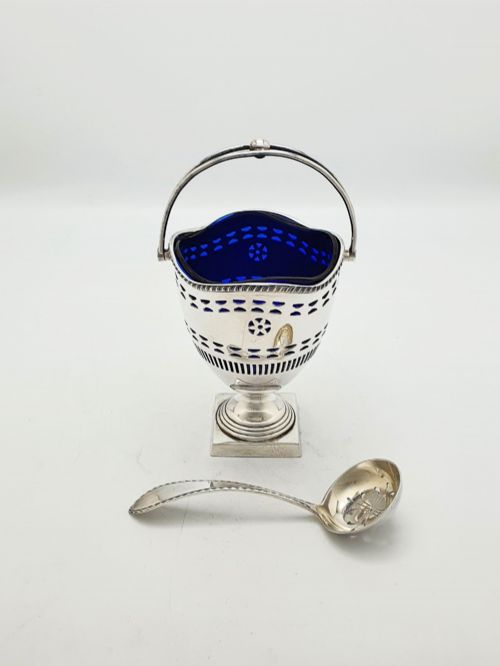
The versions most commonly met on this page are fruit baskets and cake baskets featuring intricate pierced metalwork. These pieces frequently incorporate swing handles and liners in cobalt glass, ruby glass or cranberry glass, creating a contrast between the polished metal and the coloured glass within.
How they were made
These items rely on silver plate and electroplated nickel silver as the primary base materials, forming the structural bodies of the bowls and baskets. Manufacturers utilised piercing techniques to cut decorative lattice and geometric patterns through the metal walls.
Blown glass liners in cobalt, ruby and cranberry colours were shaped to fit snugly inside the pierced metal frameworks. Additional elements such as reeded handles and wooden components were integrated into specific serveware designs.
Pierced Silver Plated Bowl Retail Price Guide 2026
Typical asking prices for pierced silver plated bowl among the pieces listed under this phrase on Sellingantiques today, from the lower quarter to the upper quarter. They describe what is for sale here now, not the wider market.
Listings feature items spanning the Victorian, Edwardian, and George V periods, utilising silver plate, EPNS, glass, and wood.
What varies in quality
The standard of a pierced silver plated bowl rests upon the crispness and complexity of the piercing work executed across the metal. Finer examples display meticulous symmetry and clean apertures that require skilled hand-sawing or punching.
Another distinction lies in the weight of the metal and the integrity of the silver plating over the base metal. Pieces that retain their original coloured glass liners intact without chips also stand apart from those altered or found bare.
Mappin & Webb·Elkington·Thomas Bradbury·Alex E. Clark & Company
The Pierced Silver Plated Bowl Glossary
- Silver plate
- A layer of silver bonded to a base metal such as copper or nickel silver. This technique allowed manufacturers to produce domestic items with the appearance of solid silver at a lower cost.
- EPNS
- Electroplated Nickel Silver, a common base material used from the nineteenth century onwards. It provides a durable foundation for silver plating.
- Pierced work
- Metalwork featuring decorative open cutouts and patterns. Artisans used this technique to lighten heavy serving vessels and create ornate visual motifs.
- Cobalt glass
- A deep blue glass coloured with cobalt oxide. It frequently appears as removable liners in sugar bowls and baskets.
- Bonbon dish
- A small open vessel designed for serving sweets and confections. These pieces often feature shallow pierced bowls raised on small feet or bases.
Pierced Silver Plated Bowl: Frequently Asked Questions
How do I clean a pierced silver plated bowl?
Use a soft cloth and a gentle, non-abrasive silver polish formulated for plated items. Avoid aggressive rubbing that might wear through the thin silver layer.
Take extra care around the pierced apertures where polish residue can easily become trapped. Rinse the piece gently in warm water and dry it immediately with a soft lint-free cloth.
What were glass liners used for?
Glass liners protected the metal base from acidic foods such as fruit or damp sugar. They also added vibrant colour contrasts of cobalt, ruby or cranberry against the polished silver plate.
These liners lift out independently for washing after use. Many surviving pieces retain their original matching glass inserts.
How can I tell a Victorian piece from an Edwardian one?
Victorian items tend to feature heavier, more ornate neoclassical ornamentation or dense floral piercing. They date from the mid to late nineteenth century.
Edwardian and George V designs often shift towards lighter, airier openwork patterns with simpler handles and refined proportions reflecting early twentieth-century tastes.
Are swing handles original?
Swing handles are common on fruit and cake baskets from the Victorian and Edwardian eras. They were designed to fold down flat for easy storage on the table.
Original handles move freely on pivot pins integrated directly into the rim mounts. Check the hinge points closely to ensure the fittings match the period of the bowl.