

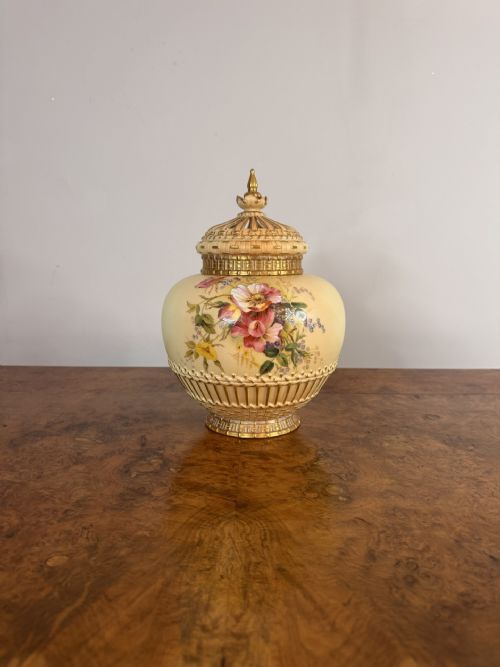


Pierced Porcelain Jar
These pierced porcelain jar examples bring delicate openwork ceramic craft to any table.
Pierced Porcelain Jar
A pierced porcelain jar brings intricate openwork design to the table, often taking the form of a potpourri vessel, lidded pot, or decorative urn. These items serve to hold dried scented petals while allowing fragrance to circulate through patterned openings in the ceramic body.
The selections available here span several centuries and stylistic traditions, ranging from Georgian ironstone and 18th-century Worcester pommanders to later Victorian and 20th-century creations. European factories and traditional English potteries dominate the origins seen on this page.
Makers such as Royal Worcester, Samuel Alcock, and Chamberlain Worcester appear frequently among the listings, alongside continental works from Sitzendorf and Herend. Buyers encounter both pedestal vases with crown covers and simpler lidded pots.
What varies in quality
The fineness of the piercing work distinguishes standard production items from masterworks, with crisp, clean margins around each aperture indicating superior ceramic control. Hand-painted artistry by known painters adds considerable distinction to the finished vessel.
The preservation of original gilding and enamel decoration across the body and pierced cover influences the overall standing of an antique piece. Well-matched covers and original finials complete the structural integrity of these fragile ceramic forms.
Pierced Porcelain Jar Retail Price Guide 2026
Typical asking prices for pierced porcelain jar among the pieces listed under this phrase on Sellingantiques today, from the lower quarter to the upper quarter. They describe what is for sale here now, not the wider market.
Victorian households relied on these pierced pots to mask the smell of coal smoke and damp parlours with sweet dried rose petals.
Royal Worcester·Samuel Alcock·Chamberlain Worcester·Mason's Ironstone·Sitzendorf·Herend
The Pierced Porcelain Jar Glossary
- Pierced porcelain
- Ceramic material featuring cut-out openwork patterns designed to release fragrance or create decorative light effects. This technique requires precise cutting of the clay before firing.
- Potpourri jar
- A lidded vessel specifically created to hold dried flowers mixed with spices for room fragrance. The pierced lid allows the scent to diffuse into the surrounding space.
- Ironstone
- A heavy, durable type of ceramic developed in the 19th century as a robust alternative to true porcelain. It accepts enamel colours and gilding readily.
- Blush ivory
- A soft, matte cream-coloured ceramic ground popularised by Victorian porcelain makers. It provides a subtle background for delicate floral hand-painting.
- Gilding
- The application of gold leaf or gold paint to ceramic surfaces to highlight raised mouldings and rims. This finish is often seen on Regency and Victorian vessels.
Pierced Porcelain Jar: Frequently Asked Questions
What is a pierced porcelain jar used for?
These vessels primarily function as decorative containers for dried scented botanicals and potpourri mixtures. The pierced openings in the body and lid allow aromatic scents to diffuse gently throughout a room.
Collectors also display them as ornamental mantel or table centrepieces due to their intricate openwork ceramic design and painted decoration.
How do I date a lidded potpourri vase?
Examine the style of the painting, the shape of the crown cover, and any factory marks stamped or painted on the base. Victorian examples often feature blush ivory grounds and elaborate floral motifs, while Georgian pieces show simpler ironstone or early porcelain bodies.
Comparing the signature or factory stamp against known production periods provides the most accurate dating evidence.
What is the difference between porcelain and ironstone?
Porcelain is a fine, translucent ceramic fired at high temperatures, known for its smooth texture and delicate appearance. Ironstone is a heavier, opaque earthenware variant designed for greater durability while retaining a refined finish.
Both materials accommodate pierced designs, but ironstone typically feels much heavier and sturdier in the hand.