




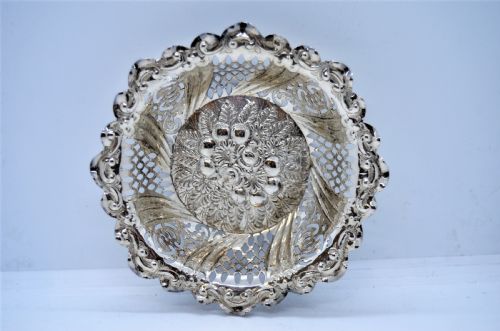


Pierced Lattice Silver
Pierced lattice silver brings intricate openwork metalwork to the table, offering a delicate visual texture that collectors prize for display.
Pierced Lattice Silver
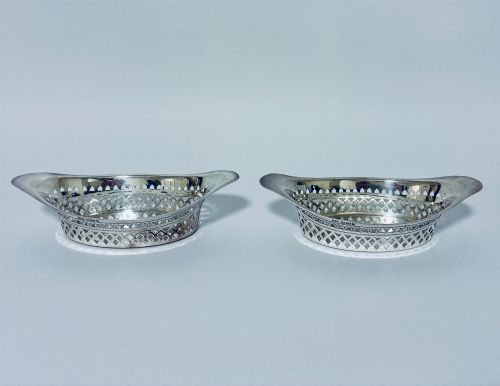
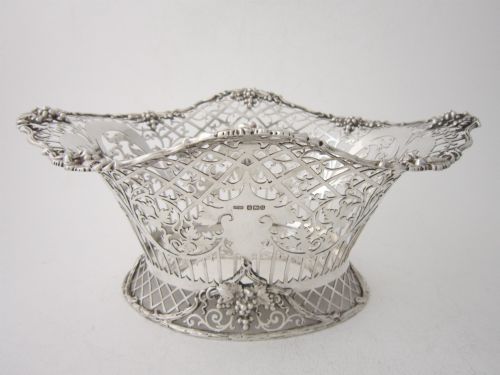
Pierced lattice silver comprises decorative vessels and serving pieces characterised by openwork geometric or floral patterns. When searching for pierced lattice silver, buyers encounter items ranging from small bonbon dishes to large centrepiece bowls.
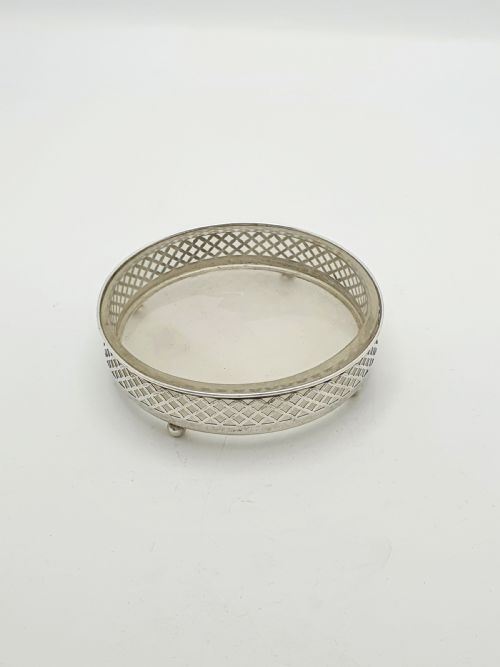
The selection includes pieces spanning multiple eras, with Victorian and Edwardian examples appearing frequently alongside Georgian and 1920s designs. These forms serve as ornamental tableware or functional dishes, often incorporating swing handles, pedestal feet, or removable glass liners.
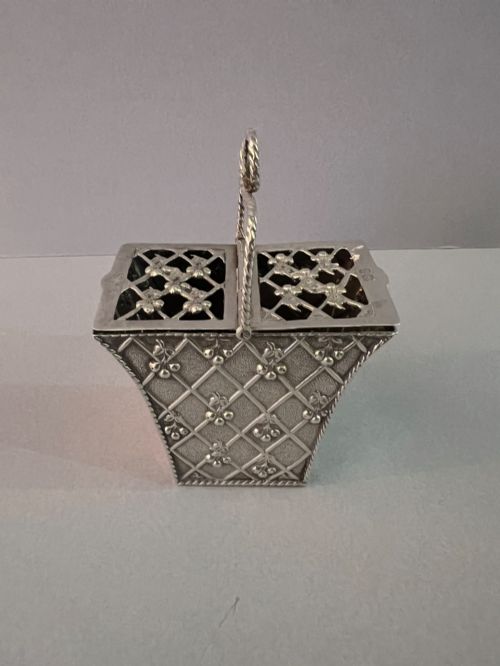
Object types on offer include baskets, butter dishes, and sweetmeat dishes created in solid silver, sterling silver, and silver plate. The aesthetic focuses on perforated walls that lighten the heavy appearance of metal while displaying contents or coloured glass inserts.
How they were made
Silversmiths constructed these pieces using sterling silver and solid silver, occasionally pairing the metalwork with clear or coloured glass liners. Techniques involved hand-piercing or sawing intricate lattice patterns directly into sheet metal before shaping and soldering the components.
Maker execution relied on meticulous piercing saws and chisels to cut out negative spaces without distorting the structural integrity of the basket or dish. Subsequent chasing and engraving added surface detail around the openwork borders.
Pierced Lattice Silver Retail Price Guide 2026
Typical asking prices for pierced lattice silver among the pieces listed under this phrase on Sellingantiques today, from the lower quarter to the upper quarter. They describe what is for sale here now, not the wider market.
The listings span the Georgian, Victorian, Edwardian, and 1920s eras, featuring materials such as sterling silver, silver plate, and glass.
What varies in quality
Quality in pierced lattice silver rests upon the precision and complexity of the openwork cutting. Crisp edges and symmetrical geometric repeats distinguish superior examples from simpler, softer stampings.
Substantial gauge metal provides rigidity to large centrepiece bowls and baskets, preventing distortion across wide spans. Weight and the reputation of the silversmith, such as London or provincial makers, further define the standing of individual pieces.
Joseph Rodgers·William Comyns·William Bond
The Pierced Lattice Silver Glossary
- Bonbon dish
- A small vessel designed for holding sweets, confectionery, or nuts. These often feature pierced borders and rest on small feet or a shallow base.
- Centrepiece bowl
- A large ornamental bowl placed in the middle of a dining table. Examples in this category measure up to fifty-three centimetres and utilise sturdy silver construction.
- Sweatmeat basket
- A miniature container traditionally used for sweetmeats or dried fruits. They frequently incorporate swing handles and delicate pierced lattice walls.
- Sterling silver
- An alloy comprising ninety-two point five percent silver by mass, with the remainder consisting of other metals for durability. Most British and American pieces in this metal carry standard hallmarks.
Pierced Lattice Silver: Frequently Asked Questions
What are pierced lattice silver dishes used for?
These vessels serve primarily as decorative tableware for presenting butter, sweets, or small fruits.
The openwork design allows light to pass through, creating intricate patterns on the dining surface below.
How do I identify a Victorian piece?
Victorian examples display specific stylistic markers typical of the nineteenth century, often confirmed by official assay office hallmarks.
Makers working during this period frequently utilised naturalistic floral motifs alongside geometric lattice piercing.
Are glass liners original to the dishes?
Certain butter dishes and bowls incorporate fitted glass liners to protect the pierced silver from moisture and food acids.
These liners are designed specifically for the dimensions of the metal basket and match the era of manufacture.
How should I clean pierced silver?
Cleaning requires a soft brush to remove tarnish from the tight apertures of the lattice without bending the thin metal.
Liquid silver dips work effectively for openwork items, provided the piece contains no integrated glass liners that could be harmed.