


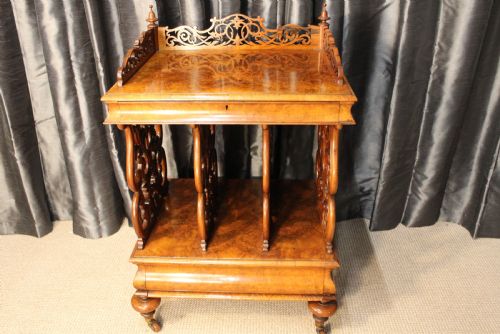


Pierced Fretwork Cabinet
These pierced fretwork cabinet pieces bring intricate woodwork into a room, offering display space and storage through pierced fretwork cabinet designs.
Pierced Fretwork Cabinet
A pierced fretwork cabinet brings distinct openwork woodwork into domestic spaces, usually taking the form of display cabinets, bookcases, or sideboards. You are most likely to meet Victorian and Edwardian examples made from walnut, mahogany, and burr walnut.
The style draws heavily upon Chinese Chippendale and Victorian Gothic Revival influences, combining glazed sections with intricate pierced panels. These furnishings served primarily to display ornaments whilst adding architectural detail to nineteenth century rooms.
How they were made
Cabinet makers utilised dense hardwoods such as mahogany, padouk wood, and walnut to achieve crisp, clean lines in the fretwork panels. These timbers provided the structural stability required for intricate pierced carving without splitting along the grain.
Joinery techniques combined traditional frame and panel construction with delicate fretsawn ornamentation fixed to doors and galleries. Brass hardware and glass panes were then integrated to complete display sections and music canterburys.
Listings span the Victorian and Edwardian eras, utilising walnut, mahogany, burr walnut, and padouk wood across various display and storage forms.
What varies in quality
Quality rests upon the crispness of the pierced fretwork and the selection of timber figures, such as burr walnut or figured mahogany. Finer examples display meticulous hand-piercing that retains sharp internal angles, whilst coarser pieces show blunt or machine-cut monotony.
The integration of decorative elements, including brass galleries and carved mouldings, separates standard production from superior cabinet work. Construction depth and secondary timber choices further distinguish workshop standards across the Victorian and Edwardian periods.
The Pierced Fretwork Cabinet Glossary
- Fretwork
- Ornamental perforated woodwork created by piercing timber panels with intricate patterns. This technique defines the visual lightness of Chinese Chippendale and revival furniture.
- Canterbury
- A low stand fitted with partitions for holding sheet music or books, often mounted on castors. Victorian examples frequently incorporate turned supports and fretwork divisions.
- Breakfront
- A piece of furniture where the central section projects forward from the flanking wings. This architectural arrangement creates depth and shadow on sideboards and bookcases.
- Chiffonier
- A low sideboard or cabinet equipped with drawers and cupboards, often surmounted by a shelf with mirror backing. These pieces became common during the nineteenth century.
Pierced Fretwork Cabinet: Frequently Asked Questions
What is a pierced fretwork cabinet?
A pierced fretwork cabinet is a wooden display or storage piece featuring intricately cut openwork panels. These designs allow light and air to circulate whilst providing ornamental detail.
Originating largely in the nineteenth century, these pieces draw on Chinese Chippendale and Gothic revival traditions. They serve as focal points for displaying ceramics and precious objects.
How do I date these cabinets?
Dating relies upon examining the primary timbers, construction methods, and stylistic revival influences present in the woodwork. Victorian and Edwardian pieces show specific jointing techniques and hardware styles.
Walnut, burr walnut, and mahogany dominate the nineteenth century, while Edwardian pieces often use lighter mahogany. Comparing the fretwork motifs to known revival periods helps narrow down the decade of manufacture.
Where should I place one?
These cabinets suit principal reception rooms or hallways where their detailed fretwork can be appreciated close up. Placing them away from direct heat sources protects the timber and veneer.
Glass-fronted display versions work well for housing collections, while sideboard variants anchor dining spaces. Ensure adequate clearance for doors and internal shelving.
How do I care for the wood?
Maintenance involves dusting regularly with a soft, dry cloth to prevent dirt settling within the pierced fretwork crevices. Avoid silicone polishes that build up sticky residues over time.
Maintain stable room humidity to prevent walnut and mahogany timbers from drying out or splitting. Occasional applications of suitable wax help nourish antique surfaces.