
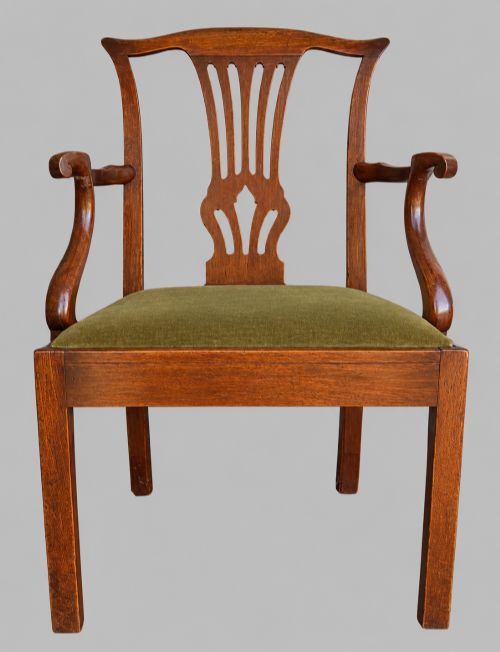
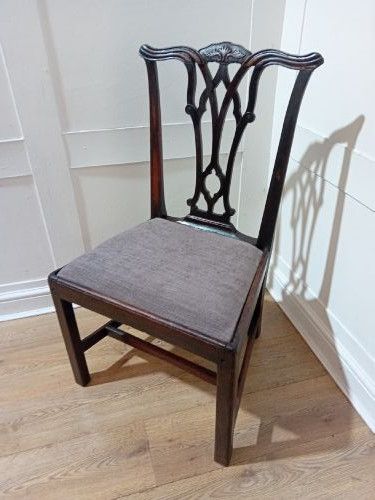
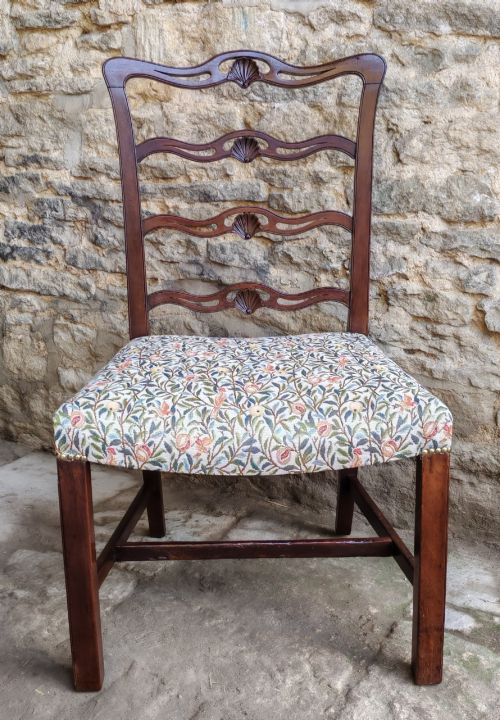
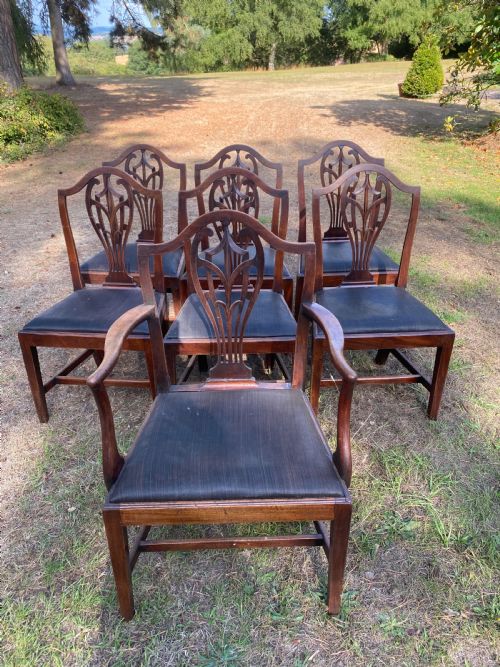

Pierced Carved Chairs
These pierced carved chairs bring centuries of cabinet-making skill into modern rooms, offering intricate woodwork and solid timber construction.
Pierced Carved Chairs
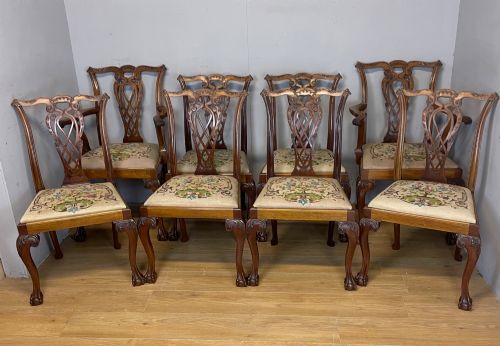
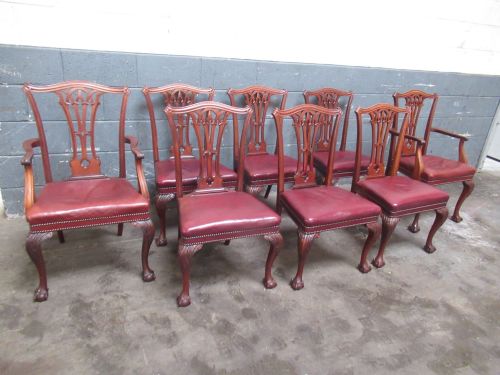
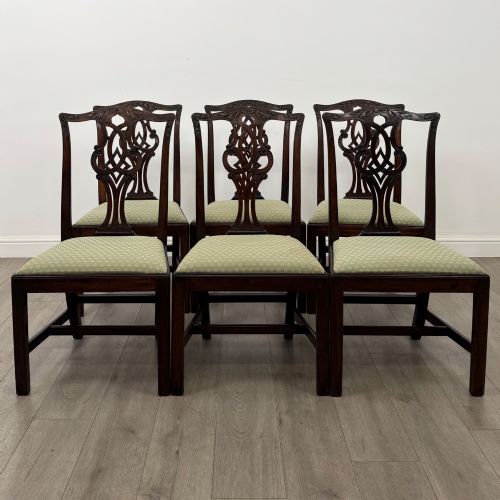
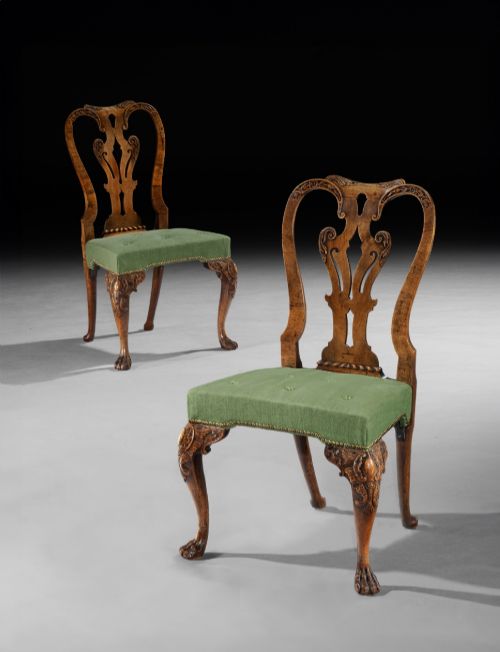
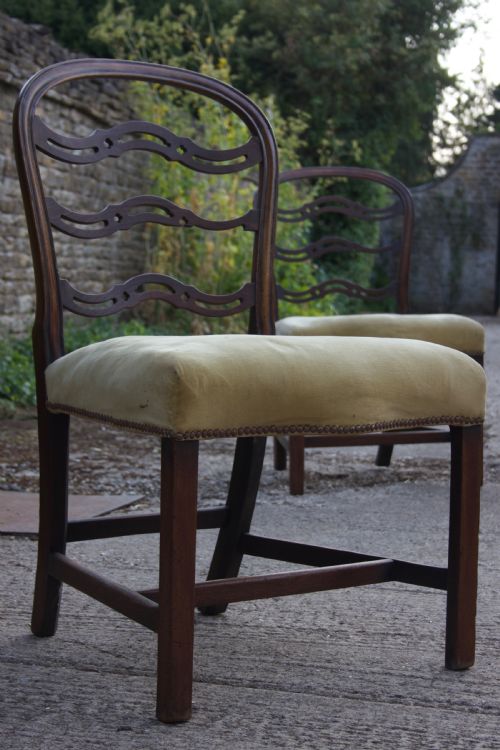
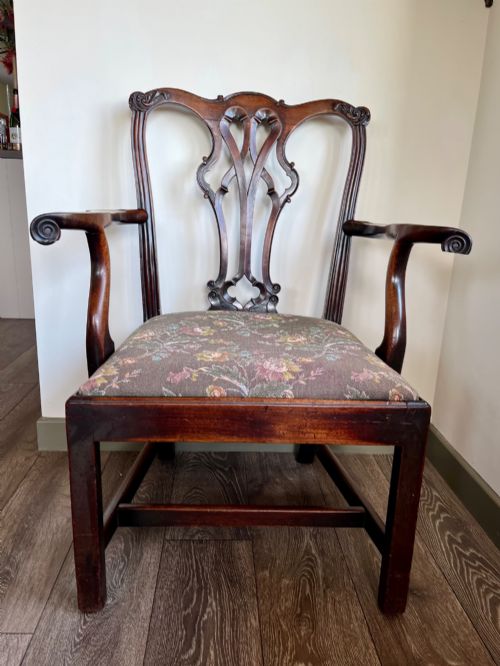
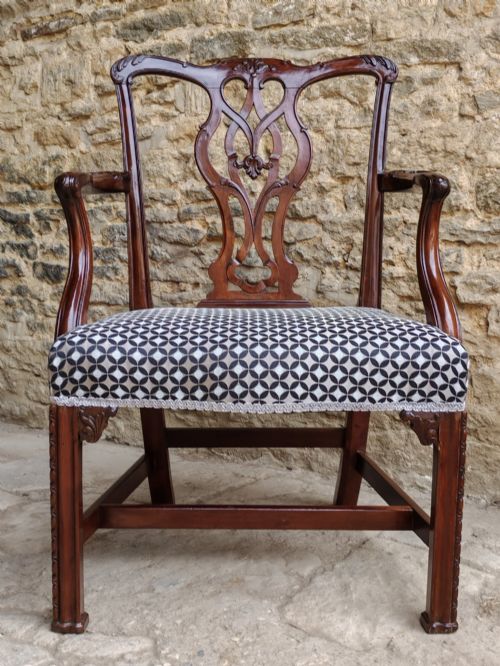
Pierced carved chairs cover a broad range of seating forms, most frequently appearing here as dining chairs, armchairs, and side chairs spanning the eighteenth, nineteenth, and early twentieth centuries. Buyers searching this phrase encounter numerous iterations of Georgian designs, Chippendale styles, and later revivals executed in various native timbers.
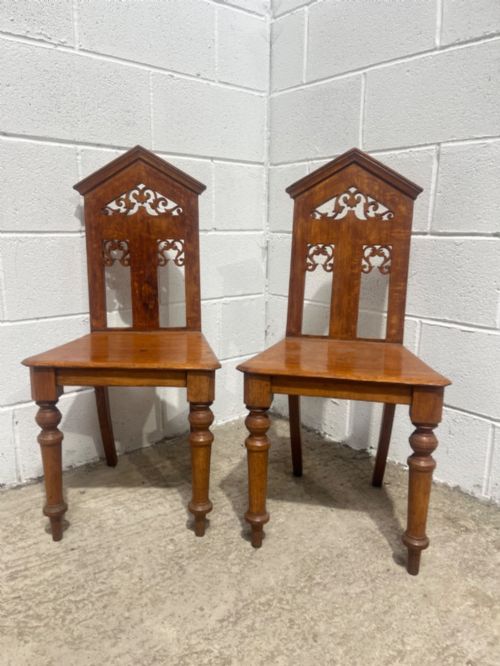
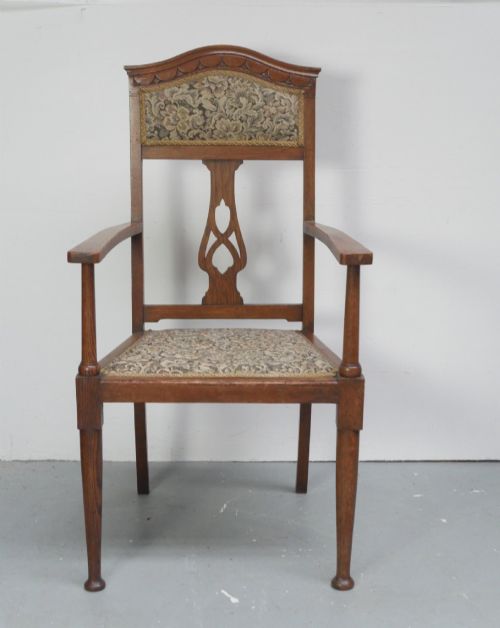
The selection ranges from formal eighteenth-century dining sets to nineteenth-century library and hall seating, alongside Edwardian interpretations. Single armchairs and pairs of side chairs appear alongside larger suites intended for dining rooms and grand hallways.
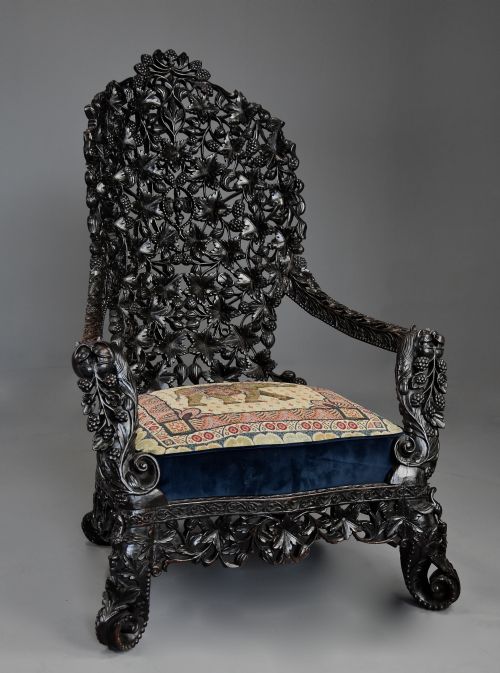
Origins stretch across English workshops, Irish makers, and nineteenth-century Anglo-Indian production in padauk and blackwood. Formal dining chairs dominate the selection, accompanied by occasional rocking chairs, desk chairs, and gossip chairs.
How they were made
Makers relied primarily on dense hardwoods, utilising mahogany and walnut for formal seating, while oak and occasional exotic timbers like padauk and blackwood served specific regional and period tastes. Timber selection dictated the depth and crispness achievable in the pierced splats and carved details.
Construction involved traditional joinery techniques, combining mortise and tenon frames with hand-carved splats and cabriole or straight legs. Upholstered elements featured drop-in seats covered in fabric, leather, or velvet, complementing the exposed polished timber frames.
Even gossip chairs found a place in Victorian parlours, designed for sideways sitting while whispering secrets.
What varies in quality
Quality rests in the depth and precision of the hand-carved pierced splat, where crisp edges and balanced proportions distinguish master craftsmanship from routine production. The choice of timber grain and the integrity of the original frame joinery further elevate certain examples above standard workshop output.
Period authenticity and originality of surface finish play significant roles in establishing the standing of individual pieces. Retaining unaltered timber patination and original structural components separates exemplary survivors from heavily restored or later revival pieces.
Warings·Wheelers of Arncroach
The Pierced Carved Chairs Glossary
- Pierced splat
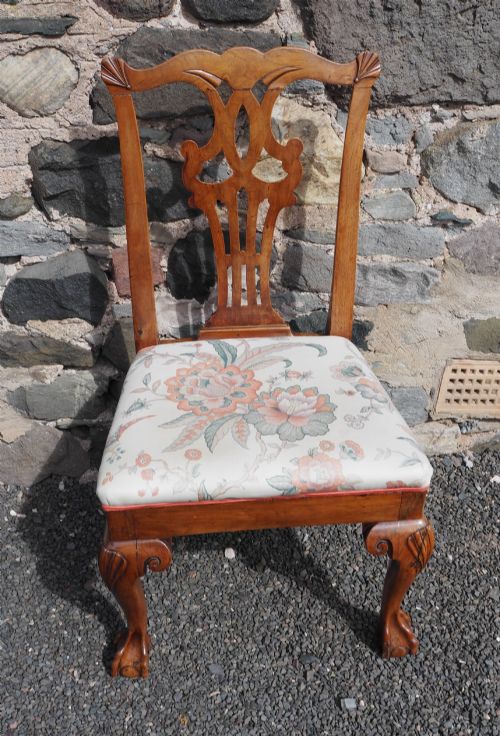
- The central vertical slat of a chair back that has been pierced or cut through to create decorative openwork patterns. This technique defines the visual lightness of mid-eighteenth-century seating designs.
- Cabriole leg
- A furniture leg that curves outward at the knee and tapers inward toward the foot, often ending in a pad or claw and ball. This form originated in antiquity and gained widespread popularity during the eighteenth century.
- Drop-in seat
- A removable wooden frame upholstered separately and dropped into a ledge within the chair rails. It allowed for easier reupholstering without dismantling the primary frame.
- Elbow chair
- An alternative term for an armchair, particularly those featuring open arms designed to accommodate formal attire. They frequently accompanied matching sets of dining side chairs.
Pierced Carved Chairs: Frequently Asked Questions
How do I identify a true eighteenth-century chair?
Examine the timber patination, construction joints underneath, and the hand-cut tool marks inside the pierced splat. Period pieces exhibit construction methods consistent with hand tools and older fastening techniques.
Compare the proportions and carved details against documented examples from the same stylistic era. Subtle irregularities in symmetry often confirm period hand-crafting over later mechanical reproduction.
Are these chairs suitable for daily dining use?
Most antique wooden chairs remain structurally sound for everyday seating if the joints are secure. Professional checks can ensure the frame handles regular weight without compromising antique joinery.
Pairing antique chairs with a modern table requires checking seat heights and arm clearance. Many eighteenth and nineteenth-century chairs sit slightly lower than contemporary standards.
What is the difference between Chippendale and revival styles?
Original Chippendale pieces date from the mid-eighteenth century and reflect the direct output of Thomas Chippendale's milieu or contemporary cabinet makers. They carry period wear and eighteenth-century construction traits.
Revival pieces, manufactured during the Victorian and Edwardian eras, imitate these earlier aesthetics using nineteenth or twentieth-century machinery and timber stocks. They offer period charm with generally sturdier nineteenth-century frames.
How should I care for antique polished timber?
Keep wooden chairs away from direct heat sources and dramatic humidity fluctuations to prevent timber splitting and veneer lifting. Regular dusting with a dry cloth protects the aged wax or polish surface.
Avoid modern silicone polishes that penetrate the grain and alter the historic finish. Apply a quality microcrystalline wax sparingly when the timber appears dry.